Einführung
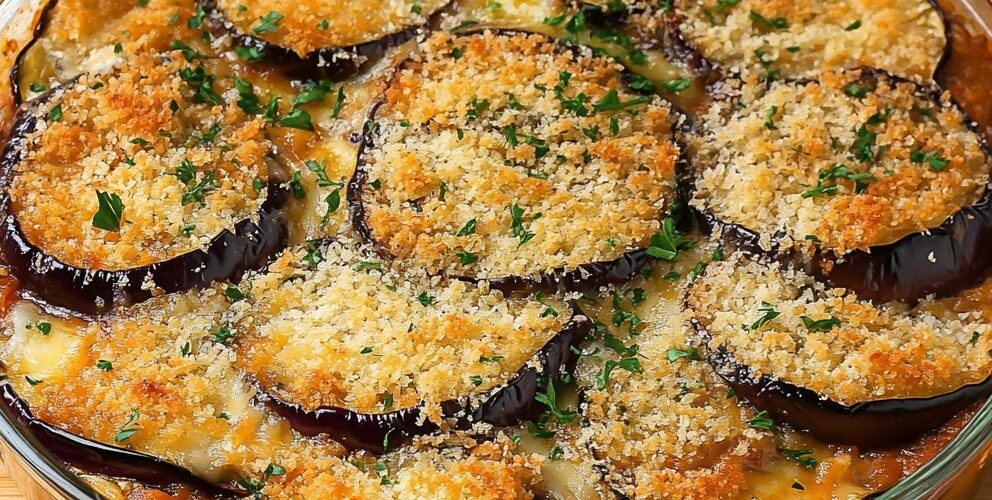
Dieser köstliche Auberginen-Parmesan ist ein echter Publikumsliebling und verwandelt einfache Auberginen in einen wohltuenden Käsegenuss. Mit Schichten aus goldbraun gebratenen Auberginen, reichhaltiger Tomatensauce und geschmolzenem Käse, gekrönt von einer knusprigen Paniermehlkruste, bietet dieses Gericht mit jedem Bissen einen unglaublichen Geschmack. Perfekt für Abendessen unter der Woche oder besondere Anlässe – dieses Rezept vereint Einfachheit und Eleganz. Die Kombination aus zarter Aubergine, pikanter Sauce und den kontrastierenden Texturen macht dieses Gericht zu einem echten „Hype-Erlebnis“ – im besten Sinne!
Zutaten
Für die Auberginenbasis:
- 2 mittelgroße Auberginen (je ca. 500 g)
- Salz zum Herausziehen von Bitterstoffen
- 4-5 Esslöffel (60-75 ml) Pflanzenöl zum Braten
Für die Tomatensauce:
- 1 mittelgroße Zwiebel, fein gehackt
- 3 Knoblauchzehen, gehackt
- 3-4 mittelgroße Tomaten, gewürfelt (ca. 400 g) oder 1 Dose (400 g) gehackte Tomaten
- ½ Teelöffel Zucker
- ½ Teelöffel getrockneter Oregano
- 1 Zweig frischer Rosmarin
- Salz nach Geschmack
- Gemahlener schwarzer Pfeffer nach Geschmack
- 2 Esslöffel Pflanzenöl zum Anbraten
Für die Käseschichten:
- 200 g Mozzarella, in Scheiben geschnitten oder gerieben
- 30 g (1 oz) geriebener Parmesankäse plus 10 g (0,35 oz) zum Bestreuen
Für den Belag:
- 3 Esslöffel Semmelbrösel
- 10 g (0,35 oz) geriebener Parmesankäse
- 3-4 Esslöffel (45-60 ml) 10%ige Sahne oder Halbfettmilch
- Frische Kräuter zum Garnieren (optional)
Anweisungen
Zubereitung der Aubergine:
- Schneiden Sie die Auberginen in etwa 1 cm dicke Scheiben.
- Streuen Sie großzügig Salz auf beide Seiten jeder Auberginenscheibe und legen Sie sie in ein Sieb oder auf Papiertücher.
- Lassen Sie die Auberginenscheiben 10–15 Minuten ruhen. Dadurch wird die Feuchtigkeit entzogen und die Bitterkeit entfernt.
- Nach dem Ruhen die Auberginenscheiben mit Papiertüchern gründlich trocken tupfen und dabei möglichst viel Feuchtigkeit und Salz entfernen.
- Erhitzen Sie 2–3 Esslöffel Pflanzenöl in einer großen Pfanne bei mittlerer bis hoher Hitze.
- Die Auberginenscheiben portionsweise von jeder Seite ca. 2–3 Minuten goldbraun braten. Bei Bedarf zwischendurch mehr Öl hinzufügen.
- Legen Sie die gebratene Aubergine auf einen mit Papiertüchern ausgelegten Teller, um überschüssiges Öl aufzusaugen.
Zubereitung der Tomatensauce:
- Erhitzen Sie in einem mittelgroßen Topf 2 Esslöffel Pflanzenöl bei mittlerer Hitze.
- Die gehackte Zwiebel hinzufügen und etwa 3–4 Minuten anbraten, bis sie glasig ist.
- Den gehackten Knoblauch hinzufügen und weitere 30 Sekunden anbraten, bis er duftet, aber nicht gebräunt ist.
- Fügen Sie die gewürfelten Tomaten, Zucker, Salz, schwarzen Pfeffer, getrockneten Oregano und den Rosmarinzweig hinzu.
- Lassen Sie die Sauce etwa 5 Minuten köcheln, damit sich die Aromen vermischen und die Tomaten etwas zerfallen können.
- Den Rosmarinzweig entfernen und weitere 3 Minuten köcheln lassen. Wer eine feinere Sauce bevorzugt, kann sie mit einem Stabmixer leicht pürieren.
Zusammenbau des Gerichts:
- Preheat your oven to 180°C (350°F).
- In a medium-sized baking dish (approximately 9×9 inches or 23×23 cm), start by spreading half of the prepared tomato sauce evenly across the bottom.
- Arrange a layer of the fried eggplant slices over the sauce, slightly overlapping them if necessary.
- Distribute half of the mozzarella cheese over the eggplant layer.
- Season with a sprinkle of ground black pepper and some of the Parmesan cheese.
- Repeat the layers: remaining tomato sauce, another layer of fried eggplant, the rest of the mozzarella, black pepper, and Parmesan.
Preparing the Topping and Baking:
- Place the assembled dish in the preheated oven and bake for 20 minutes, until the cheese is melted and bubbling.
- While the dish is baking, prepare the topping by mixing the breadcrumbs with the remaining 10g of Parmesan cheese.
- After the initial 20 minutes of baking, remove the dish from the oven.
- Drizzle the cream evenly over the top, then sprinkle with the breadcrumb and Parmesan mixture.
- Return the dish to the oven and bake for an additional 15 minutes, until the topping is golden and crispy.
- Remove from the oven and let it rest for 5-10 minutes before serving. This allows the layers to set and makes for easier serving.
- Garnish with fresh herbs if desired.
Nutritional Information and Timing
Preparation Time: 30 minutes
Cooking Time: 35 minutes
Total Time: 1 hour 5 minutes
Servings: 4-6
Per Serving (based on 6 servings):
- Calories: Approximately 320 kcal
- Protein: 12g
- Carbohydrates: 18g
- Fiber: 6g
- Fat: 24g (primarily from cheese and cooking oil)
- Sodium: 480mg (varies based on salt usage)
Cooking Tips and Tricks
- Selecting Eggplants: Choose firm, glossy eggplants that feel heavy for their size. Smaller eggplants typically have fewer seeds and less bitterness.
- Salting Process: Don’t skip the salting step! It not only removes bitterness but also helps the eggplant absorb less oil during frying, resulting in a lighter dish.
- Frying Technique: Make sure your oil is hot before adding the eggplant, but not smoking. This ensures proper browning without soaking up too much oil. A medium-high heat is ideal.
- Oil Management: Eggplants are like sponges and can absorb a lot of oil. Use just enough oil to fry them and consider using a non-stick pan to reduce the amount needed.
- Sauce Consistency: If your tomatoes are very watery, simmer the sauce a bit longer to concentrate the flavors and reduce excess moisture, which could make your dish soggy.
- Cheese Selection: For the best flavor and melt, use fresh mozzarella if available, or a good quality low-moisture mozzarella. Freshly grated Parmesan will taste better than pre-packaged versions.
- Resting Period: Allow the dish to rest after baking. This helps the layers set and makes it easier to serve neat portions without everything sliding apart.
Variations and Substitutions
- Healthier Option: Instead of frying, brush the eggplant slices with olive oil and bake them at 200°C (400°F) for about 20 minutes before assembling the dish.
- Meat Addition: For a non-vegetarian version, add cooked ground beef or Italian sausage to the tomato sauce.
- Cheese Alternatives: Replace mozzarella with provolone, fontina, or a mix of Italian cheeses. For a dairy-free version, use plant-based cheese alternatives.
- Sauce Variations: Enhance the tomato sauce with red wine, balsamic vinegar, or additional herbs like basil, thyme, or bay leaf for more complex flavors.
- Gluten-Free Option: Use gluten-free breadcrumbs for the topping, or substitute with crushed nuts or gluten-free cereal.
- Added Vegetables: Incorporate layers of sautéed spinach, zucchini, or bell peppers for extra nutrition and flavor complexity.
- Spice Level: Add red pepper flakes to the sauce or a pinch of cayenne to the breadcrumb topping for a spicier version.
Common FAQs
Why is my eggplant parmesan watery?
This typically happens if the eggplant wasn’t properly salted and dried before frying, or if the tomato sauce was too thin. Make sure to thoroughly pat the eggplant dry after salting, and simmer your sauce until it reaches a thicker consistency. Also, allowing the finished dish to rest for 10-15 minutes before serving helps reduce excess moisture.
Can I prepare this dish ahead of time?
Yes! You can prepare all the components (fry the eggplant, make the sauce) up to a day in advance and refrigerate. Assemble and bake when you’re ready to serve. Alternatively, you can assemble the entire dish, refrigerate (unbaked) for up to 24 hours, and then bake when needed, adding about 10 minutes to the baking time.
Can I freeze eggplant parmesan?
Yes, this dish freezes well. Let it cool completely after baking, then wrap it tightly in plastic wrap and aluminum foil, or place in an airtight container. Freeze for up to 3 months. Thaw overnight in the refrigerator and reheat in a 350°F (180°C) oven until hot throughout, about 20-30 minutes.
How can I make this dish less oily?
To reduce the oil content, bake the eggplant slices instead of frying them. Lay them on a baking sheet, brush with a small amount of oil, and bake at 200°C (400°F) for about 20 minutes, flipping halfway through, until tender and lightly browned.
What can I serve with eggplant parmesan?
This hearty dish pairs beautifully with a simple green salad dressed with lemon and olive oil. It also goes well with crusty bread, a side of pasta with light sauce, or roasted vegetables. For a complete Italian-inspired meal, serve with a light soup as a starter.
Storage and Make-Ahead Tips
- Kühlung: Bewahren Sie übrig gebliebenen Auberginenparmesan bis zu 3–4 Tage in einem luftdichten Behälter im Kühlschrank auf.
- Aufwärmen: Für beste Ergebnisse im 180 °C (350 °F) heißen Backofen ca. 15–20 Minuten erhitzen, bis das Brot durchgehend heiß ist. Sollte die Oberfläche zu stark bräunen, mit Alufolie abdecken. Im Notfall geht es auch in der Mikrowelle, die Paniermehlkrümel können aber matschig werden.
- Einfrieren: Zum Einfrieren das Gericht vollständig abkühlen lassen, dann fest in Frischhaltefolie und anschließend in Alufolie einwickeln. Mit Datum beschriften und bis zu 3 Monate einfrieren. Vor dem Aufwärmen über Nacht im Kühlschrank auftauen lassen.
- Zutaten zum Vorbereiten:
- Die Tomatensoße kann bis zu 3 Tage im Voraus zubereitet und im Kühlschrank oder in der Tiefkühltruhe bis zu 3 Monate aufbewahrt werden.
- Auberginenscheiben können einen Tag im Voraus gebraten und in durch Papiertücher getrennten Schichten im Kühlschrank aufbewahrt werden.
- Das gesamte Gericht kann bis zu 24 Stunden im Voraus zubereitet (aber nicht gebacken), abgedeckt und gekühlt werden.
- Serviervorschlag: Für eine optimale Präsentation und Konsistenz lassen Sie das gebackene Gericht vor dem Anschneiden und Servieren 10–15 Minuten ruhen. So können die Schichten fest werden und das Servieren wird übersichtlicher.
Dieses Auberginen-Parmesan-Rezept verwandelt einfache Zutaten in ein wahrhaft bemerkenswertes Gericht. Die knusprige Oberfläche der Aubergine, ergänzt durch die reichhaltige Tomatensauce und den geschmolzenen Käse, schafft eine Harmonie aus Aromen und Texturen, die sie zu einem perfekten Wohlfühlessen macht. Ob als Hauptgericht für ein Familienessen oder als Teil eines größeren Buffets für Gäste – dieses Gericht wird jeden an Ihrem Tisch beeindrucken.