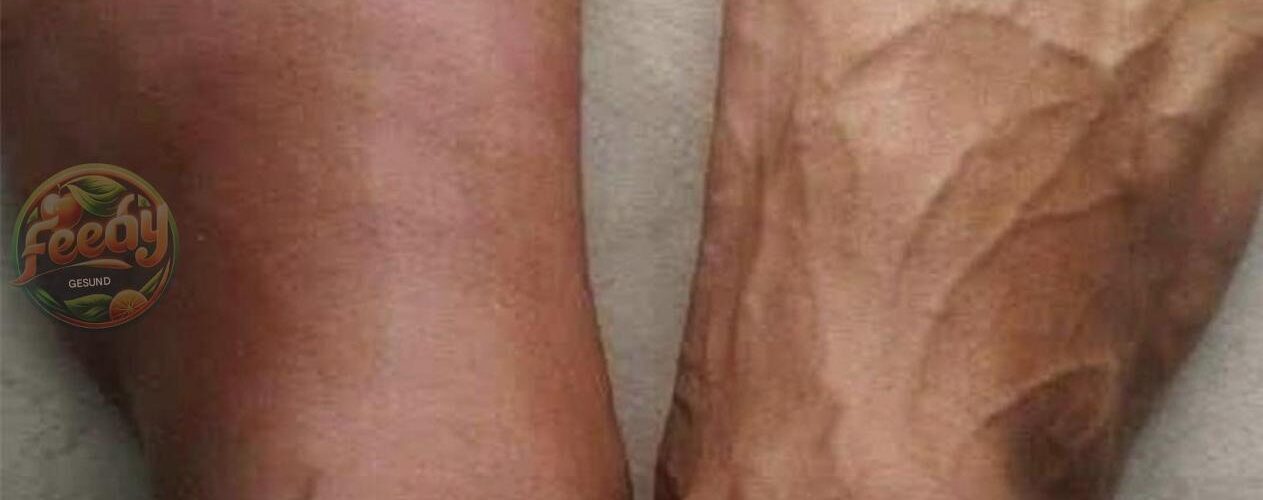
Haben Sie schon einmal:
- Haben Sie bemerkt, dass Ihre Schuhe enger sind als sonst?
- Ist ein Fuß oder Knöchel geschwollener als der andere?
- Hat es auf Ihre Haut gedrückt und eine Delle hinterlassen, die noch immer sichtbar ist?
Du bildest es dir nicht ein.
Geschwollene Füße oder Knöchel – medizinisch als Ödeme bekannt – sind mehr als nur ein Zeichen dafür, dass Sie den ganzen Tag auf den Beinen waren. Obwohl sie oft harmlos sind, können plötzliche oder anhaltende Schwellungen ein stilles Signal von Herz, Nieren, Venen oder Lymphsystem sein.
Wenn Sie es ignorieren, kann dies bedeuten, dass Sie ein frühes Warnsignal für eine ernste Erkrankung übersehen.
Lassen Sie uns die häufigsten Ursachen für Fußschwellungen untersuchen, wann sie normal sind und wann Sie einen Arzt aufsuchen sollten – damit Sie bewusst und nicht ängstlich reagieren können.
🧠 Was ist ein Ödem?
Bei Ödemen handelt es sich um Flüssigkeitsansammlungen im Gewebe – am häufigsten in den Füßen, Knöcheln und Beinen.
Es kann sein:
- Leicht und vorübergehend – nach zu langem Stehen oder bei heißem Wetter
- Chronisch oder plötzlich – ein Hinweis darauf, dass Ihr Körper Aufmerksamkeit braucht
🔍 Einfacher Test: Drücken Sie mit dem Finger auf die geschwollene Stelle. Wenn sich eine Delle bildet (ein sogenanntes Ödem ), handelt es sich wahrscheinlich um eine Flüssigkeitsretention.
✅ Häufige und harmlose Ursachen
In vielen Fällen sind geschwollene Füße kein Grund zur Sorge – vor allem, wenn sie durch Ruhe verschwinden.
- Längeres Stehen oder Sitzen
- Hitze oder Feuchtigkeit
- Salzreiche Mahlzeiten
- Hormonelle Veränderungen (PMS, Schwangerschaft, Wechseljahre)
- Leichte Verletzung (verstauchter Knöchel, Fußzerrung)
Diese verbessern sich normalerweise durch:
- Beine hochlegen
- Fortbewegung
- Reduzierung der Salzaufnahme
⚠️ Wann Schwellungen auf ein Gesundheitsproblem hinweisen können
Gelegentliche Schwellungen sind zwar normal, bestimmte Muster können jedoch auf Grunderkrankungen hinweisen – insbesondere, wenn die Schwellung:
- Plötzlich
- Einseitig
- Schmerzhaft
- Hartnäckig
- Begleitet von anderen Symptomen
🚩 6 ernste Erkrankungen im Zusammenhang mit geschwollenen Füßen
1. Tiefe Venenthrombose (TVT)
- Ein Blutgerinnsel in einer tiefen Beinvene
- Normalerweise ein Bein mit Schmerzen, Rötung, Wärme
- 🚨 Medizinischer Notfall – Risiko einer Lungenembolie
2. Herzinsuffizienz
- Das Herz kann nicht effektiv pumpen → Flüssigkeit staut sich in den Beinen
- Schwellung in beiden Füßen/Knöcheln, schlimmer am Ende des Tages
- Oft mit Kurzatmigkeit, Müdigkeit, Gewichtszunahme
3. Nierenerkrankung
- Die Nieren können Flüssigkeit/Natrium nicht entfernen
- Schwellungen in Füßen, Händen und um die Augen
- Kann auch zu schaumigem Urin, Müdigkeit und hohem Blutdruck führen
4. Lebererkrankung (Leberzirrhose)
- Die Leber produziert kein Albumin → Flüssigkeit tritt in das Gewebe aus
- Schwellungen in den Beinen ( Ödeme ) und im Bauchraum ( Aszites )
- Oft mit Gelbsucht, leichter Blutergüsse, Müdigkeit
5. Chronische Veneninsuffizienz
- Geschwächte Venenklappen → Blutansammlung in den Beinen
- Schlimmer beim Stehen, bessert sich beim Hochlegen
- Kann auch Krampfadern, Hautveränderungen haben
6. Lymphödem
- Lymphatische Blockade/Schädigung (nach Operation oder Infektion)
- Chronische, feste Schwellung (oft einseitig)
- Die Haut fühlt sich dick oder gespannt an
✅ Was Sie zu Hause tun können (bei leichten Schwellungen)
- Heben Sie Ihre Beine über Herzhöhe
- Gehen oder bewegen Sie sich regelmäßig
- Tragen Sie Kompressionsstrümpfe
- Reduzieren Sie die Salzaufnahme
- Bleiben Sie hydriert
- Vermeiden Sie enge Schuhe/Socken
❗ Ignorieren Sie keine Schwellungen, die sich innerhalb von 2–3 Tagen nicht bessern.
🚨 Wann Sie sofort einen Arzt aufsuchen sollten
Suchen Sie einen Arzt auf, wenn Sie:
- 🦵 Plötzliche Schwellung eines Beins (mögliche TVT)
- 😖 Kurzatmigkeit oder Brustschmerzen
- ⚖️ Unerklärliche schnelle Gewichtszunahme
- 💩 Schwellung mit schaumigem/dunklem Urin
- 🌡️ Rote, heiße, schmerzhafte Schwellung
Abschließende Gedanken
Geschwollene Füße sind nicht immer gefährlich – aber man sollte sie nie völlig ignorieren.
Ihr Körper nutzt Schwellungen als Signal – sei es durch Salz, Inaktivität oder etwas Ernsteres.
👉 Versuchen Sie zunächst einfache Lösungen.
👉 Wenn das Problem anhält, sich verschlimmert oder sich ungewöhnlich anfühlt, suchen Sie einen Arzt auf.
Bei wahrer Gesundheit geht es nicht um Angst – es geht darum, auf den eigenen Körper zu hören und zu wissen, wann man um Hilfe bitten muss.
German Scientists Develop Regenerative Gel That Could Transform Joint Treatment
A groundbreaking medical discovery from Germany may soon revolutionize the way joint injuries and arthritis are treated. Scientists have developed an innovative bioactive gel that stimulates the body’s own cells to regrow damaged cartilage, offering a non-invasive alternative to surgery and implants.
Harnessing the Body’s Natural Healing Power
Unlike traditional methods such as joint replacement or synthetic implants, the gel works by activating the body’s natural repair mechanisms. Once applied, it encourages cartilage cells to regenerate, restoring the joint’s flexibility, cushioning, and function.
“Instead of replacing what’s lost, we’re teaching the body to rebuild itself,” researchers explained. This breakthrough has the potential to change treatment pathways for conditions that have long been considered irreversible.
Promising Early Results
In early clinical trials, patients treated with the gel reported reduced pain, improved mobility, and significantly shorter recovery times compared with those undergoing conventional therapies. For many, it meant a return to daily activities without the lengthy rehabilitation or risks associated with invasive surgery.
A Hopeful Future for Millions
The implications are vast. Arthritis alone affects hundreds of millions worldwide, while sports-related cartilage injuries are a leading cause of disability in younger adults. This regenerative gel could offer a safe, effective solution for both groups.
By reducing reliance on surgical procedures, the treatment also lowers risks of infection, implant failure, and other complications, while minimizing healthcare costs.
Redefining Joint Care
Although more research and large-scale trials are needed, experts believe this innovation could reshape the future of orthopedics. If successful, it would mark a shift from repair through replacement to repair through regeneration.
“This is a paradigm shift in joint medicine,” said one orthopedic specialist not involved in the study. “The ability to regrow cartilage naturally could transform the quality of life for millions of patients.”
For now, patients and doctors alike are watching closely as the research progresses. The prospect of restoring mobility and freedom—without going under the knife—brings new hope in the fight against joint degeneration.
Groundbreaking Surgery Removes Spinal Tumor Through the Eye Socket
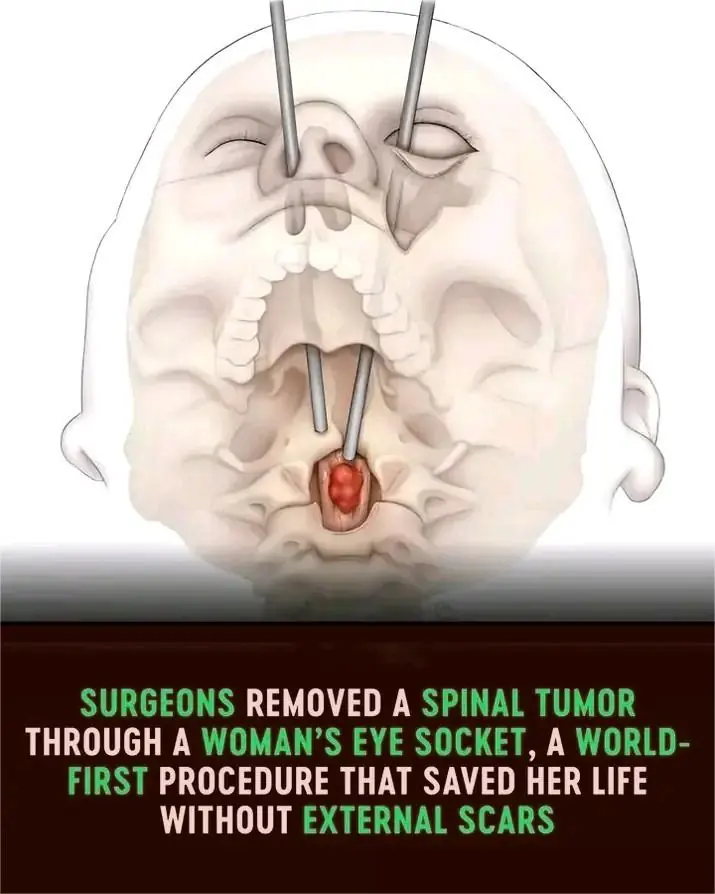
In a remarkable medical first, surgeons at the University of Maryland Medical Center have successfully removed a spinal tumor by accessing it through a patient’s eye socket. The pioneering procedure marks a new milestone in neurosurgery, offering fresh hope to patients facing rare and life-threatening tumors.
A Rare and Dangerous Diagnosis
The patient, 19-year-old Karla Flores, was diagnosed with a chordoma—a rare tumor that arises in the bones of the skull and spine. Although slow-growing, chordomas are highly invasive and often wrap around delicate structures such as nerves, arteries, and the spinal cord.
Flores’ tumor was lodged in her cervical spine, perilously close to critical blood vessels and nerves. Conventional surgery posed extraordinary risks, including paralysis, loss of vital functions, or even death. The location made traditional approaches nearly impossible without causing severe damage.
A Revolutionary Surgical Pathway
Faced with these challenges, neurosurgeon Dr. Mohamed A.M. Labib and his team adopted a bold approach. Rather than using large incisions, they employed a transorbital route—entering through the natural opening of the eye socket.
This technique, previously used in select brain tumor operations, was adapted for spinal surgery after extensive research. Surgeons created a precise corridor through the orbit, guided by advanced imaging, navigation systems, and specialized instruments.
The outcome was extraordinary: the tumor was removed, essential neurological functions were preserved, and the patient was left with no external scarring.
A Team Effort
The achievement was the result of collaboration across multiple specialties, including neurosurgery, head and neck surgery, radiation oncology, and spinal reconstruction. After the tumor removal, Flores received proton radiation therapy—a highly targeted treatment designed to minimize collateral damage—as well as spinal fusion to stabilize her neck.
Recovery and Inspiration
Today, Flores is cancer-free and regaining strength. Her case has been hailed as a breakthrough in minimally invasive neurosurgery.
“This is the first step in a new direction,” said Dr. Labib. “Areas of the spine once considered too dangerous to operate on may now be accessible with less invasive methods.”
Redefining the Future of Neurosurgery
The success of this transorbital approach could transform how surgeons treat complex spinal and skull base tumors. By reducing trauma, shortening recovery times, and avoiding disfiguring scars, it may become an invaluable option for conditions once thought untreatable.
Experts believe the method could one day be expanded to treat other spinal and cranial conditions, pushing the boundaries of what modern medicine can achieve.
A New Era in Surgical Innovation
For Flores, the operation was life-saving. For the medical community, it represents a new era—where procedures once deemed impossible can now be performed with precision and minimal invasiveness.
As more hospitals explore and refine this approach, the promise is clear: safer surgeries, faster recoveries, and renewed hope for patients facing the most complex of diagnoses.
Scratchy Throat? Try This Tiny Spice for Gentle, Natural Relief

Feeling that familiar sting when you swallow? A raw throat, hoarse voice, or tender tonsils can make even simple tasks uncomfortable.
Instead of reaching straight for sprays or lozenges packed with artificial ingredients, take a look in your spice rack. Hidden there is a small but mighty natural remedy that’s been trusted for centuries: the clove.
🌸 Why Cloves Help With a Sore Throat
Cloves may be known as a holiday spice, but they’re also rich in eugenol, a natural compound with soothing and antimicrobial properties. This makes them an excellent ally when your throat feels inflamed or irritated.
Here’s what cloves may do for you:
- 🔸 Natural antiseptic – Helps fight bacteria and viruses
- 🔸 Anti-inflammatory – Reduces swelling and irritation in the throat
- 🔸 Mucus-clearing – Opens up breathing passages for easier airflow
- 🔸 Immune-supporting – Provides extra protection during cold and flu season
💬 In simple terms: cloves can make your throat feel less raw, ease breathing, and support a smoother recovery.
🍵 Clove Tea Recipe – A Warming Sip for Comfort
When your throat is sore, a cup of clove tea offers warmth and natural relief.
You’ll need:
- 4–5 whole cloves
- 1 cup water
- Optional: 1 tsp raw honey, a slice of fresh ginger, or lemon wedge
How to make it:
- Bring water to a boil.
- Add cloves and simmer for 10–12 minutes.
- Strain into a mug.
- Add honey or lemon if desired.
✨ Enjoy this tea 2–3 times a day for best results.
👅 The Clove Chew Trick – Quick Relief Anytime
No time to make tea? Try this simple on-the-go method:
What to do:
- Place 1 whole clove in your mouth.
- Let it soften naturally.
- Gently chew and hold it under your tongue or in your cheek.
What you may notice:
- 🔥 A gentle warming or numbing sensation
- 😌 Soothed throat and less irritation
- 🛡️ Moisture and natural protection for dryness
✅ You can repeat this up to 2–3 times per day.
🌟 What People Often Notice
✔ Less pain when swallowing
✔ Reduced dryness and irritation
✔ Easier breathing
✔ Comfort without chemicals or artificial flavors
✅ Final Thoughts: A Tiny Spice with Big Power
Cloves are one of nature’s gentlest healers, used for generations to calm sore throats and support wellness. Whether brewed into a tea or chewed whole, cloves offer a natural, chemical-free solution for throat discomfort.
💚 No sprays. No synthetic flavors. Just the simple power of plants.
👉 Next time your throat feels scratchy, skip the artificial remedies—and let cloves do the soothing, one sip (or chew) at a time.
💬 Have you ever tried cloves for a sore throat? Share your favorite natural remedy in the comments—or tag someone who could use this gentle tip today!