Eine Fettlebererkrankung, auch Steatose genannt , entsteht, wenn sich überschüssiges Fett in der Leber ansammelt und ihre Funktion beeinträchtigt. Zu den Hauptursachen zählen ein ungesunder Lebensstil, Übergewicht und Stoffwechselstörungen. Durch frühzeitige Erkennung und proaktive Behandlung können jedoch schwerwiegende Komplikationen vermieden werden.
In diesem Leitfaden werden die Ursachen, Symptome, Arten und Lebensstilstrategien untersucht , die dazu beitragen können, einer Fettlebererkrankung wirksam vorzubeugen und sie zu behandeln .
Fettlebererkrankung verstehen
Ihre Leber ist für das Filtern von Giftstoffen, den Fettstoffwechsel und die Regulierung wichtiger Nährstoffe im Körper verantwortlich. Wenn sich überschüssiges Fett ansammelt, kann dies zu Entzündungen, Vernarbungen und schließlich zu Leberschäden führen .
Fettlebererkrankungen treten immer häufiger auf, insbesondere bei Menschen mit ungesunder Ernährung, sitzender Lebensweise oder übermäßigem Alkoholkonsum . Um die Entwicklung schwererer Lebererkrankungen zu verhindern, ist es wichtig, die Risikofaktoren und Symptome zu verstehen.
Was verursacht eine Fettleber?
Zur Fettansammlung in der Leber tragen mehrere Faktoren bei , darunter:
1. Ungesunde Ernährung
Der Verzehr von verarbeiteten Lebensmitteln, zuckerreichen Getränken und ungesunden Fetten erhöht das Risiko einer Fettleber. Eine Ernährung ohne Ballaststoffe, mageres Eiweiß und gesunde Fette kann ebenfalls zu diesem Problem beitragen.
2. Fettleibigkeit
Übergewicht oder Fettleibigkeit sind ein wesentlicher Risikofaktor, da überschüssiges Körperfett die Fettansammlung in der Leber fördert und so zu Entzündungen und Schäden führt .
3. Insulinresistenz
Personen mit Typ-2-Diabetes oder metabolischem Syndrom weisen häufig eine Insulinresistenz auf, die die Fettspeicherung in der Leber erhöht und ihre normale Funktion stört.
4. Übermäßiger Alkoholkonsum
Starker und anhaltender Alkoholkonsum verursacht eine alkoholische Fettlebererkrankung (AFLD), indem er die Fähigkeit der Leber, Fette abzubauen , beeinträchtigt .
5. Genetik
Manche Menschen haben eine genetische Veranlagung zur Entwicklung einer Fettlebererkrankung, selbst wenn sie einen gesunden Lebensstil pflegen.
6. Schwangerschaft
In seltenen Fällen entwickeln Frauen eine akute Schwangerschaftsfettleber (AFLP) , die sich normalerweise nach der Geburt zurückbildet .
Symptome einer Fettlebererkrankung
Fatty liver disease is often silent in its early stages, making it difficult to detect without medical tests. However, some common symptoms include:
✅ Fatigue and weakness
✅ Abdominal pain or discomfort (especially in the upper right side)
✅ Unexplained weight loss
✅ Jaundice (yellowing of the skin and eyes)
✅ Loss of appetite
If left untreated, fatty liver can progress to inflammation (steatohepatitis), fibrosis (scarring), or even cirrhosis—a life-threatening condition.
Types of Fatty Liver Disease
There are two main types of fatty liver disease:
1. Alcoholic Fatty Liver Disease (AFLD)
✅ Cause: Heavy alcohol consumption
✅ Risk: Can progress to alcoholic hepatitis or cirrhosis
✅ Prevention: Reducing or eliminating alcohol intake
2. Non-Alcoholic Fatty Liver Disease (NAFLD)
✅ Cause: Obesity, diabetes, high cholesterol, and poor diet
✅ Risk: Can develop into non-alcoholic steatohepatitis (NASH), leading to inflammation and liver scarring
✅ Prevention: Lifestyle changes including weight management and healthy eating
How to Prevent & Manage Fatty Liver Naturally
While medical treatment is available, lifestyle modifications are the best way to prevent and manage fatty liver disease.
1. Healthy Diet for Liver Detox
A nutrient-dense diet is essential to support liver function and prevent fat buildup.
✅ Eat more:
- Leafy greens (spinach, kale)
- Fruits & vegetables (berries, carrots, beets)
- Whole grains (brown rice, quinoa)
- Healthy fats (avocados, nuts, olive oil)
- Lean proteins (fish, chicken, tofu)
🚫 Avoid or limit:
- Processed foods (fast food, chips, packaged snacks)
- Sugary drinks (soda, fruit juices with added sugar)
- Refined carbs (white bread, pasta)
- Saturated fats & trans fats (fried foods, margarine)
2. Exercise & Weight Management
Maintaining a healthy weight helps reduce liver fat accumulation and improves insulin sensitivity.
🏋️ Trainingsempfehlungen:
✔ 150 Minuten moderate Bewegung pro Woche (Gehen, Radfahren, Yoga)
✔ Integrieren Sie Krafttraining zur Verbesserung des Stoffwechsels
✔ Bleiben Sie den ganzen Tag aktiv (reduzieren Sie langes Sitzen)
Schon eine Gewichtsabnahme von 5–10 % kann die Fettleber deutlich verbessern .
3. Reduzieren Sie den Alkoholkonsum
Für Menschen mit AFLD ist die Reduzierung oder der Verzicht auf Alkohol von entscheidender Bedeutung. Auch bei NAFLD schützt die Einschränkung des Alkoholkonsums die Leber vor weiteren Schäden .
4. Verwalten Sie die zugrunde liegenden Bedingungen
Wenn Sie Erkrankungen wie Diabetes, Bluthochdruck und hohen Cholesterinspiegel unter Kontrolle halten, können Sie weiteren Leberschäden vorbeugen .
5. Hausmittel und Nahrungsergänzungsmittel für eine gesunde Leber
Während die Ernährung die wichtigste Möglichkeit zur Unterstützung der Lebergesundheit darstellt, können bestimmte natürliche Heilmittel und Nahrungsergänzungsmittel zusätzliche Vorteile bieten:
🌿 Mariendistel – Enthält Silymarin , das die Regeneration von Leberzellen unterstützt und Entzündungen reduziert .
🐟 Omega-3-Fettsäuren – kommen in Fischöl, Leinsamen und Walnüssen vor und helfen, Leberfett zu reduzieren .
🍊 Vitamin C und E – Starke Antioxidantien , die die Entgiftung der Leber unterstützen .
🍵 Grüner Tee – Reich an Catechinen , die helfen, die Fettspeicherung in der Leber zu reduzieren .
Konsultieren Sie vor der Einnahme von Nahrungsergänzungsmitteln einen Arzt , um die Sicherheit und richtige Dosierung sicherzustellen.
Abschließende Gedanken: Schützen Sie Ihre Leber für eine gesündere Zukunft
Eine Fettlebererkrankung kann durch die richtigen Änderungen des Lebensstils weitgehend verhindert und behandelt werden . Durch:
✔ Sich ausgewogen ernähren
✔ Aktiv bleiben
✔ Gewichtskontrolle
✔ Alkoholkonsum einschränken
✔ Grunderkrankungen behandeln
Sie können die Gesundheit Ihrer Leber unterstützen und Komplikationen vorbeugen .
Eine frühzeitige Erkennung und ein proaktiver Ansatz können eine Fettleber rückgängig machen und das allgemeine Wohlbefinden fördern . Beginnen Sie noch heute mit kleinen, aber wirkungsvollen Änderungen in Ihrem Alltag!
High cholesterol can be inherited. Here’s what you can do about it
Most people associate high cholesterol with an unhealthy diet, lack of exercise, or aging — something that builds up slowly over time. But for some, elevated cholesterol isn’t the result of lifestyle at all. Instead, it’s inherited through a genetic condition known as familial hypercholesterolemia (FH).
🧬 What Is Familial Hypercholesterolemia?
FH is caused by a genetic mutation that leads to lifelong high LDL (“bad”) cholesterol levels, regardless of diet or activity. According to the U.S. Centers for Disease Control and Prevention (CDC), about 1 in 250 people has FH. Yet experts estimate that 70–90 percent remain undiagnosed, leaving them at risk for serious heart problems.
Without proper management, FH greatly increases the risk of early heart attacks and strokes. Detecting it early can be lifesaving.
🩺 Why Cholesterol Matters
Cholesterol itself isn’t harmful — in fact, it’s essential. Every cell in the body needs cholesterol to build membranes and produce hormones. But problems arise when LDL cholesterol builds up in the artery walls.
Excess LDL particles trigger inflammation, much like a splinter under the skin. Over time, this can damage artery linings and cause dangerous blood clots — the underlying process behind most heart attacks and strokes.
⚠️ Signs and Symptoms
Most people with high cholesterol feel no symptoms until serious complications occur. FH is especially insidious because cholesterol levels are high from birth.
In rare cases, very high cholesterol may cause:
- Fatty deposits in tendons (xanthomas)
- Yellowish patches on the skin
- A white ring around the cornea of the eye
But for most, routine blood tests are the only way to detect it.
🔎 Who Should Be Tested?
- Children: Pediatric guidelines recommend cholesterol screening between ages 9–11 if a parent has FH. Some children may be tested earlier.
- Adults: There’s no age “too early” for testing. Anyone with a family history of heart disease, stroke, or high cholesterol should ask for screening.
It’s also important to test for lipoprotein(a), another inherited cholesterol particle often elevated in people with FH, which further increases cardiovascular risk.
🥗 Living With Inherited High Cholesterol
Lifestyle changes alone won’t normalize cholesterol in FH — but they still matter. According to cardiologists, healthy habits can cut cardiac risk by up to 80 percent, even when LDL remains high.
Recommendations include:
- Eating fruits, vegetables, whole grains, lean protein, and nuts
- Limiting added sugars, sodium, red meat, and processed foods
- Exercising at least 150 minutes of moderate activity per week (walking, cycling, swimming)
- Avoiding smoking entirely
Most people with FH will also need cholesterol-lowering medications, such as statins or newer therapies, to reduce LDL and protect the heart.
✅ A Winnable Battle
A diagnosis of familial hypercholesterolemia may sound daunting, but experts emphasize that it’s treatable and manageable. With the right combination of medical care, lifestyle adjustments, and early detection, people with FH can live long, healthy lives.
As cardiologist Dr. Ashish Sarraju explains:
“In most cases, I consider high cholesterol treatable and a winnable battle.”
The key is awareness — recognizing that if heart disease runs in your family, testing early could make all the difference.
37,368 HFMD cases logged nationwide
MANILA, Philippines — The Department of Health (DOH) has reported a sharp rise in hand, foot and mouth disease (HFMD) cases nationwide, with figures showing a nearly 750 percent increase compared to last year.
📈 HFMD Cases Spike Among Young Children
DOH data showed that as of August 9, there have been 37,368 HFMD cases across the country since January — far higher than the 5,081 cases recorded during the same period in 2024.
Health officials noted that most of the patients are children aged one to three years old, consistent with the disease’s prevalence among children under five.
While HFMD is generally mild and self-limiting, the DOH warned that complications such as meningitis, encephalitis, and polio-like paralysis can occur if left untreated.
🦠 Transmission and Symptoms
HFMD spreads easily through direct contact with infected individuals, as well as through droplets and contaminated objects.
Common symptoms include:
- Fever lasting one to two days
- Painful mouth sores
- Rashes and blisters on the hands, feet, and buttocks
Patients are advised to undergo isolation for seven to 10 days until fever subsides and rashes disappear.
The DOH emphasized the importance of strict hygiene practices:
- Utensils and personal items used by the patient must be kept separate and disinfected.
- The isolation room must be thoroughly cleaned once the patient recovers.
Health Secretary Ted Herbosa underscored the need to teach children proper handwashing techniques, especially if they have been exposed to HFMD cases.
💡 Preventive Measures
To reduce the spread of HFMD, health experts recommend:
- Frequent handwashing with soap and water
- Regular disinfection of frequently touched surfaces
- Wearing protective gear (masks, gloves, gowns) when caring for an infected patient
🌧️ Leptospirosis Cases Decline
In contrast, leptospirosis cases — which surged following recent tropical storms — are now on a downward trend.
Only 18 cases were reported nationwide from August 17 to 21, a significant drop from the 1,112 cases recorded in the week following storms Crising, Dante, and Emong earlier this month.
Since the rainy season officially began on June 8, the country has reported 4,436 leptospirosis cases.
State-run hospitals have noted declining admissions:
- Tondo Medical Center reported seven new cases.
- National Kidney and Transplant Institute recorded just one.
- East Avenue Medical Center reported none.
To ensure swift care, the DOH has established fast lanes in hospitals specifically for leptospirosis patients.
✅ Outlook
The DOH continues to monitor both HFMD and leptospirosis closely, urging the public to remain vigilant. While HFMD cases climb at an alarming rate, the recent decline in leptospirosis offers a reminder that strict prevention and early intervention are key to controlling infectious disease outbreaks.
BE CAREFUL, if you get these bruises on your body, it means you have…
Have you ever noticed that you bruise easily? Those black-and-blue marks that eventually turn yellow may not only look unsightly, but sometimes they’re painful and even a sign of something more serious. While bruises often result from harmless bumps or injuries, in some cases they can indicate an underlying medical issue.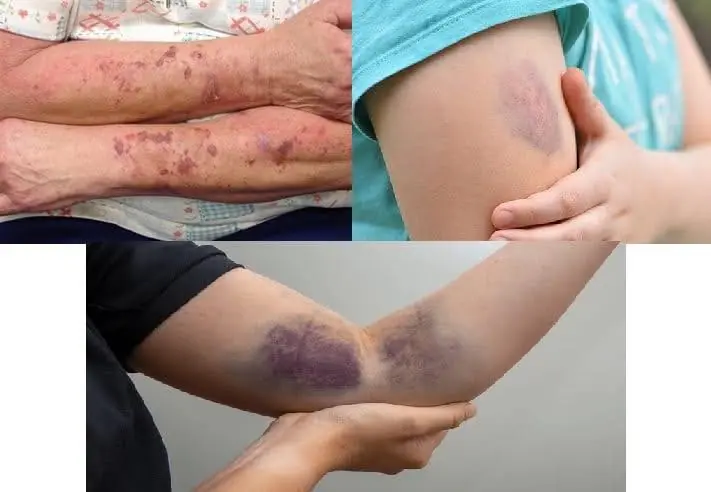
This article explains what bruises are, why they form, possible causes—including vitamin deficiencies—and when you should consult a doctor.
What Is a Bruise?
The medical term for a bruise is ecchymosis. It happens when small blood vessels break under the skin, causing blood to pool beneath the surface. Unlike a cut where blood escapes outside the body, bruises trap blood internally.
Common causes include bumping into furniture, minor falls, or even having blood drawn. The bruise appears dark red, purple, blue, or black at first, then changes colors—green, yellow, or brown—as your body reabsorbs the blood during healing.
When to Be Concerned
Bruises on arms and legs are usually harmless. However, you should see a doctor if:
- Bruises appear on your abdomen, back, genitals, ears, or hands.
- They occur frequently without clear cause.
- They do not begin to fade within a few days.
- They last longer than two weeks.
Vitamin Deficiencies Linked to Bruising
Certain vitamin shortages can make you bruise more easily:
- Vitamin C deficiency: Vitamin C is essential for producing collagen, which strengthens blood vessels. Without enough, vessels become fragile and bruise easily. Smokers are particularly at risk.
- Vitamin K deficiency: Vitamin K is crucial for blood clotting and capillary strength. Low levels may slow clotting and increase bruising.
- Vitamin D and B vitamins: Low levels can also contribute to increased susceptibility to bruising.
Other Causes of Bruising
- Dietary supplements: Ginkgo, ginseng, garlic, ginger, omega-3s, saw palmetto, and vitamin E can thin the blood and make bruising more likely.
- Medications: Blood thinners, aspirin, ibuprofen, steroids, certain antibiotics, and antidepressants may all increase bruising risk.
- Aging: Thinner skin and weaker blood vessels make older adults more prone to bruises.
- Sun damage: Years of sun exposure can weaken blood vessels.
- Medical conditions: Diabetes, anemia, hemophilia, leukemia, and lymphoma can all affect clotting or vessel strength.
- Sports injuries: Contact sports often cause contusions—another name for bruises—from direct impacts.
Treatment and Prevention
Most bruises heal on their own, but you can speed recovery and reduce discomfort with:
- RICE method: Rest, ice, compression, and elevation.
- Heat: After a few days, apply a warm compress to promote healing.
- Pain relief: Use acetaminophen, but avoid aspirin or ibuprofen if bruising is the concern.
- Fall prevention: Improve home lighting, clear floor clutter, and secure cords or rugs to reduce risk.
- Skin care: Protect fragile skin with ointments or bandages to prevent infection if the skin breaks.
If you suspect your bruises are linked to supplements or medications, get your vitamin levels tested and talk with your doctor.
Final Thoughts
Most bruises are harmless reminders of everyday bumps. But persistent, severe, or unexplained bruising should not be ignored. They may be your body’s way of signaling a deficiency or an underlying medical condition. Consulting your doctor can help you find