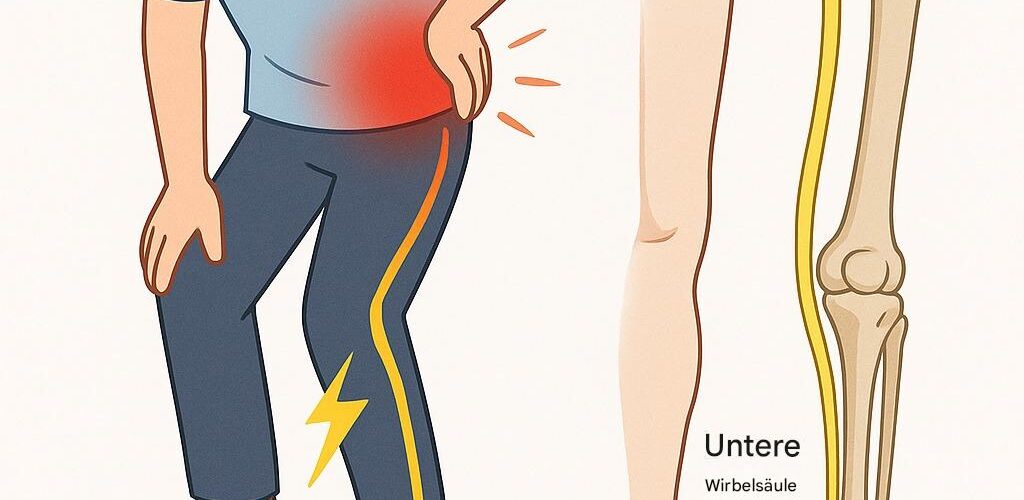
Ischiasschmerzen sind eine häufige Erkrankung, die viele Menschen irgendwann im Leben betrifft. Sie entstehen im unteren Rücken und strahlen über das Gesäß in die Rückseite eines oder beider Beine aus. In diesem Artikel stellen wir Ihnen eine Reihe von Natur- und Hausmitteln vor, die diese Schmerzen lindern und Ihre Lebensqualität verbessern können.
Bevor wir uns mit den Heilmitteln befassen, ist es wichtig zu verstehen, was der Ischiasnerv ist. Er ist der längste Nerv im menschlichen Körper und verläuft vom unteren Rücken bis zu den Beinen. Wird er gereizt oder eingeklemmt, kann dies starke Schmerzen verursachen und die Beweglichkeit einschränken. Ursachen für Ischiasschmerzen sind Bandscheibenvorfälle, Verletzungen oder eine schlechte Körperhaltung.
Natürliche Wege zur Linderung von Ischiasnervschmerzen
1. Bewegung und Dehnung
Spezielle Übungen und Dehnungen können Ischiasschmerzen sehr effektiv lindern. Regelmäßige körperliche Aktivität stärkt die Rücken- und Bauchmuskulatur und sorgt für eine bessere Unterstützung der Wirbelsäule. Folgende Übungen helfen:
- Dehnung der Oberschenkelrückseite: Legen Sie sich auf den Rücken und heben Sie ein Bein gerade nach oben zur Decke.
- Piriformis-Dehnung: Kreuzen Sie ein Bein über das gegenüberliegende Knie und ziehen Sie es sanft in Richtung Brust.
- Yoga: Einige Yoga-Stellungen sind besonders hilfreich bei der Linderung von Ischiasschmerzen.
2. Heiß- und Kalttherapie
Wärme- und Kälteanwendungen können sofortige Linderung verschaffen. Wechseln Sie zwischen heißen und kalten Kompressen, um Entzündungen zu lindern und verspannte Muskeln zu entspannen.
- Kaltkompresse: Legen Sie einen in ein Handtuch gewickelten Eisbeutel für 15–20 Minuten auf die schmerzende Stelle.
- Heiße Kompresse: Verwenden Sie 15–20 Minuten lang ein Heizkissen, um verspannte Muskeln zu entspannen.
3. Kräutertees und natürliche Aufgüsse
Mehrere Kräuter haben entzündungshemmende Eigenschaften, die zur Linderung von Ischiasschmerzen beitragen können:
- Ingwertee: Bekannt für seine entzündungshemmende Wirkung.
- Kurkuma-Tee: Hilft, die Durchblutung zu verbessern und Entzündungen zu reduzieren.
- Kamillentee: Hat entspannende Eigenschaften, die zur Beruhigung der Muskeln beitragen.
4. Entspannungstechniken
Meditation und Atemübungen können helfen, Stress abzubauen und Schmerzen zu lindern. Sich Zeit zum Entspannen zu nehmen, kann Ihr allgemeines Wohlbefinden deutlich verbessern. Versuchen Sie, täglich Atemübungen zu machen, um Verspannungen im Rücken zu lösen.
5. Massagetherapie
Therapeutische Massagen können sehr effektiv sein. Sie helfen, verspannte Muskeln zu entspannen, die Durchblutung anzuregen und die Freisetzung von Endorphinen – den natürlichen Schmerzmitteln Ihres Körpers – anzuregen. Suchen Sie einen Chiropraktiker oder einen auf Rückenschmerzen spezialisierten Masseur auf.
6. Achten Sie auf eine gute Körperhaltung
Eine schlechte Körperhaltung kann Ischiasschmerzen verschlimmern. Achten Sie im Sitzen und Stehen stets auf eine korrekte Wirbelsäulenausrichtung. Wenn Sie am Schreibtisch arbeiten, stellen Sie Ihren Stuhl und Arbeitsplatz so ein, dass die Belastung des unteren Rückens reduziert wird.
Abschluss
Ischiasschmerzen können äußerst unangenehm sein und Ihren Alltag beeinträchtigen. Glücklicherweise können diese natürlichen und Hausmittel Linderung verschaffen und Ihr Wohlbefinden steigern. Konsultieren Sie vor Beginn einer Behandlung immer einen Arzt oder Spezialisten – insbesondere, wenn die Schmerzen anhalten. Die Pflege Ihrer Gesundheit ist eine Investition in Ihre langfristige Lebensqualität.
German Scientists Develop Regenerative Gel That Could Transform Joint Treatment
A groundbreaking medical discovery from Germany may soon revolutionize the way joint injuries and arthritis are treated. Scientists have developed an innovative bioactive gel that stimulates the body’s own cells to regrow damaged cartilage, offering a non-invasive alternative to surgery and implants.
Harnessing the Body’s Natural Healing Power
Unlike traditional methods such as joint replacement or synthetic implants, the gel works by activating the body’s natural repair mechanisms. Once applied, it encourages cartilage cells to regenerate, restoring the joint’s flexibility, cushioning, and function.
“Instead of replacing what’s lost, we’re teaching the body to rebuild itself,” researchers explained. This breakthrough has the potential to change treatment pathways for conditions that have long been considered irreversible.
Promising Early Results
In early clinical trials, patients treated with the gel reported reduced pain, improved mobility, and significantly shorter recovery times compared with those undergoing conventional therapies. For many, it meant a return to daily activities without the lengthy rehabilitation or risks associated with invasive surgery.
A Hopeful Future for Millions
The implications are vast. Arthritis alone affects hundreds of millions worldwide, while sports-related cartilage injuries are a leading cause of disability in younger adults. This regenerative gel could offer a safe, effective solution for both groups.
By reducing reliance on surgical procedures, the treatment also lowers risks of infection, implant failure, and other complications, while minimizing healthcare costs.
Redefining Joint Care
Although more research and large-scale trials are needed, experts believe this innovation could reshape the future of orthopedics. If successful, it would mark a shift from repair through replacement to repair through regeneration.
“This is a paradigm shift in joint medicine,” said one orthopedic specialist not involved in the study. “The ability to regrow cartilage naturally could transform the quality of life for millions of patients.”
For now, patients and doctors alike are watching closely as the research progresses. The prospect of restoring mobility and freedom—without going under the knife—brings new hope in the fight against joint degeneration.
Why Climbing Stairs Daily Is a Small Habit With Big Health Benefits
When it comes to healthy lifestyle changes, many people imagine gym memberships, intense workouts, or restrictive diets. But one of the most effective—and most overlooked—forms of exercise could be right in front of you every day: the stairs.
Choosing the stairs over the elevator may seem like a small decision, but it’s a powerful, full-body workout in disguise.
🔥 A Calorie-Burning Everyday Exercise
Stair climbing is a vigorous form of physical activity that engages the legs, glutes, and core while quickly elevating the heart rate. Compared to walking on flat ground, it burns significantly more calories in the same amount of time.
- On average, climbing stairs burns 8–11 calories per minute, depending on body weight and intensity.
- Just 10 minutes a day can burn around 70 calories.
- Over the course of a year, that adds up to more than 25,000 calories—equivalent to 3.5 to 5 kilograms (7–11 pounds) of body fat, assuming diet and other lifestyle factors remain consistent.
This makes stair climbing one of the simplest ways to create a natural calorie deficit without changing your schedule.
💓 More Than Weight Loss: Full-Body Benefits
Beyond calorie burn, stair climbing offers a wide range of health benefits:
- Improves cardiovascular fitness: Strengthens the heart and lungs.
- Builds muscle and endurance: Engages the quads, calves, hamstrings, and glutes while improving stamina.
- Strengthens bones: Weight-bearing movement supports bone density and joint health.
- Boosts mental health: Short bursts of activity release endorphins, helping reduce stress and fatigue.
Unlike repetitive machine workouts, stair climbing also incorporates balance and coordination, making it a functional exercise that prepares you for daily life.
🏃 How to Make It a Daily Habit
The beauty of stair climbing is that it requires no special equipment or time commitment. Small choices add up over time:
- Take the stairs instead of the elevator or escalator.
- Add short “stair breaks” during work hours.
- Challenge yourself with extra flights for endurance.
- Combine with walking for a quick cardio session.
✅ Final Word: A Simple Step Toward Better Health
Climbing stairs is free, accessible, and adaptable for most fitness levels. By consistently choosing stairs over elevators, you can burn thousands of extra calories a year, strengthen your body, and improve heart health—all without stepping into a gym.
Sometimes the most powerful lifestyle changes are also the simplest. The next time you face a choice between the elevator and the stairs, remember: every step is an investment in your long-term health.
Why Seniors Should Avoid Early Morning Baths
For many people, daily bathing brings a sense of refreshment and good health. However, for those over 70, the timing of a bath can make a big difference.
Morning Baths and Liver Health
As we age, blood circulation slows down. Taking a hot bath immediately after waking causes blood to rush to the skin, reducing blood flow to internal organs. Experts warn that this can “put extra strain on the liver,” especially in individuals with fatty liver, hepatitis, or cirrhosis.
Risks to Watch Out For
- Worsening Fatty Liver: Hot baths may cause blood pressure fluctuations that aggravate metabolic problems.
- Hepatitis Reactivation: Sudden temperature changes can stress the immune system.
- Cirrhosis Complications: Increases the risk of reduced detoxification and swelling.
- Gallbladder Strain & Dehydration: Early-morning dehydration plus heat may hinder bile flow and toxin elimination.
A Safer Approach
Doctors recommend:
- Waiting at least one hour after waking before bathing.
- Using lukewarm water instead of very hot water.
- Drinking enough water before bathing.
- Limiting bath time to 10–15 minutes.
👉 These small adjustments can help protect your liver and keep your mornings safe.