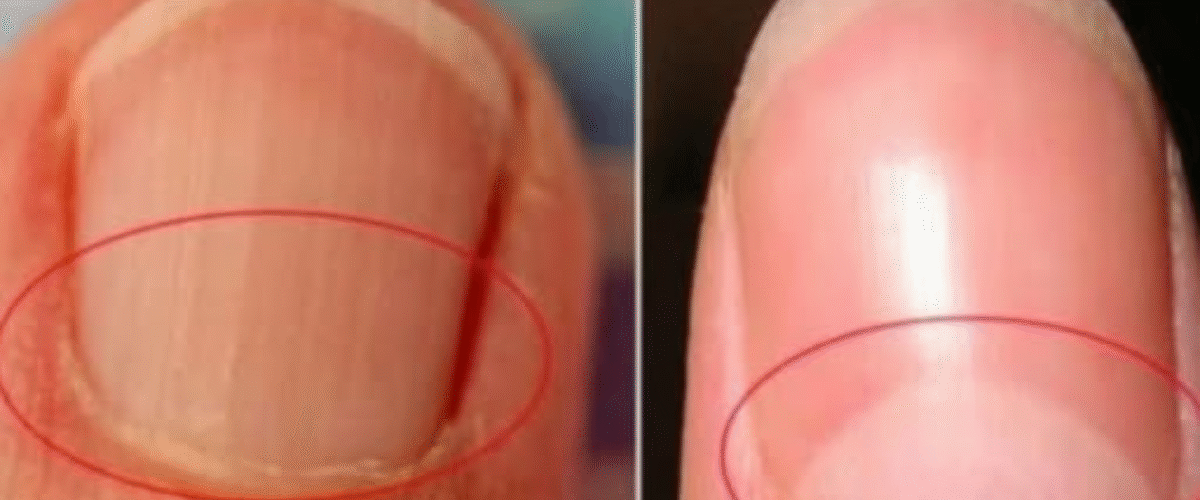
Der kleine, blasse, halbmondförmige Bereich an der Basis Ihrer Fingernägel – die sogenannte Lunula – bleibt oft unbemerkt. Dennoch fragen sich viele, ob Veränderungen an der Lunula ein Hinweis auf den allgemeinen Gesundheitszustand sein könnten.
Obwohl gesunde Nägel manchmal ein Hinweis auf allgemeines Wohlbefinden sein können, sollten Veränderungen sorgfältig und im Kontext interpretiert werden. Dieser Leitfaden erklärt, was die Lunula ist, warum sie von Person zu Person unterschiedlich aussieht und wann Sie wegen ihres Aussehens einen Arzt aufsuchen sollten.
Was ist die Lunula?
Der Begriff Lunula stammt aus dem Lateinischen und bedeutet „kleiner Mond“ und bezieht sich auf die sichelförmige Gestalt des Mondes. Sie ist der sichtbare Teil der Nagelmatrix – das Gewebe, das neue Nagelzellen produziert. Sie befindet sich direkt unter der Nagelhaut und erscheint als blasser, weißlicher Bogen.
Seine hellere Farbe kommt von seiner dicken Struktur, die die darunter liegenden Blutgefäße verbirgt und so einen Kontrast zum Rest des Nagels bildet.
Wo ist es am besten sichtbar?
Die Lunula ist normalerweise am Daumen am deutlichsten sichtbar, kann aber auch am Zeige- und Mittelfinger auftreten. An Ringfingern und kleinen Fingern ist sie oft weniger auffällig oder fehlt ganz. Die Sichtbarkeit kann aufgrund von Faktoren wie diesen variieren:
- Hautfarbe
- Alter
- Nageldicke
- Genetik
- Lichtverhältnisse
Laut der American Academy of Dermatology sind Abweichungen in Größe, Farbe und Form der Nägel – einschließlich der Lunula – normal und weisen nicht unbedingt auf gesundheitliche Probleme hin, sofern sie nicht mit anderen Symptomen einhergehen.
Ist es normal, kleine oder unsichtbare Lunulas zu haben? 
Ja. In vielen Fällen ist eine kleine oder versteckte Lunula völlig normal. Sie kann von der Nagelhaut verdeckt sein, insbesondere bei Kindern, älteren Menschen oder Personen mit kleineren Nagelbetten.
Unterschiede in der Sichtbarkeit der Lunula von einem Finger zum anderen – oder zwischen einzelnen Personen – sind häufig und normalerweise harmlos.
Wann Sie auf Lunula-Veränderungen achten sollten
Obwohl die meisten Abweichungen harmlos sind, können plötzliche oder weit verbreitete Veränderungen bemerkenswert sein, insbesondere wenn andere Symptome vorhanden sind. Einige Forscher vermuten Zusammenhänge mit bestimmten Erkrankungen, diese sollten jedoch ohne medizinische Untersuchung niemals als diagnostisch angesehen werden.
1. Verschwindende Lunulas
Eine deutliche Verringerung an mehreren Fingern kann mit Folgendem zusammenhängen:
- Vitamin B12 oder Eisenmangel
- Müdigkeit oder chronischer Stress
- Funktionsstörung der Schilddrüse (z. B. Hypothyreose)
2. Vergrößerte Lunula
Größere als normale Lunulas, die sich weiter nach unten auf der Nagelplatte erstrecken, können auftreten bei:
- Hyperthyreose
- Herz-Kreislauf-Stress
- Hohe Stoffwechselaktivität
3. Verfärbte Lunulas
Farbveränderungen sollten immer untersucht werden, insbesondere wenn die Lunula erscheint:
- Blau: möglicherweise niedriger Sauerstoffgehalt oder Kreislaufprobleme
- Rot oder Lila: mögliche Herz-Kreislauf-Probleme
- Grau: mögliche systemische Probleme oder, selten, Schwermetallbelastung
Diese Anzeichen sind am bedeutsamsten, wenn sie mit anderen Symptomen wie Müdigkeit, Atemproblemen oder Nageldeformationen einhergehen.
Was verursacht Lunula-Veränderungen?
Verschiedene Faktoren können das Aussehen der Lunula verändern, darunter:
- Nährstoffmangel (Biotin, Eisen, Vitamin B12)
- Stress und hormonelle Veränderungen
- Medizinische Erkrankungen (Schilddrüsen-, Herz- oder Lebererkrankungen)
- Alterung , die das Nagelwachstum verlangsamt
- Verletzung oder Trauma der Nagelmatrix
Für sich genommen sind Lunula-Veränderungen selten ein Grund zur Sorge.
Unterstützung gesunder Nägel und Lunulas
Starke und gesunde Nägel spiegeln oft das allgemeine Wohlbefinden wider. Laut Harvard Health Publishing kann eine gute Nagelgesundheit durch Folgendes aufrechterhalten werden:
- Eine ausgewogene Ernährung mit Eiweiß, Eisen, Zink und B-Vitaminen
- Ausreichend Flüssigkeitszufuhr zur Unterstützung der Nagel- und Hautfeuchtigkeit
- Praktizieren Sie eine sanfte Nagelpflege und vermeiden Sie aggressive Chemikalien oder grobe Maniküre
- Anwendung von Schutzmaßnahmen , wie etwa das Tragen von Handschuhen beim Reinigen oder bei der Verwendung von Reizstoffen
Wann Sie einen Arzt aufsuchen sollten
Sie sollten einen Fachmann aufsuchen, wenn Sie Folgendes bemerken:
- Plötzlicher Verlust oder Schrumpfung der Lunula an mehreren Fingern
- Deutliche Verfärbung (blau, rot oder grau)
- Rillen, Vertiefungen oder verdickte Nagelplatten
- Andere Symptome wie Müdigkeit, Kälteempfindlichkeit oder Haarausfall
Durch eine frühzeitige Untersuchung können zugrunde liegende Gesundheitsprobleme ausgeschlossen oder behandelt werden.
Zusammenfassung
Die Lunula – die halbmondförmige Ausbuchtung an der Basis Ihrer Nägel – ist ein normaler Bestandteil der Nagelanatomie. Ihre Größe, Form und Sichtbarkeit können von Person zu Person stark variieren und weisen in der Regel nicht auf eine Erkrankung hin.
Obwohl Veränderungen der Lunula manchmal mit gesundheitlichen Problemen in Zusammenhang stehen, sollten sie nicht allein als Grundlage für die Diagnose dienen. Am besten beobachten Sie allmähliche Veränderungen und suchen Sie einen Arzt auf, wenn Veränderungen neben anderen besorgniserregenden Symptomen auftreten.
If when you make love, your partner DOESN’T KISS YOU it’s because… See more
If your girlfriend turns away when you try to kiss her, it can be confusing and even hurtful. You may wonder if you’re doing something wrong, if you’re a bad kisser, or if there’s a deeper issue in your relationship. While it can feel unsettling, there are many possible explanations—most of which can be addressed with care, communication, and patience.
Below are ten common reasons why she may avoid kissing and what you can do about it.
1. Your Breath Isn’t Fresh 
Fresh breath plays a big role in attraction. If she notices unpleasant odors from your last meal, it may turn her off.
Fix it: Brush your teeth regularly, chew gum, or pop a mint before going in for a kiss. A little effort with oral hygiene can make a big difference.
2. One of You Has Chapped Lips 
Dry, cracked lips make kissing uncomfortable.
Fix it: Stay hydrated and use lip balm. If she struggles with chapped lips, consider gifting her a lip care set so she doesn’t feel self-conscious. You could even casually offer your lip balm and make it a playful moment.
3. She Doesn’t Like Your Kissing Technique 
Sometimes it’s about style—too much tongue, too much pressure, or even painful bites can turn kissing into something unpleasant.
Fix it: Relax, keep the tongue minimal at first, and follow her lead. Don’t be afraid to ask, “How do you like to be kissed?”
4. You Recently Argued or She Feels Disconnected 
Emotional distance can show up physically. If she avoids kissing, it may be her way of expressing dissatisfaction or hurt.
Fix it: Reflect on the state of your relationship. Start an open, non-blaming conversation about what’s missing and how you can both feel more connected.
5. She’s Stressed, Busy, or Upset 
When her mind is overloaded, kissing may not be a priority. This doesn’t necessarily mean there’s something wrong between you.
Fix it: Be emotionally supportive. Listen to her frustrations, validate her feelings, and show empathy. Strengthening emotional intimacy can naturally rekindle physical closeness.
6. She’s Anxious or Out of Practice
If you haven’t kissed in a while, she may feel self-conscious. For someone experiencing their first kiss, nervousness is natural.
Fix it: Be patient and reassuring. A genuine compliment like, “You’re a really good kisser,” can ease her anxiety and boost her confidence.
7. She Prefers a Casual Relationship Without Emotional Intimacy
For some, kissing feels more emotionally intimate than sex. She may avoid it if she sees your relationship as casual or “friends with benefits.”
Fix it: Talk openly about how she defines the relationship. Share how her actions make you feel and clarify both of your expectations moving forward.
8. She Thinks Kissing Implies Sex
She may worry that kissing will automatically lead to sex, especially if her sexual desire doesn’t match yours.
Fix it: Communicate clearly. Ask for consent before kissing, and reassure her that kissing doesn’t have to mean sex if she doesn’t want it.
9. She’s Uncomfortable with Public Displays of Affection 
If she pulls away in public, it might be about the setting, not you.
Fix it: Ask how she feels about PDA. Respect her boundaries and save the kisses for private moments if that makes her more comfortable.
10. She’s Simply Not a Fan of Kissing
Some people don’t enjoy kissing at all. This preference may be about personal comfort rather than anything you’re doing wrong.
Fix it: Ask what other types of affection she enjoys—like hugging or hand-holding. However, if kissing is very important to you, it’s worth considering whether this difference is a deal breaker.
Final Thoughts
Avoiding kisses doesn’t always signal rejection or trouble in your relationship. Often, it comes down to practical issues like fresh breath, stress, or mismatched expectations. The most important step is communication: gently bring up what you’ve noticed, listen without judgment, and express your needs honestly.
A healthy relationship balances both partners’ comfort levels, so working together to understand each other’s preferences can strengthen not just your kisses—but your connection as a whole.
Half of Japanese Companies Report Having an “Old Man Who Does Nothing,” Survey Finds
A recent survey by Tokyo-based consulting firm Shikigaku has shed light on a curious workplace phenomenon in Japan: the so-called “old man who does nothing.” According to the study, nearly 49 percent of employees in their 20s to 30s reported that their company had at least one older male colleague who seemed to contribute little to actual work.
A Common Workplace Observation
The phrase does not literally mean that these employees never work, but rather that they are perceived by younger colleagues as disengaged or unproductive. Respondents described behaviors such as taking frequent breaks, spending extended time chatting, browsing the internet instead of working, or staring blankly at their desks.
The survey focused on companies with over 300 employees, and all respondents were under the age of 40. This means the findings reflect the perceptions of younger generations in larger corporations, rather than being a complete picture of Japan’s workforce.
Cultural and Structural Roots
Experts suggest that Japan’s traditional seniority-based employment system may partly explain the phenomenon. In many firms, older employees retain their positions and salaries even if their responsibilities decrease over time. This system was originally designed to reward loyalty and long-term service, but it can result in a mismatch between pay, expectations, and output in today’s changing corporate environment.
The use of the Japanese term “ojisan” (middle-aged or older man) in the survey underscores that the label is more about perception than a fixed age group. What one worker sees as idleness may, in some cases, be tasks or roles that are less visible to younger colleagues.
Not Just a Joke
While the phrase “old man who does nothing” has been used lightheartedly in Japanese media, the survey points to deeper concerns about workplace productivity, generational differences, and corporate reform. Younger employees, who often face heavier workloads, may view the seeming inactivity of older colleagues as a sign of inefficiency or inequality.
At the same time, the results highlight the need for companies to better define roles, create opportunities for meaningful contributions at all career stages, and move away from outdated employment models that prioritize seniority over performance.
The Bigger Picture
Japan is already grappling with an aging workforce and declining population, making it more important than ever to harness the potential of older employees. While nearly half of younger workers say their companies have “old men who do nothing,” the challenge lies in transforming this perception—by providing clearer responsibilities, retraining opportunities, and creating intergenerational workplaces where experience and energy can complement one another.
9 Kinds of Touch Every Woman Secretly Craves

Touch is one of the most powerful forms of communication in love. Sometimes it says what words can’t. A brush of the hand, a lingering hug, or a playful squeeze can send a message louder than an entire paragraph.
For women, touch isn’t just physical. It carries meaning, emotion, and energy. The right kind of touch can calm her when she’s stressed, make her feel adored when she’s uncertain, or ignite passion when the timing is right. And while every woman is unique, there are certain kinds of touch almost all women secretly crave, even if they never say it out loud.
Here are nine of them.
1. The Forehead Kiss
It feels soft, simple, and innocent, yet it holds incredible power. A forehead kiss tells her she’s safe. It whispers,“I care about you, I respect you, I’m here for you.”More than passion, this touch is about love that runs deep and steady.
2. The Hand Hold
Public or private, hand holding is a gesture every woman treasures. Out in the world, it says,“I’m proud to be with you.”In quiet moments, it’s a promise of closeness. Holding her hand reassures her that no matter what, you’re by her side.
3. The Back Hug
There’s something playful and protective about hugging her from behind. It catches her by surprise and makes her feel wanted. This kind of hug says,“I couldn’t resist pulling you closer.”It blends affection with a spark of passion, and that’s why women secretly love it.
4. The Gentle Brush
A fingertip trailing along her arm, her back, or her neck can make her shiver in the best way. It’s subtle, yet it says,“I’m thinking of you, even in this small moment.”These gentle touches build anticipation, reminding her she’s always on your mind.
5. The Long Hug
Quick hugs are nice, but long hugs are unforgettable. A hug that lingers, where she can hear your heartbeat and feel your arms tighten, melts stress away instantly. It’s comfort, safety, and love all rolled into one.
6. The Face Caress
When you hold her face in your hands, she feels truly seen. It’s tender, it’s intimate, and it makes her feel like she’s the only person in the room. For many women, this is the kind of touch that speaks straight to the soul.
7. The Waist Pull
There’s confidence in the way a man pulls a woman in by the waist. It’s bold yet protective, a gesture that says,“You’re mine, and I want you close.”This touch reminds her of passion and playfulness, keeping the spark alive.
8. The Hair Tuck
Moving her hair away from her face or tucking it gently behind her ear may seem small, but it feels thoughtful and deeply affectionate. It’s a tender gesture that shows attention, care, and connection.
9. The Subtle Thigh Touch on a Date
This is the kind of touch that feels both public and private at the same time. You’re sitting together, maybe in a restaurant or at the movies, and his hand rests gently on your thigh. It’s not rushed, not forced, just steady and warm. To her, it’s thrilling. It makes her feel desired without anyone else noticing. That quiet intimacy transforms an ordinary date into a moment she’ll remember.
Final Thought
Touch isn’t about how long or how often. It’s about meaning. The sweetest touches are the ones that make her feel safe, seen, and wanted. Women crave gestures that are intentional, not accidental, filled with love rather than routine.
So if you want her to feel cherished, don’t just tell her. Show her , through the touches that speak to her heart.