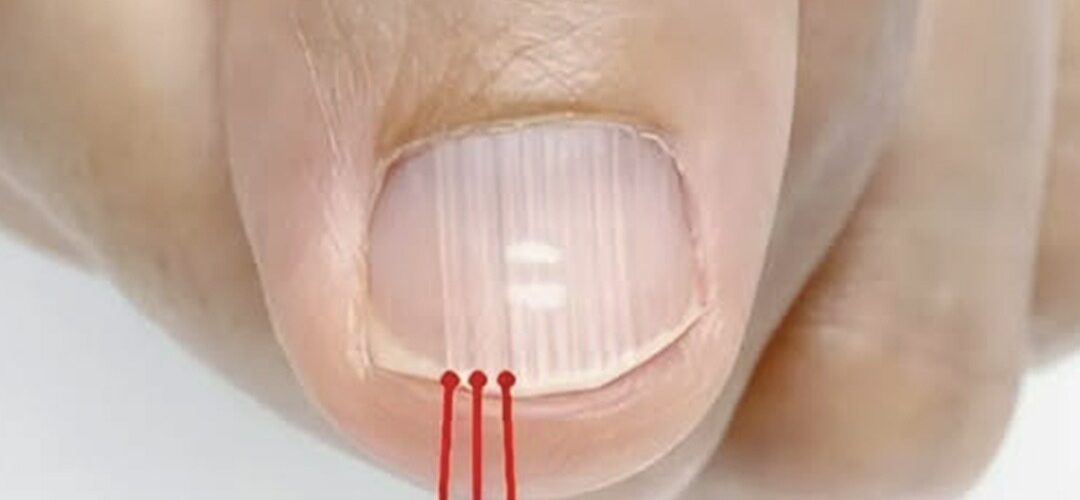
Haben Sie dünne, vertikale Rillen bemerkt, die von der Basis bis zur Spitze Ihrer Nägel verlaufen?
Du bist nicht allein.
Diese vertikalen Linien – auch Längsrillen der Nägel genannt – kommen unglaublich häufig vor, insbesondere wenn wir älter werden.
Und obwohl Sie vielleicht innehalten und sich fragen: „Ist das normal?“ , lautet die Antwort in den meisten Fällen:
✅ Ja – normalerweise besteht kein Grund zur Sorge.
Aber könnten sie auch etwas über Ihre Gesundheit aussagen? Lassen Sie uns untersuchen, was Nagelrillen verursacht, wann sie auf ein zugrunde liegendes Problem hinweisen können und wie Sie Ihre Nägel pflegen – damit Sie beruhigt sein können.
🧠 Was verursacht vertikale Linien auf den Nägeln?
Vertikale Rillen sind erhabene Linien, die auf der Nagelplatte auf und ab verlaufen. Sie unterscheiden sich von horizontalen Linien ( Beau-Linien ), die auf eine Krankheit oder ein Trauma hinweisen können.
Häufigste Ursachen:
- ✅ Alterung – Der Hauptgrund: Das Nagelwachstum verlangsamt sich, die Oberfläche wird uneben.
- ✅ Trockene Nägel – Feuchtigkeitsmangel führt zu Brüchigkeit und Rillen.
- ✅ Genetik – Bei manchen Menschen entwickeln sich die Rillen von Natur aus früher.
- ✅ Leichtes Trauma – Wiederholtes Anstoßen oder Beanspruchen der Nägel (Tippen, Gartenarbeit).
📊 Bis zu 90 % der Menschen über 50 haben ein gewisses Maß an Nagelrillen – das ist ein normaler Teil des Alterns.
🟢 Wenn vertikale Linien normal sind
Sie müssen sich wahrscheinlich keine Sorgen machen, wenn:
- Die meisten Nägel haben Rillen.
- Die Nägel sind rosa, an der Basis glatt und schmerzfrei.
- Die Änderungen erfolgen schrittweise.
- Sie sind über 40 (natürlicher Alterungsprozess).
✅ Betrachten Sie sie als Fältchen auf Ihren Nägeln – ein Zeichen der Zeit, kein Problem.
🟡 Wann Sie aufpassen sollten: Mögliche gesundheitliche Hinweise
Obwohl vertikale Furchen normalerweise harmlos sind, können sie manchmal mit Grunderkrankungen in Verbindung gebracht werden – insbesondere, wenn sie mit anderen Veränderungen einhergehen.
1. Nährstoffmangel
- Eisenmangel (Anämie): Kann zu brüchigen oder löffelförmigen Nägeln führen, nicht nur zu Rillen.
- Biotin- oder Vitamin-B12-Mangel: Kann zu schwachen, splitternden Nägeln führen.
✅ Rillen allein sind kein sicheres Anzeichen für einen Mangel.
2. Schuppenflechte oder Ekzem
Hauterkrankungen, die die Nagelmatrix betreffen, können Folgendes verursachen:
- Pitting (kleine Dellen)
- Verdickung
- Gelbliche Verfärbung
- Onycholyse (Nagellifting)
3. Schilddrüsenerkrankungen
Sowohl eine Hypo- als auch eine Hyperthyreose können das Nagelwachstum beeinträchtigen und zu Folgendem führen:
- Brüchige, splitternde Nägel
- Langsames Wachstum
- Trockene Nagelhaut
4. Chronische Krankheit oder verminderter Blutfluss
Erkrankungen wie Diabetes oder eine schlechte Durchblutung können das Nagelwachstum verlangsamen und die Beschaffenheit beeinträchtigen.
🔴 Wann Sie einen Arzt aufsuchen sollten
Suchen Sie einen Arzt auf, wenn Sie Folgendes bemerken:
- Tiefe Rillen oder plötzliche Veränderungen der Nagelstruktur
- Verfärbungen (gelb, braun, schwarz)
- Schmerzen, Schwellungen oder Ablösung vom Nagelbett
- Grübchenförmige, verdickte oder brüchige Nägel
- Rillen nur auf einem Nagel (könnte ein Trauma oder ein Wachstumsproblem sein)
🩺 Ein Dermatologe kann Ihre Nägel untersuchen und Schuppenflechte, Pilzinfektionen oder andere Erkrankungen ausschließen.
✅ So pflegen Sie Rillen und halten Ihre Nägel gesund
- Befeuchten Sie Nägel und Nagelhaut – Verwenden Sie täglich Handcreme oder Öle (Jojoba, Mandel).
- Verwenden Sie einen weichen Nagelpolierer – Glätten Sie die Rillen sanft, polieren Sie nicht zu stark.
- Tragen Sie Handschuhe – beim Putzen, bei der Gartenarbeit oder beim Abwaschen.
- Bleiben Sie hydriert – Unterstützt die Gesundheit von Nägeln und Haut.
- Ernähren Sie sich ausgewogen – reich an Proteinen, Biotin, Eisen und Vitaminen.
🛑 Vermeiden Sie aggressive Nagelbehandlungen oder Acryl, die die Nägel austrocknen.
❌ Die Mythen entlarven
- ❌ „Vertikale Linien bedeuten Lebererkrankung“ → Kein wissenschaftlicher Zusammenhang.
- ❌ „Sie weisen einen Vitaminmangel auf“ → Nicht zuverlässig; Blutuntersuchungen sind erforderlich.
- ❌ „Sie sind ein Zeichen für Krebs“ → Nur wenn andere schwerwiegende Symptome vorliegen.
- ❌ „Sie können Rillen mit Nahrungsergänzungsmitteln ‚heilen‘“ → Sofern kein Mangel vorliegt, helfen Nahrungsergänzungsmittel nicht.
✨ Abschließende Gedanken
Diese vertikalen Linien auf Ihren Nägeln?
Sie sind wahrscheinlich nur ein normaler Teil des Älterwerdens – kein Warnzeichen.
Ihr Körper verändert sich.
Ihre Haut bekommt Falten.
Ihre Nägel entwickeln Rillen.
Und das ist okay.
Sollten Sie sich jedoch einmal unsicher sein oder andere Veränderungen bemerken, raten Sie nicht. Fragen Sie einen Arzt.
Denn wahre Gesundheit hat nichts mit Perfektion zu tun. Es geht darum, den eigenen Körper zu verstehen, auf seine Signale zu hören und zu wissen, wann man Hilfe in Anspruch nehmen muss.
Und manchmal ist die beste Antwort einfach:
👉 „Das bist einfach du – alternd, lebend und immer noch stark.“
Most People Don’t Realize What a Mouth Piercing Means … Check 1st comment
Tongue piercings have long intrigued society—not only as bold fashion statements but also as deeply personal and cultural expressions. While today they are often seen as edgy or unconventional, their history reaches far beyond modern trends. From ancient ceremonial practices to present-day acts of self-expression, the reasons behind this form of body modification are as diverse as the people who choose them. 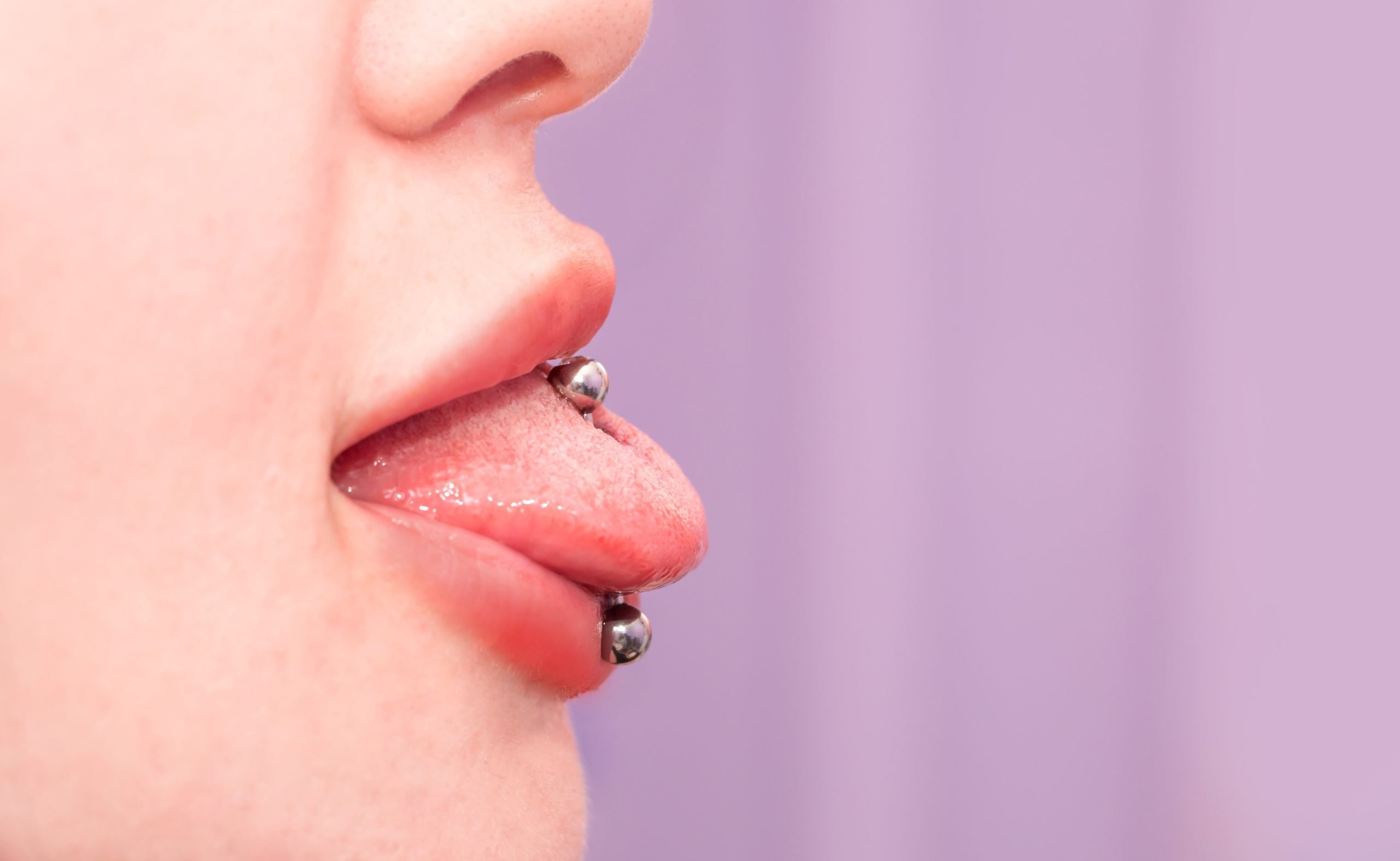
This article explores the history, cultural significance, and personal meanings behind tongue piercings—grounded in reliable sources and free from stereotypes. Whether you’re considering one yourself or simply curious, this guide offers a respectful, fact-based look at what tongue piercings truly represent.
What Is a Tongue Piercing? 
A tongue piercing typically involves placing a barbell-shaped piece of jewelry vertically through the center of the tongue. According to the American Dental Association (ADA), this type of oral piercing has grown in popularity since the late 20th century, especially among younger adults seeking individuality or marking milestones.
However, tongue piercings also require careful hygiene and dental monitoring because of possible risks, including infection, chipped teeth, and gum damage.
Ancient Cultural Roots: Rituals and Symbolism
Long before tongue piercings became associated with fashion or rebellion, they held sacred meaning in several ancient cultures. Historical records show that the Aztecs and Mayans practiced tongue piercing as part of spiritual rituals.
According to The Encyclopedia of Body Adornment by Margo DeMello, these piercings were acts of penance or ways to induce altered states of consciousness during religious ceremonies. Shamans or priests would pierce their tongues to draw blood as an offering to the gods, believing it created a channel of communication with the spiritual world.
For these civilizations, tongue piercings were symbols of devotion, transformation, and connection to higher powers—meanings that are often overlooked in modern interpretations.
A Resurgence in Modern Subcultures
In Western societies, tongue piercings rose in popularity during the late 1980s and 1990s, particularly within punk, goth, and alternative subcultures. Research in The Journal of Contemporary Ethnography notes that body modification served as a symbol of non-conformity and identity formation among youth movements of the time.
Unlike facial piercings, tongue piercings offered a more discreet form of self-expression. They allowed wearers to maintain professional appearances while privately embracing individuality or rebellion. This balance—hidden yet powerful—made them especially appealing.
Misconceptions in Pop Culture 
Pop culture has often associated tongue piercings with provocative behavior, but these claims are oversimplified and rarely supported by evidence. Body sociology experts, such as Dr. Victoria Pitts-Taylor, emphasize that such assumptions reflect cultural bias rather than the actual motivations of individuals.
In reality, the decision to get a tongue piercing can come from a wide range of reasons: aesthetics, heritage, self-discovery, or simply curiosity. Reducing it to one stereotype erases the diverse and valid stories behind the choice.
Personal Meaning: A Journey of Self-Expression
For many people, a tongue piercing is more than just an accessory—it represents a personal journey. The process of getting pierced, enduring discomfort, and completing healing can feel like a rite of passage, symbolizing independence, transformation, or even healing.
A 2017 study in the journal Body Image found that individuals who undergo body modification often report improved self-esteem, greater body autonomy, and a sense of empowerment. Tongue piercings, in particular, are empowering because they are subtle—chosen primarily for the wearer, not for outside attention.
This challenges the stereotype that all body modifications are for show. In many cases, they are quiet affirmations of self-worth, courage, and control over one’s body.
Health and Safety Considerations
Despite their meaning, tongue piercings come with medical considerations. The ADA warns of potential risks such as:
- Infection due to high bacteria levels in the mouth
- Damage to teeth or dental work, including chipping or cracking
- Gum recession caused by constant contact with metal jewelry
- Speech or swallowing difficulties during the healing phase
To minimize risks, experts recommend:
- Choosing a licensed, professional piercer
- Using high-quality materials like surgical-grade stainless steel
- Maintaining excellent oral hygiene
- Removing jewelry during contact sports or high-impact activities
Regular dental check-ups are also advised to catch issues early.
Respecting Cultural and Personal Boundaries
Like all forms of body modification, tongue piercings deserve respect. Understanding their origins helps foster cultural appreciation and avoids harmful stereotypes. Whether chosen for heritage, spirituality, rebellion, or aesthetics, these piercings carry personal stories that should be honored without judgment.
Not all interpretations carry equal weight—some are myths, others are rooted in history. By focusing on verified cultural and medical sources, we can better appreciate the real significance of this practice.
Final Thoughts: More Than Meets the Eye
Tongue piercings may seem small, but their meaning can be profound. From sacred rituals in ancient civilizations to modern acts of self-expression, they represent identity, strength, and autonomy.
In a world quick to judge by appearances, it is important to remember that each piercing may carry a unique story. The next time you notice a tongue piercing, consider the layers of history, meaning, and personal growth it might symbolize.
Far from being just a trend, it can embody transformation, healing, and the joy of being unapologetically oneself.
The Square Counting Puzzle That Tricks Everyone 🟦🧠
At first glance, this puzzle looks like a simple set of lines. The top grid shows two squares across and two squares down, and it mysteriously “equals 5.” The larger grid below shows three by three… and the challenge asks: what’s the answer?
The trick is not arithmetic — it’s about counting how many squares are hidden inside the pattern.
How It Works
In the first grid (2×2):
- There are 4 small squares.
- Plus 1 big square that frames them all.
That gives us a total of 5 squares. Mystery solved.
Now for the second grid (3×3):
- You can see 9 small squares (1×1).
- Then, there are 4 medium squares (2×2).
- Finally, the 1 largest square (3×3).
When you add them up: 9 + 4 + 1 = 14.
So the correct answer to the puzzle is 14.
Why People Get Tricked
Our brains are quick to see the obvious small boxes but often miss the larger “hidden” ones. That’s why many people guess too low at first. It’s a neat example of how perception can overlook simple patterns hiding in plain sight.
Fun Fact Takeaway
This little puzzle is less about math and more about attention to detail. It shows that sometimes the hardest problems aren’t about solving equations — they’re about looking closer. Next time you see a puzzle like this, remember: count carefully, because there’s always more than meets the eye.
Why Do Some Men Keep Their Pinky Fingernails Long?
A Curious Tradition with Deep Cultural and Historical Roots
At first glance, it might seem like an insignificant detail—just one fingernail, usually the pinky, grown longer than the rest. Yet across different cultures and historical periods, this small act has carried surprising meaning. From power and intellect to practicality and even rebellion, the long pinky nail has been far more than a fashion choice—it is a layered symbol of status, culture, and identity.
A Status Symbol in Ancient Civilizations
In ancient China, the long pinky nail was a mark of privilege and refinement. Aristocrats and intellectuals, unburdened by manual labor, could afford to let their nails grow long. A single extended nail—often the pinky—became a subtle yet powerful declaration of wealth and social class.
Some went further, protecting their nails with ornate sheaths of gold or jade. These accessories were not just decoration but emblems of superiority. Even today, in parts of China, particularly among older generations or professions like taxi drivers, the long pinky nail is still worn as a quiet sign of pride or aspiration.
Beyond Class: A Symbol of Intellect
The meaning of the nail extended beyond wealth. In both Chinese and Greek traditions, a long pinky nail was associated with scholarship and intellectual pursuits. Scholars and poets sometimes grew their pinky nail long as a reflection of their devotion to ideas rather than physical work.
Like spectacles or a fountain pen, the nail symbolized thoughtfulness and refinement. It was a silent but expressive statement of one’s inner life.
Practical Uses: Utility Over Symbolism
Outside of symbolism, practicality also explains the tradition. In countries like Turkey and India, a long pinky nail was often used as a handy tool. From peeling fruit to scratching off labels or opening wrappers, the nail served everyday purposes.
In this way, it shifted from cultural marker to practical instrument, valued for its usefulness in daily tasks.
From Counterculture to Controversy
By the 20th century, the long pinky nail took on new and sometimes controversial meanings. In the 1970s and 1980s, particularly in the West, it became associated with subcultures like glam rock or hip-hop. More controversially, it was linked—fairly or unfairly—with recreational drug use, as the nail could be used as a makeshift tool for handling substances.
This association gave the nail a rebellious edge, sometimes overshadowing its historical symbolism. Yet for others, it was embraced simply as a style choice—a personal expression rather than a cultural or functional statement.
A Fluid Tradition: Different Meanings in Different Contexts
Perhaps the most fascinating aspect of the long pinky nail is its fluidity. It can signify nobility, intellect, utility, rebellion, or style—depending entirely on time and place.
This fluidity also invites misunderstandings. One person may wear it as a nod to cultural heritage or as a practical tool, while another may misinterpret it as a symbol of something negative. Understanding its varied roots helps to foster empathy rather than judgment.
The Pinky Nail as a Personal Statement
Ultimately, the long pinky nail is deeply personal. For some, it honors tradition. For others, it’s a practical tool, a marker of rebellion, or simply a stylistic flourish.
What matters is that this small detail tells a big story. Whether it whispers of ancient dynasties, reflects everyday convenience, or speaks through modern subcultures, the long pinky nail remains a striking example of how something so small can carry such rich meaning.