
Testosteron ist eines der wichtigsten Hormone für Männer. Es beeinflusst Energie, Muskelwachstum, Fettverteilung, Libido und sogar die Stimmung. Leider sinkt der Testosteronspiegel mit zunehmendem Alter – ab dem 30. Lebensjahr sinkt er jährlich um etwa 1 % . Die gute Nachricht: Sie brauchen nicht immer Tabletten oder Spritzen, um einen gesunden Testosteronspiegel zu erhalten. Ihre Ernährung spielt eine entscheidende Rolle.
Lassen Sie uns 11 wirkungsvolle Lebensmittel aufschlüsseln , die dabei helfen können, den Testosteronspiegel auf natürliche Weise zu steigern und Ihren Hormonhaushalt im Gleichgewicht zu halten.
1. Eier – Das komplette Proteinpaket
Eigelb ist reich an Vitamin D, Cholesterin und Omega-3-Fettsäuren. Cholesterin ist ein Baustein für die Testosteronproduktion. Der tägliche Verzehr von 1–2 ganzen Eiern kann den Hormonhaushalt unterstützen, ohne bei den meisten Männern den Cholesterinspiegel zu erhöhen.
2. Austern – Der Zinkkönig
Austern sind eine der reichsten Zinkquellen, ein Mineral, das für Testosteron entscheidend ist. Ein niedriger Zinkspiegel wird mit reduziertem Testosteron und schlechter Spermiengesundheit in Verbindung gebracht. Bereits sechs Austern decken über 300 % des täglichen Zinkbedarfs .
3. Thunfisch – Vitamin-D-Kraftpaket
Thunfisch, Lachs und Sardinen sind reich an Vitamin D, das stark mit dem Testosteronspiegel zusammenhängt. Eine Portion Thunfisch kann Ihren täglichen Vitamin-D-Bedarf decken und liefert zudem mageres Protein für den Muskelaufbau.
4. Spinat – Popeyes Geheimwaffe
Spinat und anderes Blattgemüse sind reich an Magnesium. Studien zeigen, dass Magnesium den freien Testosteronspiegel bei Männern erhöht. Geben Sie Ihren Salaten oder Smoothies täglich Spinat, Grünkohl oder Mangold hinzu.
5. Rindfleisch – testosteronfreundliche Fleischstücke
Mageres Rindfleisch liefert Eiweiß, Eisen und Zink – alles wichtige Nährstoffe für die Hormonproduktion. Wählen Sie Fleisch von grasgefütterten Tieren, da diese mehr Omega-3-Fettsäuren und gesunde Fette enthalten, die den Testosteronspiegel unterstützen.
6. Granatapfel – Die „Testosteronfrucht“
Granatapfelsaft konnte in einigen Studien den Testosteronspiegel um bis zu 24 % erhöhen . Er reduziert außerdem Cortisol (das Stresshormon), das sonst den Testosteronspiegel senken kann.
7. Knoblauch – Natürlicher Hormonverstärker
Knoblauch enthält Allicin, eine Verbindung, die Cortisol reduziert. Weniger Cortisol bedeutet, dass sich Ihr Körper mehr auf die Testosteronproduktion konzentrieren kann. Verwenden Sie täglich Knoblauch zum Kochen, um Geschmack und Hormonhaushalt zu verbessern.
8. Ingwer – wissenschaftlich belegt
Ingwer wird seit Jahrhunderten als natürliches Stärkungsmittel verwendet. Moderne Studien zeigen, dass die tägliche Einnahme von Ingwer den Testosteronspiegel um bis zu 17 % erhöhen und die Spermiengesundheit verbessern kann.
9. Nüsse – Gesunde Fette für Hormone
Walnüsse, Mandeln und Paranüsse liefern gesunde Fette, Selen und Zink. Diese Nährstoffe sind wichtig für Testosteron und die allgemeine reproduktive Gesundheit. Schon eine Handvoll gemischter Nüsse täglich kann einen Unterschied machen.
10. Avocados – Gute Fette, gute Hormone
Avocados sind reich an einfach ungesättigten Fettsäuren, Vitamin B6 und Folsäure – allesamt wichtige Bestandteile der Hormonregulation. Avocados unterstützen die Testosteronproduktion und fördern gleichzeitig die Herzgesundheit.
11. Zwiebeln – Überraschende Testosteronhilfe
Zwiebeln sind vielleicht nicht selbstverständlich, aber Studien deuten darauf hin, dass sie den Testosteronspiegel deutlich steigern und gleichzeitig die antioxidative Aktivität im Körper verbessern können. Frischer Zwiebelsaft oder das Hinzufügen roher Zwiebeln zu Mahlzeiten können helfen.
Lifestyle-Tipps zur natürlichen Steigerung des Testosteronspiegels
Vergessen Sie neben diesen Lebensmitteln nicht die Grundlagen:
- Treiben Sie regelmäßig Sport (insbesondere Krafttraining und HIIT).
- Sorgen Sie für ausreichend Schlaf (7–8 Stunden pro Nacht).
- Reduzieren Sie Stress (chronischer Stress erhöht den Cortisolspiegel, was den Testosteronspiegel senkt).
- Halten Sie ein gesundes Gewicht (überschüssiges Körperfett trägt zu einem Hormonungleichgewicht bei).
✅ Schlusswort : Die richtige Ernährung in Kombination mit einem gesunden Lebensstil kann den Testosteronspiegel auf natürliche Weise erhöhen. Statt auf schnelle Lösungen zu setzen, sollten Sie sich auf langfristige Gewohnheiten konzentrieren, die Ihre Hormone, Ihre Energie und Ihre Männlichkeit stärken.
3 Colors to Avoid at a Funeral: A Guide to Respectful Attire
When we attend a funeral or memorial service, our presence is an act of love and solidarity.
And just as words matter, so does what we wear.
Clothing at a funeral isn’t about fashion — it’s a quiet expression of respect, sympathy, and support for grieving families. The right outfit helps you blend in with the solemn mood, allowing focus to remain where it belongs: on honoring a life and comforting those left behind.
While traditions vary across cultures and generations, certain colors are widely seen as inappropriate for mourning because they contrast with the tone of grief and reflection.
Let’s explore three colors to avoid at a funeral, why they may be disruptive, and what respectful alternatives you can choose instead — so you can dress with dignity and care.
🌑 Why Attire Matters at a Funeral
Funerals are deeply emotional events — often one of the last times loved ones gather to say goodbye.
Your clothing sends a subtle message:
“I am here for you.”
“This moment matters.”
“I honor your loss.”
For older generations, especially, traditional funeral attire reflects values like humility, decorum, and respect.
But even today, dressing appropriately shows emotional intelligence — not conformity.
So what should you avoid?
Here are three colors that may unintentionally stand out — and what to wear instead.
❌ 1. Bright White (in Western Cultures)
Why to Avoid:
In many Western cultures, white is associated with weddings, celebrations, and new beginnings — the opposite of mourning.
Wearing bright white (especially head-to-toe) can appear celebratory or draw attention away from the family.
💡 Note: This differs in many Eastern traditions — see “Cultural Considerations” below.
✅ Appropriate Alternatives:
- Soft gray
- Charcoal or navy tones
- Muted black with subtle texture
📌 Tip: If wearing off-white or cream, keep it minimal and paired with darker layers.
❌ 2. Vibrant Red
Why to Avoid:
Red symbolizes passion, energy, and celebration in many cultures. In a funeral setting, bold red clothing — especially full dresses or suits — can feel jarring or overly dramatic.
Even red accessories (like shoes or scarves) can draw unwanted attention if too flashy.
✅ Appropriate Alternatives:
- Deep burgundy or maroon (in some cultures, this is acceptable)
- Dark plum or eggplant
- Neutral tones with a small hint of color in a tie or pin
💡 Use red only as a subtle tribute — such as a lapel flower for someone who loved roses.
❌ 3. Neon or Fluorescent Colors
Why to Avoid:
Colors like neon pink, electric yellow, lime green, or hot orange are eye-catching by design.
At a funeral, they risk:
- Distracting others during moments of silence
- Appearing disrespectful, even if unintentional
- Drawing photos toward you instead of the casket or speaker
These shades simply don’t align with the quiet dignity of the occasion.
✅ Appropriate Alternatives:
- Muted earth tones (olive, taupe, slate blue)
- Classic black, gray, or navy
- Subtle patterns or textures (pinstripes, herringbone)
👗 Pro Tip: When in doubt, lean toward simplicity. A well-fitted dark suit or modest dress always honors the moment.
🌍 Cultural Considerations
Funeral customs vary widely around the world. What’s inappropriate in one culture may be expected in another:
| Western (U.S., Europe) | Black or dark neutral tones |
| Hindu Traditions | White (worn by mourners) |
| Buddhist Ceremonies | White or unbleached cloth (symbolizing purity) |
| Chinese Funerals | White or dark blue; red is strictly avoided |
| Ghanaian & Nigerian Traditions | Families may wear custom-printed fabrics in vibrant colors as tribute |
✅ Always consider the family’s cultural or religious background when choosing attire.
When unsure, ask quietly or follow the lead of close family members.
👔 Final Tips for Respectful Funeral Attire
| Wear modest, conservative clothing | Wear revealing outfits or loud prints |
| Choose neutral or dark tones | Wear party-style dresses or flashy jewelry |
| Keep accessories simple | Wear sunglasses indoors or hats (unless religious) |
| Dress slightly more formally than you think needed | Underdress in jeans or sneakers (unless specified) |
🕯️ When in doubt, err on the side of simplicity.
Final Thoughts
You don’t need to make a statement at a funeral.
Your presence already says enough.
By choosing clothing that reflects the gravity of the moment, you show empathy without words.
So before you leave home… pause. Look in the mirror. And ask:
“Does my outfit honor this person?”
Because real respect isn’t loud. It’s quiet. It’s kind. And it begins with the smallest choices.
And that kind of care? It stays with grieving hearts long after the service ends.
The Noni Plant: A Powerful Remedy for Many Ailments
The Noni plant (Morinda citrifolia), often called the “miracle fruit,” has been used for centuries in Polynesian, Asian, and Caribbean traditional medicine. Known for its distinct smell and bitter taste, this tropical plant hides an incredible range of healing properties that modern science is beginning to validate. From boosting immunity to easing chronic pain, the Noni plant is emerging as a natural powerhouse for overall health.
🌿 What Is the Noni Plant?
The Noni plant grows mainly in tropical regions like Tahiti, India, and Southeast Asia. Its oval-shaped fruits, leaves, and roots are all used for medicinal purposes. While the fruit’s strong odor has earned it nicknames like “cheese fruit,” its nutrient profile is anything but unpleasant—it’s loaded with vitamins, minerals, antioxidants, and phytonutrients.
💪 Key Health Benefits of Noni
1. Boosts Immune Function
Noni juice contains powerful antioxidants such as vitamin C, beta-carotene, and flavonoids, which strengthen your immune system and help your body fight infections. Regular consumption of Noni can help protect against colds, flu, and even chronic inflammation.
2. Supports Digestive Health
Traditional healers have long used Noni to improve digestion. The plant’s natural enzymes aid in nutrient absorption, while its antibacterial compounds help balance gut flora and prevent digestive disorders such as bloating and constipation.
3. Relieves Pain and Inflammation
Noni is a natural anti-inflammatory remedy. Studies suggest that it works similarly to certain pain-relief medications but without harmful side effects. It’s often used for arthritis, joint pain, and muscle soreness, making it a favorite among people with chronic pain conditions.
4. Enhances Skin Health
Noni’s antioxidant and antibacterial properties make it excellent for skin health. It can help reduce acne, eczema, and signs of aging. Applying Noni extract or consuming Noni juice may also promote faster wound healing and protect the skin from UV damage.
5. Supports Heart and Circulatory Health
Regular Noni consumption may help lower bad cholesterol (LDL) and regulate blood pressure. Its natural compounds improve blood circulation and protect blood vessels from oxidative stress, reducing the risk of heart disease.
6. Improves Energy and Mental Clarity
Many people drink Noni juice for a natural energy boost. Its nutrients help improve oxygen flow to the brain and muscles, promoting better focus, alertness, and stamina—without caffeine.
🌸 How to Use Noni
Noni is most commonly consumed as juice, but you can also use it in capsules, powders, or teas. The fruit can be fermented or mixed with honey or other juices to make it more palatable. Traditionally, the leaves are boiled into tea or applied as a poultice to soothe inflamed skin.
Recommended dosage:
- Juice: 30–60 ml per day (preferably on an empty stomach)
- Powder: 1 teaspoon mixed in water or smoothies
- Capsules: Follow manufacturer’s directions
⚠️ Precautions and Side Effects
While Noni is generally safe, people with kidney problems or high potassium levels should consult a doctor before using it, as Noni contains significant potassium. Pregnant or breastfeeding women should also seek medical advice before consumption.
🌺 Final Thoughts
The Noni plant is more than just a tropical curiosity—it’s a natural healer backed by both tradition and science. Whether you’re seeking a stronger immune system, pain relief, or better skin, this fruit offers a holistic, natural solution. Including Noni in your daily wellness routine could help you feel healthier, more energized, and more balanced from the inside out.
How to Get Rid of Intestinal Parasites (Recipe with Clove and Flax Seeds)
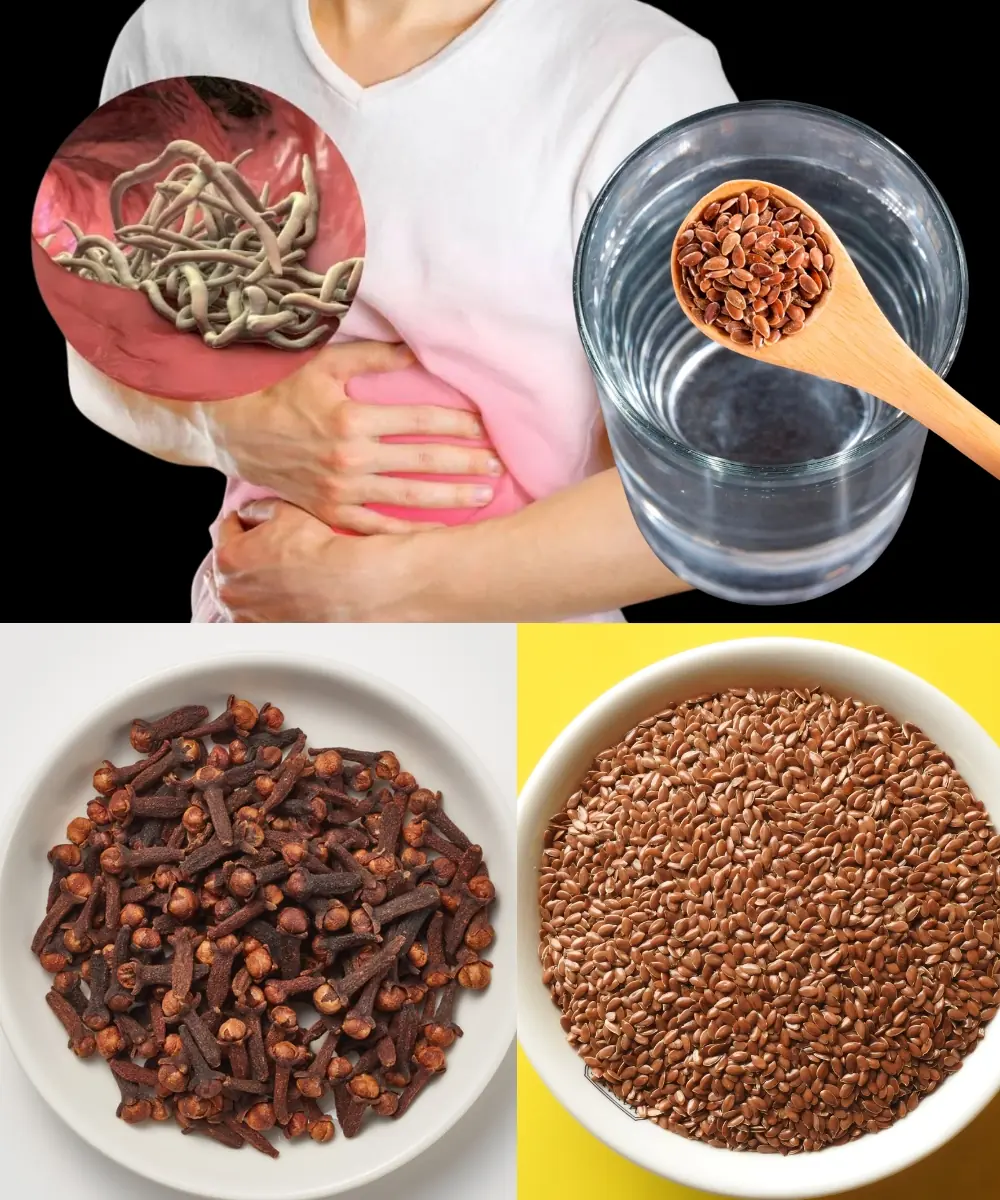
Intestinal parasites are an often-overlooked health concern that can quietly wreak havoc on your body. From nagging bloating and stomach cramps to unexplained fatigue and weight loss, these tiny invaders can cause big problems if left untreated.
The good news? Nature has given us powerful tools to fight back. Two simple ingredients—cloves and flax seeds—have been traditionally used to help cleanse the digestive tract, remove parasites, and restore gut balance.
In this guide, we’ll dive into what intestinal parasites are, why cloves and flax seeds work so well, and exactly how to make this natural parasite cleanse at home.
What Are Intestinal Parasites?
Intestinal parasites are organisms that live inside the human body and survive by stealing nutrients from the intestines. They can enter through:
- Contaminated food or water
- Poor hygiene practices
- Contact with infected individuals
Some of the most common intestinal parasites include:
- Roundworms
- Tapeworms
- Giardia
- Pinworms
Symptoms of Intestinal Parasites
If you have intestinal parasites, you might experience:
- Persistent abdominal pain
- Gas and bloating
- Alternating diarrhea and constipation
- Sudden weight loss
- Low energy and fatigue
⚠️ Always consult with a healthcare professional for proper diagnosis. But for mild cases, many people turn to natural remedies for extra support.
Why Use Clove and Flax Seeds?
🌿 Clove (Syzygium aromaticum)
Clove isn’t just a warming spice for holiday recipes—it’s a natural powerhouse. Thanks to eugenol, its main active compound, clove has been shown to:
- Kill parasites and prevent their reproduction
- Reduce gut inflammation
- Support overall digestive health
🌱 Flax Seeds (Linum usitatissimum)
Tiny but mighty, flax seeds are loaded with fiber, omega-3 fatty acids, and lignans. These nutrients:
- Improve bowel regularity (helping to “flush out” parasites)
- Support detoxification
- Calm irritated intestines
👉 Together, cloves and flax seeds create a synergistic effect: one attacks the parasites, while the other sweeps them out.
Recipe: Clove and Flax Seed Parasite Cleanse
Ingredients:
- 1 teaspoon ground cloves
- 1 tablespoon ground flax seeds
- 1 glass (8 oz) warm water
Instructions:
- Grind if needed: Use a coffee grinder to powder whole cloves and flax seeds for maximum freshness.
- Mix: Stir 1 tsp ground cloves + 1 tbsp ground flax seeds into warm water.
- Drink: Consume on an empty stomach in the morning.
- Repeat: Continue daily for 7 days, then pause for a week before repeating if needed.
💧 Pro tip: Drink plenty of water throughout the day to help your body flush out toxins.
Extra Natural Remedies to Support Parasite Removal
While cloves and flax seeds are the star players, other natural remedies may give your cleanse an extra boost:
- Garlic 🧄 – Strong anti-parasitic properties; best eaten raw.
- Papaya Seeds 🍈 – Contain enzymes that break down intestinal worms.
- Wormwood 🌿 – A traditional herb for intestinal cleansing.
- Apple Cider Vinegar 🍎 – Creates an acidic environment parasites dislike.
Lifestyle Tips for Better Results
- Add fiber-rich foods like veggies, fruits, and whole grains.
- Avoid sugary and processed foods, which parasites thrive on.
- Prioritize good hygiene: wash hands before meals and after using the restroom.
Conclusion
Intestinal parasites are more common than most people think—but the right natural remedies can help you regain control of your health. By combining the parasite-killing power of clove with the cleansing action of flax seeds, you’re giving your digestive system a strong defense.
Start with this simple 7-day cleanse, listen to your body, and don’t forget to check in with a healthcare provider if symptoms persist. Staying proactive about your gut health can help you stay parasite-free and full of energy.