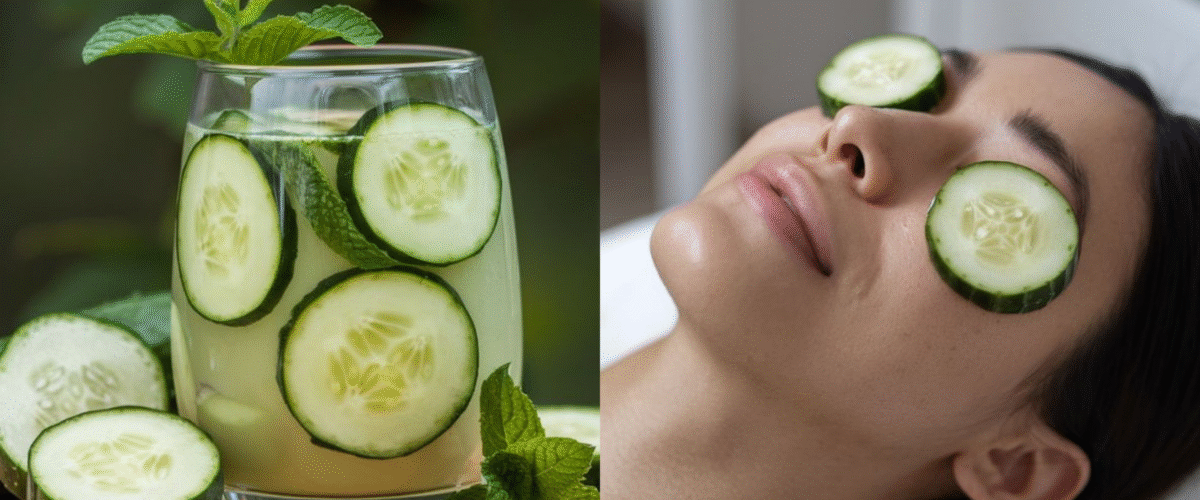
Augenbelastung und Sehprobleme treten aufgrund des modernen Lebensstils mit digitalen Bildschirmen und künstlicher Beleuchtung immer häufiger auf. Aber wussten Sie, dass etwas so Einfaches wie eine Gurke die Augengesundheit auf natürliche Weise verbessern kann?
Gurken sind nicht nur ein erfrischender Snack; sie stecken voller Vitamine, Antioxidantien und Feuchtigkeit, die die Augengesundheit unterstützen. Von der Reduzierung von Schwellungen bis hin zur Erhaltung der Sehkraft hat dieses bescheidene Gemüse viel zu bieten.
Lassen Sie uns die wissenschaftlich belegten Vorteile der Gurke für die Sehkraft erkunden, wie sie wirkt und wie man sie am besten für maximale Ergebnisse einsetzt.
Gesundheitliche Vorteile von Gurken für die Sehkraft
- Spendet Feuchtigkeit und beruhigt trockene Augen
Einer der Hauptgründe für Augenbelastung und -beschwerden ist Dehydration. Da Gurken zu 96 % aus Wasser bestehen, helfen sie, die Augen mit Feuchtigkeit zu versorgen und Trockenheit vorzubeugen.
Um Reizungen, Rötungen und Müdigkeit vorzubeugen, ist es wichtig, die Augen gut mit Feuchtigkeit zu versorgen.
Das Auftragen gekühlter Gurkenscheiben direkt auf die Augen erfrischt diese sofort, während der regelmäßige Verzehr von Gurken für eine langfristige Feuchtigkeitsversorgung von innen heraus sorgt.
- Reduziert Augenschwellungen und Augenringe
Wenn Sie mit geschwollenen Augen und dunklen Ringen aufwachen, kann Gurke Ihr bester Freund sein. Sie enthält Ascorbinsäure (Vitamin C) und Kaffeesäure, die beide helfen, Wassereinlagerungen und Entzündungen zu reduzieren.
Eine Studie im Journal of Dermatology ergab, dass die natürliche kühlende Wirkung der Gurke dazu beiträgt, die Blutgefäße um die Augen herum zu verengen, wodurch Schwellungen reduziert und dunkle Augenringe weniger sichtbar werden.
Das einfache Auflegen kalter Gurkenscheiben auf die Augenlider für 10–15 Minuten kann sichtbare Ergebnisse erzielen.
- Reich an Antioxidantien, die die Augenzellen schützen
Gurken sind reich an Beta-Carotin, Lutein und Zeaxanthin, drei starken Antioxidantien, die für die Augengesundheit unerlässlich sind. Lutein und Zeaxanthin filtern schädliches blaues Licht von Bildschirmen und Sonnenlicht heraus und verhindern so oxidative Schäden an der Netzhaut.
Einer Studie in Ophthalmology Science zufolge kann der regelmäßige Verzehr von Lebensmitteln mit einem hohen Gehalt dieser Antioxidantien das Risiko einer altersbedingten Makuladegeneration (AMD) und eines Katarakts verringern.
- Verbessert die Sehkraft mit Vitamin A
Eine 100-Gramm-Portion Gurke enthält etwa 105 IE Vitamin A, einen wichtigen Nährstoff für die Erhaltung einer klaren Sehkraft.
Vitamin A ist entscheidend für die Produktion von Rhodopsin, einem Pigment in der Netzhaut, das Ihren Augen hilft, sich an schlechte Lichtverhältnisse anzupassen.
Mangels ausreichend Vitamin A kann es zu Nachtblindheit oder Sehstörungen bei schwachem Licht kommen. Gurken in die Ernährung aufzunehmen, kann die Sehkraft auf natürliche Weise unterstützen, insbesondere im Alter.
- Reduziert die Belastung und Ermüdung der Augen
Wenn Sie zu viel Zeit damit verbringen, auf Bildschirme zu starren, kann dies zu einer digitalen Überanstrengung der Augen führen und Symptome wie Kopfschmerzen, Trockenheit und verschwommenes Sehen hervorrufen.
Die kühlende Wirkung der Gurke kann in Kombination mit ihrem Feuchtigkeits- und Nährstoffgehalt Spannungen um die Augen lindern.
Applying cucumber slices to your eyelids for 10 minutes a day helps relax eye muscles and ease discomfort caused by prolonged screen use.
- Prevents Cataracts and Eye Diseases
Cucumbers contain flavonoids and polyphenols, which have anti-inflammatory properties that help prevent oxidative stress in eye tissues. Studies suggest that people who consume antioxidants regularly have a lower risk of developing cataracts.
Additionally, the vitamin C content in cucumbers supports collagen production in the eye’s cornea, keeping it strong and healthy.
- Aids in Reducing Eye Redness and Irritation
If your eyes often feel red or itchy, cucumber can help calm the irritation. The high water content hydrates and cools the skin around the eyes, while the silica and antioxidants present in cucumber help reduce inflammation.
Simply applying chilled cucumber juice around the eyes or using cucumber-infused eye masks can provide relief from redness caused by allergies or environmental factors.
How to Use Cucumber for Eye Health
- Cucumber Eye Mask for Puffiness and Dark Circles
First, take a fresh cucumber and chill it in the refrigerator for about 30 minutes. Then, slice it into thin rounds.
Once chilled, place the slices over closed eyelids and leave them on for 10–15 minutes. You should do this daily to see visible reductions in puffiness and dark circles.
- Cucumber Juice for Eye Hydration and Redness
First, peel a cucumber and blend it with a little water. Then, strain the juice and soak cotton pads in it.
Once soaked, place the cotton pads over your eyelids for 10 minutes to relieve dryness and irritation.
- Eat Cucumber for Long-Term Vision Benefits
You can eat half a cucumber daily to naturally boost eye health. Try adding it to salads and smoothies or simply snacking on it raw.
For even better results, combine cucumber with carrots and leafy greens, which are also rich in vision-boosting nutrients.
- Cucumber and Aloe Vera Eye Gel for Cooling Relief
First, blend 1 tablespoon of cucumber juice with 1 teaspoon of aloe vera gel. Then, apply the mixture around your eyes before bed and leave it on overnight.
You should repeat this 3–4 times a week to reduce redness, puffiness, and dryness.
Cautions and Precautions
First, overusing cucumber on the skin may cause mild irritation, especially if you have sensitive skin or allergies. Always do a patch test before applying cucumber juice or masks around your eyes.
Second, while eating cucumber is beneficial, consuming too much at once can lead to excessive water retention or bloating due to its high water content. If you’re prone to low blood pressure, be cautious, as cucumber has mild diuretic properties that can lower blood pressure further.
Lastly, always use fresh organic cucumbers to avoid exposure to pesticides, which may irritate the eyes and skin. If possible, wash them thoroughly or peel the skin before use.
Disclaimer
This article is for informational purposes only and is not intended as medical advice.
Konsultieren Sie immer einen Arzt, bevor Sie wesentliche Änderungen an Ihrer Ernährung oder Hautpflegeroutine vornehmen, insbesondere wenn Sie an Vorerkrankungen leiden.
Green Papaya Latex: 18 Surprising Benefits for Health and Beauty
Everyone loves papaya, but few realize that its white latex (sap) holds impressive healing secrets. This sticky liquid, which flows out when cutting unripe papaya, has been used in traditional medicine for centuries thanks to its enzymes (like papain) and active compounds.
Here are 18 amazing benefits that make papaya latex a true natural treasure — plus simple ways to use it.
🌿 Skin & Beauty Benefits
Heals cracked heels – softens hard, dry skin.
👉 How to use: Apply a small amount of fresh latex directly on cracked heels before bedtime, then cover with socks.
Lightens dark spots – helps even out skin tone.
👉 How to use: Mix a drop of latex with honey or aloe vera gel and apply only on spots (avoid sensitive areas).
Natural exfoliant – removes dead cells with papain enzyme.
👉 How to use: Blend a tiny amount into a homemade scrub with oatmeal or rice flour, apply gently, rinse well.
Anti-fungal – fights foot and nail fungus.
👉 How to use: Dab a diluted drop on affected area daily.
Wart remover – traditionally used to dry out warts.
👉 How to use: Apply carefully on the wart with a cotton swab, cover with a bandage; repeat until it falls off.
Anti-wrinkle – supports skin regeneration and firmness.
👉 How to use: Add a very small drop to a DIY face mask with yogurt or cucumber (patch test first).
💪 Internal Health Benefits
Improves digestion – helps break down proteins.
👉 How to use: Only in very small, controlled amounts as a supplement or herbal preparation (never raw in large doses).
Relieves intestinal parasites – traditionally used against worms.
👉 How to use: In folk remedies, latex is mixed with honey or warm water; modern use recommends enzyme capsules instead.
Accelerates wound healing – supports tissue regeneration.
👉 How to use: Apply lightly to small cuts or scratches (avoid deep wounds).
Boosts immunity – its enzymes support natural defenses.
👉 How to use: Combined in herbal tonics with other immunity-boosting plants.
Anti-inflammatory – may ease muscle or joint pain.
👉 How to use: Massage diluted latex onto sore joints or muscles.
Supports liver detox – aids cleansing functions.
👉 How to use: Taken in microdoses in traditional remedies (always under guidance).
🦷 Oral Health Benefits
Relieves toothache – acts as a natural pain reliever.
👉 How to use: Apply diluted latex on a cotton ball and place gently near the aching tooth.
Fights oral bacteria – supports gum and dental health.
👉 How to use: Add a tiny drop to warm water and rinse (never swallow).
🌸 Traditional Uses & Remedies
Treats calluses – softens thickened skin.
👉 How to use: Apply directly on calluses, cover overnight, file gently next morning.
Removes skin impurities – used in cleansing masks.
👉 How to use: Mix with clay or honey for a detox mask.
Mild wound care – for small cuts and scratches.
👉 How to use: Dab a little on affected area, let dry, then rinse.
General vitality booster – used as a tonic in folk medicine.
👉 How to use: Always under professional guidance, never self-medicate with raw latex.
⚠️ Precautions
Papaya latex can be irritating for sensitive skin — always do a patch test.
Avoid during pregnancy (it may cause uterine contractions).
Do not ingest raw latex in large amounts — it can be toxic.
For safe internal use, prefer papain supplements sold in health stores.
✅ Final Tip: Papaya latex is powerful — a little goes a long way. Use it wisely and, when in doubt, consult a natural health practitioner before adding it to your routine.
Goodbye to Urinary Infections and More: Discover the Benefits of Tradescantia Spathacea
atural remedies are experiencing a major revival—and it’s easy to see why. For centuries, people have relied on plants not only for nourishment but also for healing. One plant now gaining attention in holistic wellness circles is Tradescantia spathacea—commonly called boat lily, oyster plant, purple heart, or lucky leaf.
Beyond its vibrant purple-and-green foliage, this humble houseplant is a hidden powerhouse of wellness benefits. From soothing urinary tract infections to supporting circulation and liver health, Tradescantia spathacea proves to be much more than a decorative plant.
What Is Tradescantia Spathacea?
Native to Central America and the Caribbean, Tradescantia spathacea is a hardy plant that adapts well to both indoor and outdoor environments. Its colorful leaves make it a favorite in ornamental gardens, but traditional medicine has long used it for therapeutic purposes.
In many cultures, the leaves are brewed into teas, prepared as decoctions, or applied as poultices to treat various ailments. The best part? It’s easy to grow at home—so you can keep both a decorative and medicinal ally within arm’s reach.
Key Health Benefits of Tradescantia Spathacea
Thanks to its antioxidants, flavonoids, and anti-inflammatory compounds, this plant has earned a reputation as a natural healing aid. Here are its most recognized health benefits:
- Urinary Tract Infections (UTIs)
With mild diuretic effects, Tradescantia spathacea helps flush bacteria and toxins from the urinary system. This may reduce discomfort and lower the risk of recurring infections. - Asthma Relief
Its anti-inflammatory properties can help soothe airway irritation, offering gentle support for those dealing with asthma or chronic respiratory issues. - Blood Sugar Balance
Preliminary studies suggest that the plant’s extracts may assist in stabilizing blood glucose levels, making it a potential ally for people managing diabetes. - Improved Circulation
Traditionally used to stimulate blood flow, it may benefit people struggling with poor circulation, varicose veins, or heaviness in the legs. - Liver Support
Known for its natural detoxifying properties, this plant may aid liver function, supporting the body’s cleansing processes and helping prevent fatty liver buildup. - Blood Pressure Regulation
By relaxing blood vessels and promoting circulation, Tradescantia spathacea may contribute to better cardiovascular health and lower blood pressure.
How to Use Tradescantia Spathacea
One of the simplest ways to enjoy its benefits is by making a tea:
Infusion Method: Wash a few fresh leaves, boil them in water for about 10 minutes, let steep, strain, and drink warm.
Detox Blend: Combine with lemongrass, ginger, or other cleansing herbs for a refreshing wellness brew.
Topical Use: Crushed leaves can be applied directly to the skin to help soothe irritations and minor wounds.
⚠️ Tip: Always start with small amounts to see how your body reacts. If you’re dealing with chronic conditions, consult a healthcare professional before regular use.
Final Thoughts: A Plant Worth Keeping Around
Tradescantia spathacea is more than just a striking ornamental plant—it’s a versatile natural remedy rooted in traditional healing practices. From easing urinary infections to supporting liver, heart, and respiratory health, this plant deserves a place in holistic wellness.
If you’re into natural health hacks and home-based remedies, growing this vibrant purple-green plant could be your next step toward a more balanced and holistic lifestyle.
Just mix LEMON with CHARCOAL and you won’t have to spend money at the market anymore
Lemon and charcoal may seem like unlikely companions, but when combined, they create a powerful, multi-purpose mixture that can replace several expensive products you might otherwise buy at the market. This guide explores how you can use this simple blend for teeth whitening, skincare, and more, helping you save money and embrace a more natural approach to your personal care routine.
The Power of Lemon and Charcoal
Lemon, known for its acidic properties and fresh scent, is a common household item often used in cooking, cleaning, and skincare. Its high vitamin C content makes it a powerful antioxidant that can help brighten skin, reduce blemishes, and even fight bacteria. Charcoal, particularly activated charcoal, is celebrated for its ability to draw out toxins, making it a popular ingredient in detox products and skincare. When combined, lemon and charcoal form a potent duo that can address various beauty and health concerns.
Uses of Lemon and Charcoal
- Teeth Whitening
One of the most popular uses for lemon and charcoal is in teeth whitening. Activated charcoal is known for its ability to bind with plaque and stains on teeth, making them easier to remove. The acidity of lemon juice helps break down these stains further while also freshening your breath.
How to Use:
Ingredients: Mix a small amount of lemon juice with activated charcoal powder to form a paste.
Application: Apply the paste to your toothbrush and brush your teeth gently for 1-2 minutes.
Rinse: Thoroughly rinse your mouth with water to remove all traces of charcoal.
Frequency: Use this method once a week to avoid damaging your tooth enamel due to the acidic nature of lemon.
This natural teeth-whitening method is a cost-effective alternative to store-bought whitening products, which often contain harsh chemicals.
- Purifying Facial Mask
The combination of lemon and charcoal can also be used to create a purifying facial mask. Charcoal’s ability to absorb toxins makes it ideal for deep cleansing, while lemon’s natural astringent properties help tighten pores and reduce oiliness.
How to Use:
Ingredients: Combine lemon juice with activated charcoal to make a smooth paste.
Application: Apply the paste evenly to your face, avoiding the delicate areas around your eyes and mouth.
Duration: Let the mask sit for 10-15 minutes.
Rinse: Use lukewarm water to gently rinse off the mask.
Moisturize: After cleansing, apply a light moisturizer to keep your skin hydrated.
This facial mask is excellent for those with oily or acne-prone skin, as it helps to detoxify the skin, leaving it feeling refreshed and clean.
- Skin Exfoliator
Exfoliating is a crucial step in any skincare routine, helping to remove dead skin cells and reveal a smoother, brighter complexion. By adding sugar to the lemon and charcoal mix, you can create a gentle yet effective exfoliant.
How to Use:
Ingredients: Mix lemon juice, activated charcoal, and sugar in equal parts to create a gritty paste.
Application: Gently massage the paste onto your skin in circular motions.
Rinse: Wash off with warm water.
Moisturize: Follow up with a moisturizer to maintain softness.
This scrub can be used on both the face and body, providing a natural alternative to commercial exfoliants that often contain synthetic microbeads or harsh chemicals.
Precautions and Considerations
While the lemon and charcoal mixture offers numerous benefits, there are a few precautions to keep in mind to ensure safe and effective use:
Skin Sensitivity: Lemon is acidic and can be irritating, especially for those with sensitive skin. It’s advisable to perform a patch test on a small area of skin before applying the mixture to your entire face or body.
Dental Use: When using lemon and charcoal for teeth whitening, limit the application to once a week. The acidity of lemon can erode tooth enamel if used too frequently. Always rinse your mouth thoroughly after use to avoid any potential damage.
Avoid Open Wounds: Do not apply the lemon and charcoal mixture to open wounds or broken skin, as this could cause irritation or stinging.