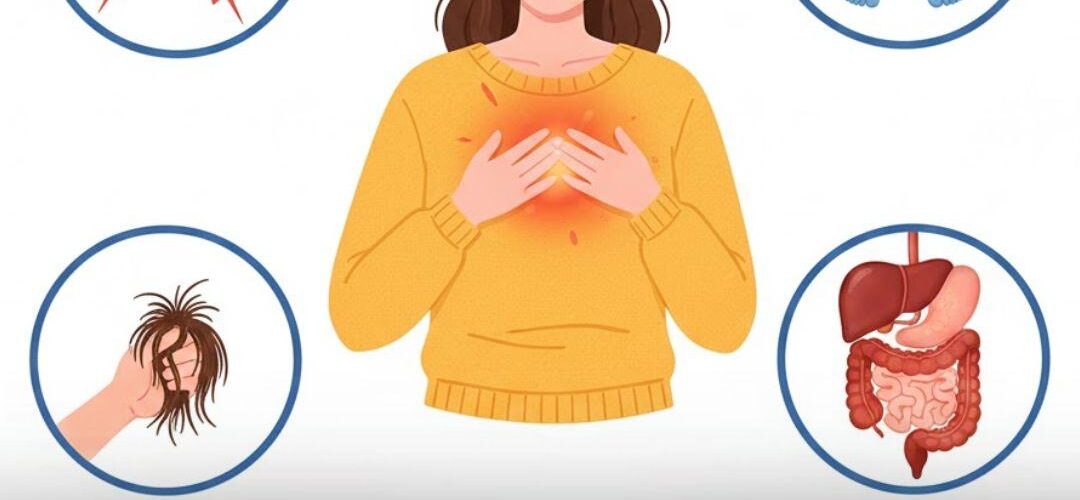
Haben Sie jemals das Gefühl gehabt, dass etwas mit Ihrem Körper nicht stimmt? Vielleicht leiden Sie unter anhaltender Müdigkeit, die sich durch Schlaf nicht beheben lässt, haben mit unerklärlicher Gewichtszunahme zu kämpfen oder bemerken, dass Ihre Haut ständig trocken und schuppig ist, egal wie viel Feuchtigkeitscreme Sie verwenden. Diese frustrierenden Symptome könnten auf eine oft übersehene Ursache hindeuten – eine kleine, schmetterlingsförmige Drüse am Halsansatz, die Schilddrüse. Wenn diese Drüse nicht richtig funktioniert, kann sich Ihr ganzer Körper aus dem Gleichgewicht anfühlen.
Diese lebenswichtige Drüse ist Ihre Schilddrüse, der zentrale Regulator Ihres Stoffwechsels. Sie produziert Hormone, die steuern, wie Ihr Körper Nahrung in Energie umwandelt und unzählige Funktionen in nahezu jedem Organ reguliert. Bei einer Schilddrüsenunterfunktion – einer Erkrankung namens Hypothyreose – verlangsamt sich Ihr Stoffwechsel, und Ihre Körperfunktionen werden träge. Erschreckenderweise leben Millionen von Menschen mit einer Hypothyreose, ohne es zu wissen, und halten ihre Symptome oft für bloße Alterserscheinungen, Stress oder Lebensstilprobleme. Heute stellen wir Ihnen, basierend auf dem Fachwissen von Dr. Siobhan Deshauer, die 15 wichtigsten Anzeichen einer Hypothyreose vor, damit Sie die Warnsignale Ihres Körpers erkennen können.
👉 Wichtigste Erkenntnisse
- Was es ist: Eine Schilddrüsenunterfunktion (Hypothyreose) verursacht eine breite Palette von Symptomen, die sich auf alles auswirken, von der Haut- und Haargesundheit bis hin zu Stimmung und Energieniveau.
- Sichtbare Anzeichen: Viele Symptome sind äußerlich erkennbar, wie z. B. Veränderungen der Hautstruktur, Haarausfall, Nagelveränderungen und Schwellungen im Gesichts- und Halsbereich.
- Versteckte Symptome: Zu den weniger offensichtlichen Anzeichen gehören chronische Müdigkeit, erhöhte Kälteempfindlichkeit, Depressionen und unerklärliche Gewichtszunahme.
- Diagnose und Behandlung: Die Diagnose erfolgt durch einen einfachen Bluttest zur Messung des Schilddrüsen-stimulierenden Hormons (TSH). Die Behandlung mit einer Hormonersatztherapie ist sehr wirksam, um das Gleichgewicht wiederherzustellen.
➡️ 1. Eine vergrößerte Schilddrüse (Kropf)
Eines der deutlichsten Anzeichen einer Schilddrüsenunterfunktion ist eine Schwellung am Halsansatz, der sogenannte Kropf. Das Gehirn überwacht ständig den Schilddrüsenhormonspiegel und schüttet das Schilddrüsen-stimulierende Hormon (TSH) aus, um die Schilddrüse zur vermehrten Hormonproduktion anzuregen. Wenn die Schilddrüse nicht mehr ausreichend Hormone produziert, erhöht das Gehirn die TSH-Menge, was die Drüse überstimuliert und zu ihrer Vergrößerung führt. In schweren Fällen kann diese Schwellung Schluck- oder Atembeschwerden verursachen, weshalb eine umgehende ärztliche Behandlung unerlässlich ist.
➡️ 2. Trockene, raue oder rissige Haut
Think of your skin as a protective brick wall. The cells are the bricks, and natural oils act like mortar, sealing in moisture. Hypothyroidism dramatically decreases oil production, causing moisture to escape and the skin to become dry, rough, and prone to cracking. Sometimes the skin develops a mosaic-like pattern of irregular cracks, which can be uncomfortable and unsightly.
➡️ 3. Thickened Skin on Hands and Feet
Thyroid hormones regulate skin regeneration. When levels are low, dead skin and proteins like keratin can build up excessively. This often leads to thick, rough patches on the palms and soles, a condition known as palmar-plantar keratoderma, which can make the skin feel calloused or scaly.
➡️ 4. Hair Loss and Thinning
Since hair is largely made of keratin, hypothyroidism significantly disrupts its growth cycle. Hair production slows, leading to dull, brittle, and thinning hair. Worse yet, hair follicles enter a resting phase prematurely, causing diffuse shedding that can lead to noticeable hair loss across the scalp within months.
➡️ 5. Brittle, Splitting, or Thick Nails
Nails can become thickened but fragile, prone to splitting and crumbling. Vertical ridges may develop, and in some cases, nails lift off the nail bed—a condition called onycholysis. This reflects disrupted nail growth caused by thyroid hormone deficiency.
➡️ 6. Thinning of the Outer Eyebrows
This classic sign is sometimes called the “Sign of Queen Anne.” Hair loss isn’t limited to the scalp—in hypothyroidism, the outer third of the eyebrows may thin dramatically, a telltale symptom doctors often check for during examinations.
➡️ 7. Puffy Face and Swelling Under the Eyes
Persistent puffiness, especially around the eyes, is often mistaken for sleep deprivation. But in hypothyroidism, this swelling results from the buildup of myxedema—a gelatinous substance accumulating in the skin and tissues. This causes a characteristic doughy swelling that can make your face appear bloated.
➡️ 8. A Swollen Tongue
Myxedema can also affect muscles, including the tongue. When the tongue swells, it feels bulky and can partially obstruct the airway during sleep. This contributes to or worsens obstructive sleep apnea, a condition causing interrupted breathing and poor sleep quality.
➡️ 9. Numbness and Tingling in Your Hands (Carpal Tunnel Syndrome)
The carpal tunnel is a tight passageway in the wrist that houses the median nerve. Fluid retention and tissue swelling caused by hypothyroidism increase pressure within this tunnel, compressing the nerve. This results in numbness, tingling, and pain in the thumb and fingers—classic symptoms of carpal tunnel syndrome. Surprisingly, many carpal tunnel cases are linked to undiagnosed thyroid issues.
➡️ 10. Feeling Cold All the Time
Do you find yourself shivering in mild weather or constantly bundling up? A persistent intolerance to cold is a hallmark of hypothyroidism. When metabolism slows, your cells operate at reduced capacity and produce less heat, making you feel chilled even when others feel comfortable.
➡️ 11. Yellow-Orange Skin (Carotenemia)
If your skin, especially on your palms and soles, takes on an unusual yellow-orange hue, it could be due to carotenemia. This condition happens because hypothyroidism impairs the enzyme responsible for converting beta-carotene (found in carrots, sweet potatoes, and other vegetables) into vitamin A. As a result, excess beta-carotene accumulates in your bloodstream and deposits in your skin, causing the discoloration.
➡️ 12. Depression, Brain Fog, and Mood Swings
Your thyroid heavily influences brain chemistry. Low thyroid hormone levels reduce the production of neurotransmitters like serotonin and dopamine, which regulate mood and cognition. This can cause depression, memory problems, difficulty concentrating (brain fog), and mood swings. Because of this, doctors often recommend thyroid testing during assessments for mental health concerns.
➡️ 13. Heavy or Irregular Menstrual Cycles
For women, hypothyroidism often disrupts the delicate balance between estrogen and progesterone. This hormonal imbalance affects the uterine lining, leading to heavier, longer, or irregular menstrual cycles, sometimes causing painful periods or spotting between cycles.
➡️ 14. Chronic Fatigue
Perhaps the most common yet overlooked symptom is deep, persistent fatigue. This isn’t just feeling tired after a busy day—it’s an overwhelming exhaustion that doesn’t improve with rest or sleep. With your metabolism slowed to a crawl, your body struggles to generate the energy needed for daily life.
➡️ 15. Unexplained Weight Gain and Constipation
Weight gain is one of the most common complaints among people with hypothyroidism. As your metabolism slows, your body burns fewer calories even at rest, making it easier to gain weight without changes in diet or exercise. Additionally, digestive motility slows, often leading to constipation, bloating, and abdominal discomfort. Because these symptoms are so common, they are frequently overlooked as signs of a thyroid problem.
⚙️ What to Do Next
If several of these signs resonate with you, don’t panic. The first and most important step is to consult your healthcare provider. Diagnosing hypothyroidism is straightforward and involves a simple blood test measuring your TSH level. A high TSH means your brain is signaling your thyroid to produce more hormones, indicating underperformance.
The great news is hypothyroidism is highly treatable. The standard treatment is a daily medication called levothyroxine, which replaces the thyroid hormone your body isn’t producing enough of. With consistent treatment, many symptoms can improve significantly or even resolve completely, helping you regain your energy, mood, and overall health.
Bei Verdacht auf eine Schilddrüsenunterfunktion kann frühzeitiges Handeln entscheidend sein. Achten Sie auf die Signale Ihres Körpers, lassen Sie sich untersuchen und entwickeln Sie gemeinsam mit Ihrem Arzt einen Behandlungsplan, damit Sie sich wieder wohlfühlen.