Einführung
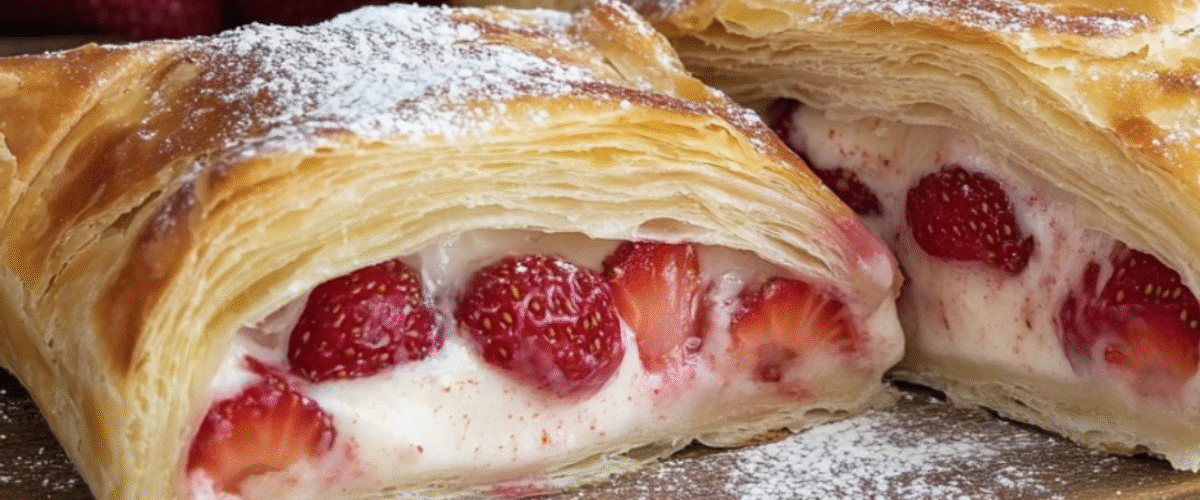
Stellen Sie sich die perfekte Harmonie aus knusprigem Blätterteig vor, der eine köstliche Vanillecremefüllung umschließt, mit saftigen Erdbeeren gespickt und mit zarten Löffelbiskuits garniert. Dieser Vanille-Erdbeer-Strudel vereint die besten europäischen Backtraditionen in einem eleganten Dessert. Die Kombination aus samtigem, hausgemachtem Vanillepudding und frischen Erdbeeren ergibt eine luxuriöse Füllung, die Süße mit fruchtiger Frische in Einklang bringt, alles eingehüllt in goldenen Blätterteig, der bei jedem Bissen wunderbar zerspringt. Ob ofenwarm bei einem Familientreffen oder als krönender Abschluss einer eleganten Dinnerparty serviert, dieser Strudel verspricht ein Hochgenuss für die Sinne und wird jeden nach einem zweiten verlangen lassen. Perfekt, um saisonale Erdbeeren in Szene zu setzen, schafft es dieses Dessert, wohltuend und raffiniert zugleich zu sein – ein echter Hingucker, der sich überraschend gut zu Hause zubereiten lässt.
Zutaten
Für den Vanillepudding:
- 1 Tasse (240 ml) Vollmilch
- 2,4 EL (30 g) Kristallzucker
- 1 EL (10 g) Maisstärke
- 2 oz (57 g) Eier (ungefähr 1 mittelgroßes Ei)
- ½ Tasse (25 g) Eigelb (ungefähr 1 mittelgroßes Eigelb)
- 1 unverarbeitete Zitrone, nur Schale
- 1 Prise feines Salz
Für die Erdbeerfüllung:
- 1,7 Tassen (250 g) frische Erdbeeren
- 2 EL (25 g) Kristallzucker
- Abgeriebene Schale einer halben Zitrone
Für den Strudel:
- 230 g rechteckiger Blätterteig
- 3 Löffelbiskuits (Savoiardi)
Für die Glasur:
- 1 Eigelb
- 1 Esslöffel Vollmilch
Zum Servieren:
- Puderzucker zum Bestäuben
Schritt-für-Schritt-Anleitung
Zubereitung der Vanillecreme:
- Zitrone und Milch vorbereiten : Mit einem Sparschäler die gelbe Schale der Zitrone vorsichtig in Streifen abziehen, dabei die bittere weiße Haut vermeiden. Die Milch in einen mittelgroßen Topf geben, die Zitronenschale hinzufügen und bei schwacher Hitze erhitzen, bis sie kurz vor dem Kochen steht (am Rand bilden sich kleine Bläschen). Vom Herd nehmen.
- Eiermischung : Eier, Eigelb, Zucker und eine Prise Salz in einer mittelgroßen Schüssel vermengen. Vorsichtig verquirlen, bis alles gut vermischt ist – dabei darauf achten, dass nicht zu viele Blasen entstehen.
- Maisstärke hinzufügen : Um Klumpen zu vermeiden, die Maisstärke direkt in die Eiermischung sieben. Verrühren, bis eine glatte Masse entsteht und alles gut vermischt ist.
- Eiermasse temperieren : Die Zitronenschalenstreifen aus der warmen Milch nehmen. Etwa die Hälfte der heißen Milch unter ständigem Rühren langsam zur Eiermasse gießen. Dadurch werden die Eier temperiert und ein Gerinnen verhindert.
- Cook the custard: Return the saucepan with the remaining milk to medium-low heat. Pour the egg-milk mixture back into the saucepan, stirring constantly with a whisk. Continue cooking for about 10 minutes, stirring continuously, until the custard thickens enough to coat the back of a spoon. The custard should leave a clear path when you run your finger across the spoon.
- Cool the custard: Transfer the custard to a shallow baking dish or bowl. Cover the surface directly with plastic wrap (touching the custard) to prevent a skin from forming. Allow it to cool at room temperature for about an hour.
Preparing the Strawberry Filling:
- Prepare the strawberries: Wash the strawberries thoroughly, remove the stems, and cut them into quarters (or smaller pieces if they’re very large).
- Cook the strawberries: In a non-stick frying pan, combine the quartered strawberries, sugar, and grated lemon zest. Cook over high heat for about 5 minutes, stirring occasionally, until the strawberries release their juices but still maintain some of their shape. Remove from heat and set aside to cool slightly.
- Drain excess juice: Once cooled, use a slotted spoon to transfer the strawberries to a bowl, leaving behind most of the excess juice to prevent the strudel from becoming soggy.
Assembling and Baking the Strudel:
- Prepare for baking: Preheat your oven to 350°F (175°C). Line a baking sheet with parchment paper.
- Prepare the ladyfingers: Break or cut the ladyfingers into small pieces, about ½-inch chunks.
- Roll out the pastry: Place the rectangular puff pastry sheet on a piece of parchment paper with the long side facing you. If necessary, gently roll it to ensure even thickness.
- Layer the fillings: Spread the cooled custard down the center of the puff pastry, creating a 3-inch-wide strip and leaving at least 1 inch on either side, and 2 inches at the top and bottom. Arrange the drained strawberries evenly over the custard. Sprinkle the ladyfinger pieces over the strawberries.
- Fold the strudel: Using the parchment paper to help, fold one long side of the pastry over the filling, then fold the other side over, slightly overlapping. Press gently to seal. Fold the ends under the strudel, pinching to seal and prevent the filling from leaking.
- Prepare for baking: Carefully transfer the strudel, seam-side down, along with the parchment paper to the prepared baking sheet. Using a sharp knife, make several diagonal slits on the top of the strudel to allow steam to escape during baking.
- Glaze the strudel: In a small bowl, whisk together the egg yolk and tablespoon of milk. Using a pastry brush, gently brush this mixture over the entire surface of the strudel for a golden finish.
- Bake: Place the strudel in the preheated oven and bake for approximately 40 minutes, or until the pastry is puffed and golden brown.
- Cool and serve: Remove from the oven and allow the strudel to cool on the baking sheet for at least 15 minutes. Before serving, dust generously with powdered sugar. Slice carefully with a serrated knife and serve warm or at room temperature.
Nutritional Information and Timing
Preparation Time: 25 minutes
Custard Cooling Time: 1 hour
Baking Time: 40 minutes
Total Time: 2 hours 5 minutes
Servings: 8 slices
Nutritional Information (per slice):
- Calories: 260
- Protein: 5g
- Carbohydrates: 27g
- Fat: 15g
- Fiber: 1g
- Sugar: 13g
- Sodium: 180mg
Cooking Tips and Tricks
- Perfect custard consistency: The custard should be thick enough to spread easily but not runny. If it seems too thick after cooling, whisk it gently to loosen it up before spreading on the pastry.
- Puff pastry handling: Work with cold puff pastry straight from the refrigerator for best results. If it becomes too soft or sticky, return it to the refrigerator for 15 minutes before continuing.
- Preventing a soggy bottom: Make sure to drain the cooked strawberries well before adding them to the strudel. The ladyfinger pieces also help absorb excess moisture from the fruit.
- Creating a tight seal: When folding the pastry, ensure all edges are well-sealed to prevent filling from leaking during baking. A little water on your fingertips can help create a better seal.
- Even browning: For perfectly even browning, rotate the baking sheet halfway through baking time. If the strudel is browning too quickly, cover loosely with aluminum foil.
- Testing for doneness: The strudel is ready when the pastry is puffed and golden brown, and you can see the filling bubbling slightly through the vents.
- Clean cutting: Allow the strudel to cool for at least 15 minutes before cutting to let the filling set. Use a sharp serrated knife with a gentle sawing motion for the cleanest slices.
Variations and Substitutions
- Pastry options: While puff pastry creates a classically flaky strudel, you can also use phyllo dough for a more traditional Austrian-style strudel. Layer 6-8 sheets of phyllo, brushing each with melted butter before adding the filling.
- Fruit variations: Replace strawberries with other berries like raspberries, blackberries, or blueberries. For a mixed berry version, use equal parts of different berries totaling 1.7 cups.
- Seasonal adaptations: In fall, try diced apples or pears sautéed with cinnamon and brown sugar. In winter, use frozen berries (thawed and well-drained) or poached fruit.
- Flavor enhancements: Add ½ teaspoon of vanilla extract or the seeds from ½ vanilla bean to the custard for extra flavor. A dash of almond extract pairs wonderfully with strawberries.
- Cookie alternatives: If ladyfingers aren’t available, use crushed amaretti cookies, shortbread, or even graham crackers for a different texture and flavor profile.
- Dairy-free option: Substitute the whole milk with almond milk or coconut milk for a dairy-free custard. Be aware that cooking time may vary slightly.
- Nutty addition: Sprinkle 2-3 tablespoons of sliced almonds or chopped pistachios over the strawberries before adding the ladyfinger pieces for extra texture and flavor.
Common FAQs
Can I make this strudel ahead of time?
Yes, you can prepare the custard up to 2 days ahead and store it in the refrigerator, covered with plastic wrap. The assembled strudel can be prepared up to 6 hours ahead and refrigerated before baking. Add an extra 5 minutes to the baking time if baking from cold.
My custard seems lumpy. How can I fix it?
If your custard develops lumps, remove it from heat immediately and strain it through a fine-mesh sieve while still hot. Then continue cooking until it reaches the proper thickness.
Can I use frozen puff pastry?
Absolutely! Frozen puff pastry works perfectly for this recipe. Just thaw it according to package directions before using, but make sure it remains cold and workable.
Why is my strudel leaking filling during baking?
This usually happens if the seams aren’t properly sealed or if there are tears in the pastry. Make sure to pinch all seams firmly and check for any thin spots or tears before filling. Also, ensure you’ve properly drained the strawberries of excess juice.
Can I serve this strudel cold?
While this strudel is delicious warm or at room temperature, it can certainly be served cold from the refrigerator. The flavors actually develop nicely after a few hours of chilling.
Storage and Make-Ahead Tips
- Refrigerating the baked strudel: Store any leftover strudel in an airtight container in the refrigerator for up to 3 days. The pastry will soften somewhat but will still be delicious.
- Reheating: To restore some crispness to the pastry, reheat individual slices in a 300°F (150°C) oven for 10 minutes. Microwave reheating works but will result in softer pastry.
- Freezing options: The unbaked assembled strudel can be frozen for up to 1 month. Wrap it tightly in plastic wrap, then in foil. Thaw overnight in the refrigerator before brushing with egg wash and baking. Add about 10 minutes to the baking time.
- Custard make-ahead: The custard can be made up to 2 days ahead and stored in an airtight container in the refrigerator. Whisk it gently before using if it has become too firm.
- Teilvorbereitung : Um Zeit zu sparen, bereiten Sie den Vanillepudding zu und kochen Sie die Erdbeeren am Vortag. Lagern Sie beide Komponenten im Kühlschrank und backen Sie den Strudel am nächsten Tag.
- Frischmachen am Tag : Wenn der Strudel früher am Tag zubereitet wurde und etwas von seiner Knusprigkeit verloren hat, schieben Sie ihn vor dem Servieren 5–7 Minuten lang in den auf 165 °C vorgeheizten Ofen. Lassen Sie ihn etwas abkühlen und bestäuben Sie ihn anschließend mit frischem Puderzucker.
Dieser Vanillepudding-Erdbeer-Strudel vereint den Komfort von hausgemachtem Vanillepudding mit dem frischen Geschmack saisonaler Erdbeeren, umhüllt von goldenem Blätterteig. Ein beeindruckendes Dessert, das sicher zu einem Favoriten für besondere Anlässe und Familienfeiern wird!