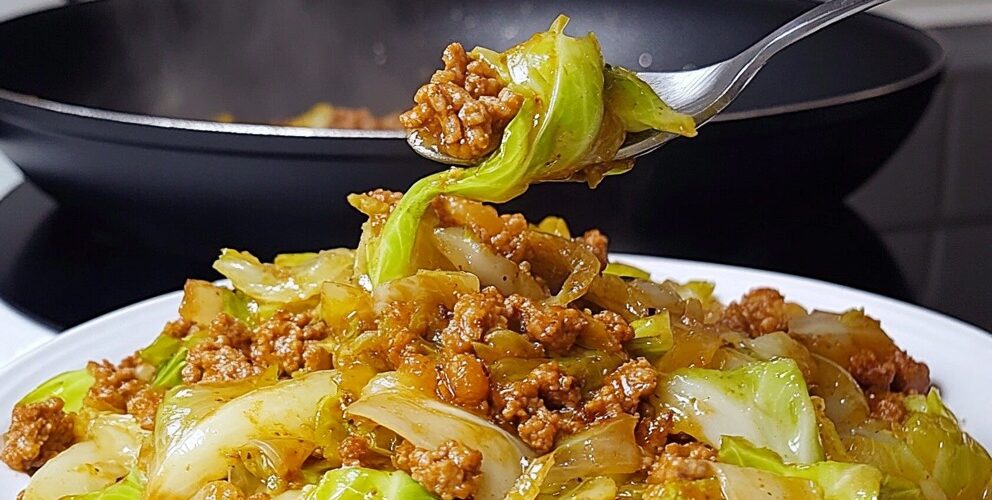
Entdecken Sie, warum dieses revolutionäre Rezept für jungen Kohl mit Hackfleisch die Küchen im Sturm erobert. Dieses schnelle und schmackhafte Gericht kombiniert zarten jungen Kohl mit perfekt gewürztem Hackfleisch und kreiert so etwas wie „faule Kohlrouladen“ – ganz ohne lästiges Rollen. Das Geheimnis liegt darin, den Kohl separat zu blanchieren, bevor er mit der aromatischen Hackfleischmischung vermischt wird.
Warum dieses Rezept für jungen Kohl so gut ist
Junger Kohl, oft als „König des Gemüses“ bezeichnet, verwandelt sich mit dieser Zubereitungsmethode in etwas Außergewöhnliches. Im Gegensatz zu traditionellen Schmorgerichten bleibt der Kohl bei dieser Zubereitungsart natürlich knackig und erhält gleichzeitig die reichhaltigen, herzhaften Aromen des gewürzten Hackfleischs. Das Blanchieren sorgt dafür, dass der Kohl seine leuchtende Farbe und perfekte Konsistenz behält.
Zutaten
Für die Hackfleischbasis:
- 700 g (1,5 Pfund) gehackter Schweinenacken (oder Hühner-/Rinderhackfleisch)
- 1 große Zwiebel, gewürfelt
- 2 mittelgroße Karotten, gerieben
- 1 mittelgroße Tomate, gewürfelt (oder 2 Esslöffel Tomatenmark)
- 2-3 Zehen frischer Knoblauch, gehackt
- 2 Esslöffel Pflanzenöl
- Salz nach Geschmack
- Schwarzer Pfeffer nach Geschmack
- 1 Teelöffel süßes Paprikapulver
- 1 Teelöffel Hmeli-Suneli-Gewürzmischung
Für den Kohl:
- 700 g junger Kohl, in Blütenblätter geschnitten
- 1 Liter (4 Tassen) Wasser
- 1 Esslöffel Salz für das Blanchierwasser
Schritt-für-Schritt-Anleitung
Zubereitung der Hackfleischmischung
Schritt 1: Gemüse anbraten. Pflanzenöl in einer tiefen Pfanne oder einem Topf mit dickem Boden bei mittlerer bis hoher Hitze erhitzen. Die gewürfelte Zwiebel und die geriebenen Karotten hinzufügen und 5–7 Minuten braten, bis die Zwiebel glasig und die Karotten weich werden.
Schritt 2: Hackfleisch anbraten. Das Hackfleisch mit dem sautierten Gemüse in die Pfanne geben. Bei geöffnetem Deckel braten und dabei häufig umrühren, um Klumpen aufzulösen. Etwa 10 Minuten braten, bis das Fleisch Farbe ändert und seinen natürlichen Saft abgibt.
Schritt 3: Fleisch würzen Sobald das Fleisch Farbe angenommen hat und erste Bräunungsspuren aufweist, würzen Sie es großzügig mit Salz und schwarzem Pfeffer. Braten Sie weiter, bis sich erste goldbraune Ränder am Fleisch bilden.
Schritt 4: Gewürze und Aromen hinzufügen. Sobald das Fleisch Anzeichen von Bräunung zeigt, fügen Sie das süße Paprikapulver und die Hmeli-Suneli-Gewürzmischung hinzu. Die Hmeli-Suneli-Gewürzmischung mit 14 verschiedenen aromatischen Kräutern verströmt sofort ein unglaubliches Aroma. Gut umrühren, um die Gewürze gleichmäßig zu verteilen.
Schritt 5: Tomaten hinzufügen . Die gewürfelten frischen Tomaten hinzufügen. Falls Sie Tomatenmark verwenden, geben Sie es jetzt hinzu. Frisches Gemüse schmeckt immer besser, verwenden Sie daher möglichst frische Tomaten. Gut vermischen.
Step 6: Simmer the Mixture Reduce heat to medium-low, cover the pan, and simmer for 8-10 minutes. This allows the tomato to release its juices and the meat to absorb all the aromatic flavors. The tomato should completely melt and integrate into the mixture.
Preparing the Young Cabbage
Step 7: Prepare Blanching Water While the meat mixture simmers, bring 1 liter of water to a rolling boil in a separate large saucepan. Add 1 tablespoon of salt to the boiling water.
Step 8: Cut the Cabbage Cut the young cabbage into petal-shaped pieces, removing the core but keeping the pieces reasonably large. The cabbage will shrink significantly during blanching.
Step 9: Blanch the Cabbage Add all the cabbage petals to the boiling salted water at once. Cover the pot and blanch for only 2-3 minutes after the water returns to a boil. Young cabbage is very tender and cooks quickly. Turn the cabbage once during blanching to ensure even cooking.
Step 10: Drain the Cabbage Immediately drain the blanched cabbage in a colander. The cabbage should be tender but still have a slight bite. Do not overcook, as it will continue cooking when combined with the meat.
Combining and Final Cooking
Step 11: Marry the Ingredients Add the drained blanched cabbage to the simmered meat mixture. Stir carefully to combine, ensuring the cabbage is evenly distributed throughout the meat.
Step 12: Final Seasoning Add the minced fresh garlic to the combined mixture. Garlic pairs beautifully with cabbage and adds an essential aromatic element to the dish.
Step 13: Final Simmer Cover the pan and simmer on low heat for 3-5 minutes, allowing all the flavors to marry together. Turn off the heat and let the dish rest for another 5 minutes before serving.
Nutritional Information and Timing
Preparation Time: 15 minutes Cooking Time: 25 minutes Total Time: 40 minutes Serves: 4-6 people Calories per serving: Approximately 320 calories
Nutritional Benefits: This dish provides high-quality protein from the minced meat, essential vitamins C and K from the young cabbage, beta-carotene from the carrots, and beneficial compounds from the onions and garlic. The combination creates a well-balanced, nutrient-dense meal that’s both satisfying and healthy.
Recipe Variations and Substitutions
Meat Alternatives: Substitute pork with ground chicken, turkey, or beef based on your preference. Each type of meat will bring its own unique flavor profile to the dish.
Vegetarian Version: Replace the minced meat with a mixture of cooked lentils and chopped mushrooms for a plant-based alternative that maintains the hearty texture.
Spice Variations: If hmeli-suneli is unavailable, substitute with a mixture of dried herbs including coriander, fenugreek, bay leaves, and dried mint.
Cabbage Alternatives: While young cabbage works best, you can use regular cabbage cut into smaller pieces, though it may require slightly longer blanching time.
Low-Carb Option: Serve over cauliflower rice or zucchini noodles instead of traditional rice or pasta for a lower-carb alternative.
Why Blanching Makes the Difference
The key to this recipe’s success lies in blanching the cabbage separately before combining it with the meat. This technique preserves the cabbage’s natural texture and prevents it from becoming mushy. When cabbage is cooked directly with the meat from the beginning, it tends to release too much water and loses its appealing bite. Blanching maintains the vegetable’s integrity while allowing it to absorb the meat’s flavors perfectly.
Serving Suggestions
This versatile dish works wonderfully as a complete meal on its own or can be served alongside rice, mashed potatoes, or crusty bread. The flavors are reminiscent of traditional cabbage rolls but without the time-consuming preparation. It’s equally delicious served hot immediately after cooking or at room temperature the next day.
Storage and Reheating
Store leftovers in the refrigerator for up to 4 days. The flavors actually improve overnight as they continue to meld together. Reheat gently on the stovetop over medium-low heat, adding a splash of water if needed to prevent sticking. This dish also freezes well for up to 3 months.
Frequently Asked Questions
Why can’t I just add the cabbage directly to the minced meat instead of blanching it separately? Blanching the cabbage separately is crucial for achieving the perfect texture and flavor. When cabbage is cooked directly with the meat, it releases too much water and becomes soggy. Blanching preserves the cabbage’s structure while allowing it to absorb the meat’s flavors without compromising texture.
Can I use regular cabbage instead of young cabbage? Yes, but you’ll need to adjust the cooking time. Regular cabbage is tougher and may require 4-5 minutes of blanching instead of 2-3 minutes. Cut it into smaller pieces to ensure even cooking.
What is hmeli-suneli and can I substitute it? Hmeli-suneli is a Georgian spice blend containing 14 different herbs and spices. If unavailable, create a substitute using equal parts dried coriander, fenugreek, dried mint, and bay leaves, with a pinch of cinnamon and cloves.
How do I know when the cabbage is properly blanched? The cabbage should be bright green, tender when pierced with a fork, but still have a slight crunch. It should have reduced in volume by about half and be easy to cut with a fork.
Kann ich dieses Gericht vorbereiten? Absolut! Es schmeckt am nächsten Tag sogar noch besser, da die Aromen mehr Zeit haben, sich zu entfalten. Bereiten Sie es vollständig vor, kühlen Sie es ab und stellen Sie es in den Kühlschrank. Vor dem Servieren leicht erwärmen und bei Bedarf etwas Wasser hinzufügen.
Diese revolutionäre Methode, jungen Kohl mit Hackfleisch zuzubereiten, ergibt ein Gericht, das sowohl wohltuend als auch raffiniert ist. Die Kombination aus sorgfältig blanchiertem Kohl und aromatisch gewürztem Fleisch ergibt das, was viele als „faule Kohlrouladen“ bezeichnen – den vollen Geschmack traditioneller Kohlrouladen ohne das mühsame Rollen. Wenn Sie diese Methode einmal ausprobiert haben, werden Sie verstehen, warum sie zu einem beliebten Rezept für arbeitsreiche Abendessen unter der Woche und Familienfeiern geworden ist.