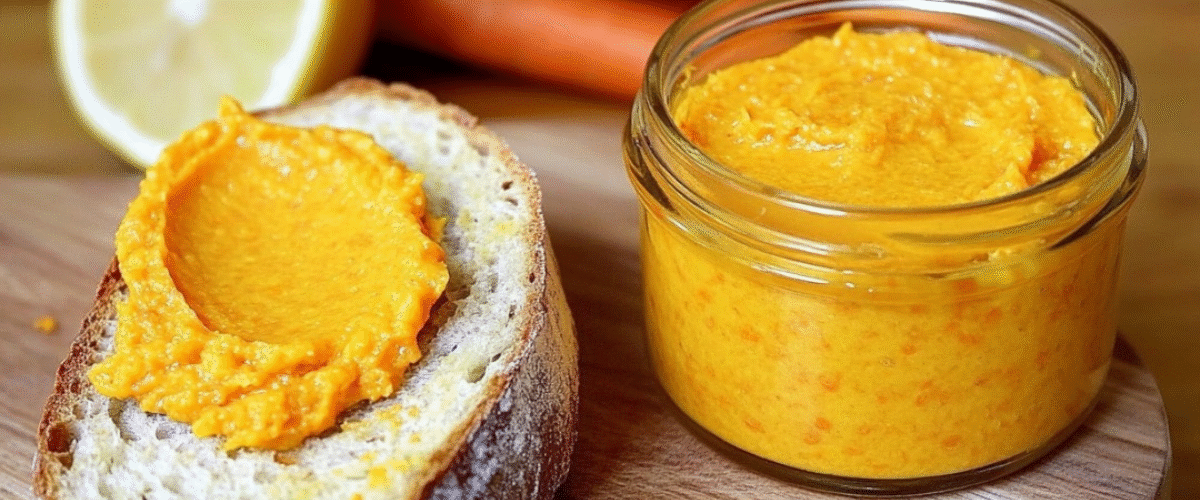
Dieses unglaubliche Karottenpastete-Rezept wird Ihre Vorstellung von gesunden Brotaufstrichen und Dips revolutionieren. Selbst wenn Sie kein Hummus-Fan sind, wird Sie diese cremige und absolut köstliche Karottenpastete mit ihrem vollen Geschmack und ihrer seidigen Textur begeistern. Mit nur einer Handvoll einfacher Zutaten, die Sie wahrscheinlich bereits in Ihrer Küche haben, beweist dieses Rezept, dass die außergewöhnlichsten Gerichte oft aus bescheidenen Anfängen entstehen.
Warum diese Karottenpastete herkömmlichen Hummus übertrifft
Im Gegensatz zu traditionellem Hummus, dessen Basis Kichererbsen sind, nutzt diese Karottenpastete die natürliche Süße und die cremige Textur perfekt gegarter Karotten. Das Ergebnis ist ein natürlich süßerer, farbenfroherer und unglaublich vielseitiger Brotaufstrich. Durch den Kochvorgang verwandeln sich die Karotten in eine samtig-weiche Basis, die wunderbar mit aromatischen Gewürzen harmoniert. So entsteht eine Pastete, die sowohl raffiniert als auch für jeden Gaumen geeignet ist.
Zutaten
Hauptzutaten:
- 250 g Karotten (ca. 2 mittelgroße Karotten), ungeschält
- 40 g (3 Esslöffel) natives Olivenöl extra
- 30 g (3 Esslöffel) frischer Zitronensaft (ungefähr ½ Zitrone)
- 5-8 g (1-2 kleine Zehen) Knoblauch, Keim entfernt
- 5 g (1 Teelöffel) gemahlener Kreuzkümmel
- 2 g (¼ Teelöffel) Salz
- Frisch gemahlener schwarzer Pfeffer nach Geschmack
Zum Servieren:
- Geröstete Brotscheiben
- Natives Olivenöl extra zum Beträufeln
- Grüne Pfefferkörner oder frisch gemahlener schwarzer Pfeffer
- Frische Kräuter zum Garnieren (optional)
- Cracker, Gemüse oder Pita-Chips zum Dippen
Schritt-für-Schritt-Anleitung
Zubereitung der Karotten
Schritt 1: Karotten putzen und vorbereiten. 250 g Karotten gründlich unter fließendem kaltem Wasser waschen und vorsichtig abschrubben, um Schmutz zu entfernen. Die Schale dranlassen, da sie der Paste Nährstoffe und Geschmack verleiht. Die Karotten in gleichmäßige, ca. 3 cm lange Stücke schneiden, damit sie gleichmäßig garen.
Schritt 2: Karotten kochen. Bringen Sie einen großen Topf Wasser bei starker Hitze zum Kochen. Geben Sie eine großzügige Prise Salz ins Wasser, genau wie beim Kochen von Nudeln. Das Salzwasser würzt die Karotten von innen heraus.
Schritt 3: Perfekt garen: Die vorbereiteten Karottenstücke in das kochende Wasser geben und genau 10 Minuten kochen lassen. Die Karotten sollten beim Hineinstechen mit der Gabel weich, aber nicht matschig sein. Richtig gegarte Karotten haben eine glatte, cremige Konsistenz ohne faserige Stücke.
Schritt 4: Garvorgang stoppen. Die Karotten sofort in einem Sieb abtropfen lassen und kurz unter fließendem kaltem Wasser abspülen. Dadurch wird der Garvorgang gestoppt und ein Verkochen der Karotten verhindert. Die Karotten sollten sich noch warm anfühlen.
Zubereitung der Aromastoffe
Step 5: Prepare the Garlic Select 1-2 garlic cloves totaling 5-8g in weight. If using older garlic with visible green germs, carefully remove the germ by splitting the clove and pulling it out. The germ can add bitterness and may cause digestive discomfort. Fresh garlic without prominent germs can be used whole.
Step 6: Extract Fresh Lemon Juice Squeeze half a lemon to obtain 3 tablespoons (30g) of fresh lemon juice. Fresh lemon juice is essential for both flavor and the proper texture of the pâté. Strain out any seeds but leave the pulp for added texture.
Creating the Pâté
Step 7: Combine Base Ingredients Place the warm, drained carrots in a food processor or high-speed blender. The residual warmth helps create a smoother blend and better incorporates the oil.
Step 8: Add Liquids and Seasonings Add the olive oil, fresh lemon juice, prepared garlic, ground cumin, and salt to the carrots. Using measuring spoons ensures accuracy and consistent results every time you make this recipe.
Step 9: Blend to Silky Smooth Process the mixture until completely smooth and creamy, stopping to scrape down the sides as needed. The goal is to achieve a consistency similar to smooth hummus without any visible carrot pieces. This may take 2-3 minutes of continuous blending.
Step 10: Adjust Seasoning Taste the pâté and adjust seasonings as needed. Add more salt if the flavors seem flat, more lemon juice for brightness and acidity, or additional garlic for a stronger bite. The beauty of this recipe lies in its adaptability to personal preferences.
Final Preparation and Storage
Step 11: Perfect the Consistency The pâté will be quite soft while warm but will firm up considerably once chilled. Transfer to a clean jar or airtight container, smoothing the top with a spoon.
Step 12: Chill and Set Refrigerate the pâté for 2-3 hours until it reaches the perfect spreading consistency. The chilling time allows all flavors to meld together while the texture becomes ideal for spreading or dipping.
Nutritional Information and Timing
Preparation Time: 15 minutes Cooking Time: 10 minutes
Chilling Time: 2-3 hours Total Time: 3 hours 25 minutes Serves: 6-8 people as an appetizer Calories per serving: Approximately 95 calories
Nutritional Benefits: Each serving provides high levels of beta-carotene (vitamin A), vitamin K, potassium, and fiber from the carrots. The olive oil contributes healthy monounsaturated fats, while lemon juice adds vitamin C. This pâté is naturally vegan, gluten-free, and rich in antioxidants.
Recipe Variations and Substitutions
Spice Variations: Replace cumin with smoked paprika for a Spanish influence, curry powder for an Indian twist, or za’atar for Middle Eastern flavors. Each spice creates a completely different flavor profile while maintaining the recipe’s simplicity.
Oil Alternatives: While extra virgin olive oil provides the best flavor, you can substitute with avocado oil for a more neutral taste or walnut oil for a nutty richness.
Acid Variations: Try lime juice instead of lemon for a different citrus note, or add a splash of apple cider vinegar for tang with subtle sweetness.
Texture Modifications: For a chunkier pâté, reserve some cooked carrots and fold them in after blending for added texture. For an ultra-smooth version, pass the finished pâté through a fine-mesh sieve.
Herb Additions: Fresh herbs like parsley, cilantro, or chives can be blended in for added freshness and color.
Serving Suggestions and Presentation
This versatile carrot pâté shines in numerous applications. Spread it on toasted bread drizzled with olive oil and topped with green peppercorns for an elegant appetizer. Use it as a dip for fresh vegetables, pita chips, or crackers. It also works beautifully as a sandwich spread, replacing mayonnaise or mustard with something far more nutritious and flavorful.
Storage and Make-Ahead Benefits
This pâté is perfect for meal prep and entertaining. It can be made up to one week in advance and stored covered in the refrigerator. The flavors actually improve with time as they continue to develop. For longer storage, the pâté can be frozen for up to three months, though the texture may be slightly different when thawed.
Gift-Worthy Recipe
This recipe scales beautifully for larger batches, making it perfect for gift-giving. Fill small jars with the pâté, add attractive labels, and you have a thoughtful, homemade gift that showcases your culinary skills while providing something genuinely useful and delicious.
Frequently Asked Questions
Why should I leave the skin on the carrots? Carrot skins contain additional nutrients and fiber while adding subtle flavor complexity. Since the pâté is blended until completely smooth, the skins won’t affect the final texture but will enhance the nutritional value and taste.
Can I use pre-cooked or roasted carrots instead? While boiled carrots create the smoothest texture, you can use roasted carrots for a deeper, more caramelized flavor. Roasting concentrates the natural sugars and adds complexity, though the preparation time will be longer.
What if my pâté is too thick or too thin? If too thick, gradually add warm water or additional lemon juice one tablespoon at a time. If too thin, refrigerate longer to firm up, or blend in additional cooked carrots to thicken the consistency.
Wie erkenne ich, ob ich den Knoblauchkeim vollständig entfernt habe? Dazu schneide ich die Knoblauchzehe der Länge nach auf und suche in der Mitte nach einem grünen oder gelblichen Keim. Entferne diesen vollständig mit der Messerspitze. Frischer Knoblauch hat möglicherweise keinen sichtbaren Keim, kann aber problemlos verwendet werden.
Kann ich das auch ohne Küchenmaschine machen? Eine Küchenmaschine oder ein Hochgeschwindigkeitsmixer erzielen zwar die glattesten Ergebnisse, aber Sie können auch einen Stabmixer verwenden. Für eine besonders geschmeidige Konsistenz müssen Sie die Mischung allerdings durch ein feines Sieb passieren. Ein Kartoffelstampfer und anschließendes kräftiges Rühren können zur Not auch funktionieren, allerdings wird die Konsistenz dann nicht so glatt.
Dieses bemerkenswerte Karottenpastete-Rezept zeigt, dass selbst aus einfachsten Zutaten außergewöhnliche Aromen entstehen können, wenn sie mit Sorgfalt und Sorgfalt zubereitet werden. Die natürliche Süße der Karotten, verfeinert durch aromatische Gewürze und frischen Zitronensaft, ergibt einen raffinierten und zugleich wohltuenden Brotaufstrich. Ob Sie eine gesunde Alternative zu herkömmlichen Brotaufstrichen suchen oder einfach mehr Gemüse auf köstliche Weise in Ihren Speiseplan integrieren möchten – diese Karottenpastete überzeugt auf ganzer Linie und ist dabei unglaublich einfach zuzubereiten.