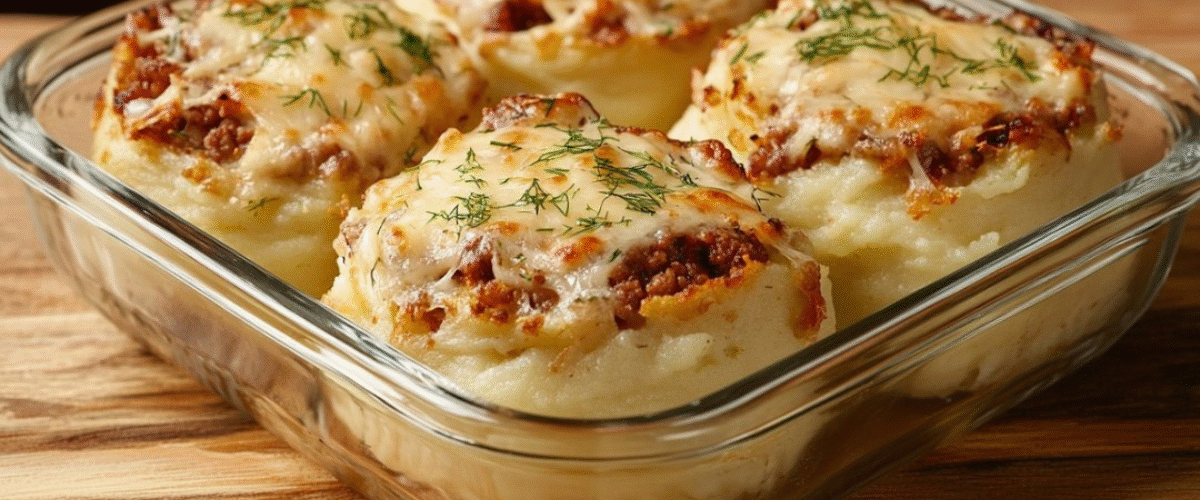
Diese goldbraunen, mit Käse gefüllten Kartoffelnester sind der ultimative Wohlfühlgenuss. Sie kombinieren cremiges Kartoffelpüree mit einer reichhaltigen, herzhaften Hackfleischfüllung. Jedes Nest ist eine perfekte Portion, die sowohl optisch ansprechend als auch unglaublich sättigend ist. Dieses Rezept verwandelt einfache Zutaten in ein elegantes Gericht, das sich wie eine warme Umarmung auf dem Teller anfühlt und sich perfekt für Familienessen oder besondere Anlässe eignet.
Zutaten
Für die Kartoffelnester:
- 5 mittelgroße Kartoffeln (ca. 750 g)
- 60 g (4 Esslöffel) Butter
- 1 großes Ei
- 1 kleines Bund frische Petersilie, fein gehackt
- 120 g (4 oz) geriebener Parmesankäse
- 1 Teelöffel Salz (für kochendes Wasser)
- Olivenöl zum Einfetten
Für die Rindfleischfüllung:
- 450 g (1 Pfund) Rinderhackfleisch
- 1 mittelgroße Zwiebel, fein gehackt
- 1 mittelgroße Karotte, fein gewürfelt
- 1 rote Paprika, fein gehackt
- 1 mittelgroße Tomate, fein gewürfelt
- 2-3 Teelöffel Tomatenmark
- 2 Knoblauchzehen, gerieben
- 1 Teelöffel Salz
- 1 Teelöffel schwarzer Pfeffer
- 1 Teelöffel Paprika
- 2-3 Esslöffel Olivenöl
Zum Zusammensetzen und Backen:
- 60 g (2 oz) geriebener Cheddar-Käse
- Kirschtomaten zum Garnieren
- Frischer Dill oder Petersilie zum Garnieren
Schritt-für-Schritt-Anleitung
Zubereitung der Kartoffeln
Füllen Sie einen großen Topf mit Wasser und geben Sie einen Teelöffel Salz hinzu. Rühren Sie vorsichtig um, bis sich das Salz aufgelöst hat. Waschen und schälen Sie die Kartoffeln und schneiden Sie sie anschließend in mittelgroße, gleichmäßige Würfel von etwa 3 cm Größe. Gleichmäßige Stücke sorgen für ein gleichmäßiges Garen und eine glatte Konsistenz.
Die gewürfelten Kartoffeln in das Salzwasser geben und bei mittlerer bis hoher Hitze zum Kochen bringen. 20–30 Minuten kochen lassen, bis die Kartoffeln beim Hineinstechen weich sind und sich leicht einstechen lassen. Die Garzeit hängt von der Größe der Kartoffelwürfel und der verwendeten Kartoffelsorte ab.
Sobald die Kartoffeln gar sind, lassen Sie sie durch ein Sieb abtropfen und lassen Sie überschüssige Feuchtigkeit einige Minuten verdunsten. Geben Sie die heißen Kartoffeln in eine große Rührschüssel, solange sie noch warm sind. Das erleichtert das Stampfen und sorgt für ein lockereres Kartoffelpüree.
Zubereitung der Kartoffelpüree-Basis
Die Butter zu den heißen Kartoffeln geben und vollständig schmelzen lassen. Die Restwärme der Kartoffeln sorgt dafür, dass die Butter gleichmäßig schmilzt. Ein Ei hinzufügen, um das Kartoffelpüree zu binden und ihm eine reichhaltigere Konsistenz zu verleihen.
Mit einem Kartoffelstampfer oder einer großen Gabel die Kartoffeln zerstampfen, bis eine glatte, cremige Masse ohne Klumpen entsteht. Die Masse sollte fest genug sein, um beim Formen zu Nestern ihre Form zu behalten, aber nicht so steif, dass sie schwer zu verarbeiten ist.
Die frische Petersilie fein hacken und unter das Kartoffelpüree heben. Dabei gleichmäßig verteilen. Die Petersilie verleiht dem fertigen Gericht Frische und einen schönen grünen Farbkontrast.
Zubereitung der Rindfleischfüllung
Heat 2-3 tablespoons of olive oil in a large skillet over medium heat. Add the finely chopped onion and sauté for 2-3 minutes until it becomes soft and translucent. The onion should not brown but rather become sweet and aromatic.
Add the finely diced carrot to the pan and stir well. Cook for another 2-3 minutes until the carrot begins to soften slightly. Follow with the finely chopped red bell pepper, stirring everything together and cooking for an additional minute.
Add the ground beef to the pan, breaking it apart with a spatula as it cooks. The meat should be broken into small, uniform pieces for the best texture in the final dish. Season with salt, black pepper, and paprika, mixing the spices evenly throughout the meat.
Continue cooking the beef mixture for 5-7 minutes, stirring regularly to ensure even browning. The meat should be completely cooked through with no pink remaining.
Completing the Filling
Add the finely diced tomato to the pan along with the tomato paste. The tomato paste adds depth and richness to the filling while helping to bind all the ingredients together. Mix everything well to distribute the tomato paste evenly.
Grate the garlic cloves using a fine grater or microplane, then add to the pan. Fresh grated garlic provides a more intense flavor than minced garlic and distributes more evenly throughout the mixture.
Cover the pan with a lid and allow the mixture to stew for 5-7 minutes. This final cooking step allows all the flavors to meld together and reduces any excess liquid from the tomatoes. Remove from heat and set aside.
Assembling the Potato Nests
Preheat your oven to 180°C (360°F). Grease a baking dish with olive oil, using a pastry brush to ensure even coverage. This prevents sticking and adds flavor to the finished dish.
Lightly oil your hands to prevent the mashed potatoes from sticking, then form the potato mixture into 6-8 evenly sized balls. Each ball should be approximately the size of a tennis ball.
Place each potato ball in the prepared baking dish, spacing them evenly apart. Using your thumb or the back of a spoon, create a deep well in the center of each ball, forming nest-like shapes. The walls should be thick enough to hold the filling without breaking.
Place a small amount of grated Parmesan cheese in the bottom of each well. This creates an extra layer of flavor and helps prevent the filling from making the potato base soggy.
Fill each potato nest generously with the prepared beef and vegetable mixture, mounding it slightly above the rim of each nest. Top each filled nest with grated cheddar cheese, ensuring good coverage for optimal melting and browning.
Baking and Serving
Place the baking dish in the preheated oven and bake for 30 minutes. The tops should be golden brown and the cheese should be bubbly and slightly crispy around the edges. The potato nests should hold their shape and have a beautiful golden color.
While the nests are baking, prepare the garnish by cutting cherry tomatoes in half. These add a fresh, colorful contrast to the rich, cheesy dish.
Remove the dish from the oven and allow to cool for 2-3 minutes before serving. Carefully transfer the potato nests to individual serving plates using a wide spatula. Garnish each portion with halved cherry tomatoes and fresh dill or parsley.
Nutritional Information and Timing
Prep Time: 30 minutes
Cook Time: 45 minutes
Total Time: 1 hour 15 minutes
Servings: 6-8 individual nests
Approximate Nutritional Information per Nest:
- Calories: 380-420
- Protein: 22g
- Carbohydrates: 28g
- Fat: 20g
- Fiber: 4g
- Sodium: 580mg
This dish provides a well-balanced combination of protein from the ground beef, complex carbohydrates from the potatoes, and essential vitamins from the vegetables. The cheese adds calcium and additional protein while the fresh herbs contribute antioxidants and fresh flavor.
Recipe Variations and Substitutions
Protein Alternatives
Ground turkey, lamb, or chicken work excellently as substitutes for beef. For a lighter option, try ground turkey breast, though you may need to add a tablespoon of olive oil to prevent dryness. Vegetarians can substitute with lentils, mushrooms, or a meat alternative.
Cheese Variations
Experiment with different cheese combinations such as Gruyère and sharp cheddar, or try goat cheese mixed with herbs for a more sophisticated flavor profile. Mozzarella creates extra stretchy, melted cheese appeal that’s perfect for social media photos.
Vegetable Additions
Enhance the nutritional value by adding diced zucchini, corn kernels, or finely chopped spinach to the beef mixture. Mushrooms add earthiness and umami depth that complements the meat beautifully.
Potato Alternatives
While regular potatoes work perfectly, you can use a combination of regular and sweet potatoes for added nutrition and a subtle sweetness. Yukon Gold potatoes create particularly creamy and flavorful nests.
Make-Ahead Options
The potato nests can be assembled completely and refrigerated for up to 24 hours before baking. You may need to add 5-10 minutes to the baking time if cooking from cold. The beef filling can be prepared up to 2 days in advance and stored separately.
Frequently Asked Questions
Why do my potato nests fall apart during baking? This usually happens when the mashed potatoes are too wet or not properly seasoned. Make sure to drain the potatoes thoroughly after boiling and allow them to cool slightly before adding the egg. The egg acts as a binder, so don’t skip this ingredient. Also ensure your hands are lightly oiled when shaping the nests.
Kann ich diese gefüllten Kartoffelnester einfrieren? Ja, sie halten bis zu 3 Monate. Die Nester vollständig zusammenbauen, aber nicht backen. Einzeln in Frischhaltefolie einwickeln und in Gefrierbeutel geben. Für die Zubereitung aus dem Gefrierfach die Backzeit um 15–20 Minuten verlängern und die Nester während der ersten Hälfte der Garzeit mit Alufolie abdecken, um ein Überbräunen zu vermeiden.
Wie verhindere ich, dass der Käse anbrennt? Sollte der Käse zu schnell bräunen, decke die Form während der letzten 10 Minuten locker mit Alufolie ab. So kann der Käse innen fertiggaren und verbrennt nicht. Du kannst den Käse auch erst in den letzten 15 Minuten hinzufügen, anstatt ihn gleich zu Beginn zuzugeben.
Wie wärmt man Reste am besten auf? Einzelne Nester im Backofen bei 160 °C (320 °F) 10–15 Minuten lang erhitzen, bis sie durchgewärmt sind. So bleibt die Kruste besser knusprig als in der Mikrowelle. Für extra Knusprigkeit können Sie die Nester auch 5–7 Minuten in der Heißluftfritteuse erhitzen.
Kann ich kleinere Nester in Vorspeisengröße zubereiten? Auf jeden Fall! Formen Sie kleinere Kartoffelbällchen und passen Sie die Garzeit auf 20–25 Minuten an. Diese eignen sich hervorragend als Party-Vorspeise oder Beilage. Aus der gleichen Menge Zutaten erhalten Sie etwa 12–15 kleinere Nester.
Diese gefüllten Kartoffelnester vereinen Wohlfühloase und Eleganz perfekt. Jedes goldene Nest ist eine komplette Mahlzeit für sich und vereint den cremigen Komfort von Kartoffelpüree mit einer reichhaltigen, herzhaften Füllung, die rundum überzeugt. Die individuelle Präsentation macht sie perfekt für Gäste, während die vertrauten Aromen dafür sorgen, dass sie zu einem festen Bestandteil Ihres Familientischs werden. Kein Wunder, dass dieses Rezept so viel Begeisterung hervorruft, dass Sie es mindestens dreimal pro Woche zubereiten werden.