
Die Gewohnheiten eines Ehemannes haben einen größeren Einfluss auf die Gesundheit seiner Frau, als man sich vorstellen kann. Selbst kleine Entscheidungen wie das Versäumen von Training oder Rauchen können unbemerkt langfristige Risiken mit sich bringen, auch im Zusammenhang mit der Brust.
Obwohl die Ernährung, körperliche Aktivität und täglichen Gewohnheiten einer Frau eine entscheidende Rolle für ihre Gesundheit spielen, deuten Untersuchungen darauf hin, dass auch die Lebensgewohnheiten des Ehemanns einen Einfluss haben können.

Ein unterstützender Ehemann bietet nicht nur emotionale Unterstützung, sondern kann auch dazu beitragen, dass seine Frau gesund bleibt.
Experten zufolge können zwei alltägliche Gewohnheiten von Männern die Brustgesundheit von Frauen auf subtile Weise beeinflussen. Paare, die diese Verhaltensweisen gemeinsam angehen, können nicht nur ihre Gesundheit verbessern, sondern auch ihre Bindung stärken.
- Bewegungsmangel – Wie sich die Inaktivität eines Partners auf den anderen auswirkt
Auch wenn es nicht immer offensichtlich ist, kann die Bewegungslosigkeit des Ehemannes mit der Zeit den Tagesablauf seiner Frau beeinflussen. In Langzeitbeziehungen neigen Paare dazu, das Verhalten des anderen zu spiegeln. Wenn also einer viel Zeit im Sitzen verbringt, zu wenig Sport treibt oder unregelmäßige Essgewohnheiten hat, kann der andere mit der Zeit in denselben Rhythmus verfallen.
Wissenschaftliche Untersuchungen zeigen, dass körperliche Inaktivität und Körperfett zu einem erhöhten Risiko für Brustprobleme führen, insbesondere bei Frauen über 40. Bewegungsmangel kann den Hormonhaushalt, beispielsweise den Östrogenspiegel, stören und das Risiko für abnormales Zellwachstum im Brustgewebe erhöhen. Wenn sich Paare an einen inaktiven Alltag gewöhnen, wird es zunehmend schwieriger, aktiv zu sein oder ein gesundes Gewicht zu halten.
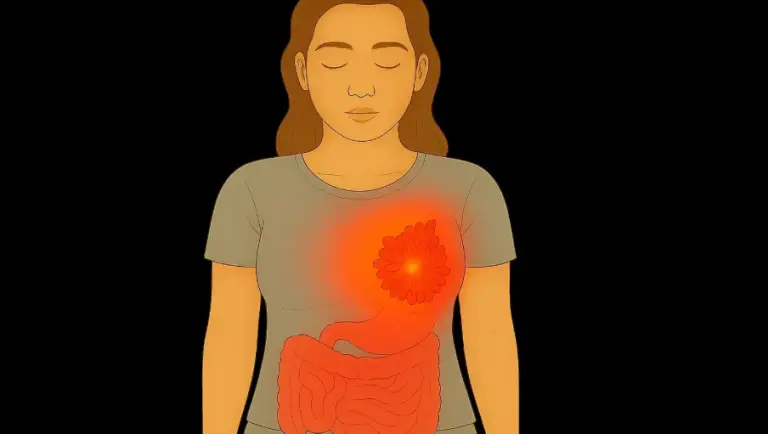
- Rauchen – eine versteckte Gefahr für die Gesundheit einer Ehefrau
Rauchen ist eine unterschätzte Gefahr im Haushalt. Selbst wenn jemand im Freien oder in einem anderen Raum raucht, bleiben giftige Partikel an Kleidung, Haaren, Haut und Möbeln haften. Dieser „Dritthandrauch“ ist noch mehrere Stunden nach dem Ausdrücken einer Zigarette wirksam und kann Angehörige noch immer mit krebserregenden Chemikalien vergiften.
Frauen, insbesondere solche vor den Wechseljahren, haben ein höheres Risiko für Brustprobleme, wenn sie ständig Passivrauch ausgesetzt sind. Die Weltgesundheitsorganisation schätzt, dass Frauen, deren Haushalt Raucherinnen sind, im Vergleich zu Frauen in rauchfreien Haushalten ein um 20–30 % höheres Risiko haben.
Die Gefahren für die Brustgesundheit enden hier nicht.
Passivrauchen erhöht das Risiko von Herz-Kreislauf- und Lungenerkrankungen sowie Fortpflanzungsproblemen. Ein Ehemann muss nicht einmal vor seiner Frau rauchen. Die Chemikalien, die er in gemeinsam genutzte Räume mitbringt, können selbst schädlich sein.
Dies wird durch Belege bestätigt: Eine Studie im British Journal of Cancer ergab, dass nichtrauchende Frauen, die Passivrauch ausgesetzt waren, ein um 24 Prozent höheres Brustkrebsrisiko hatten, wobei das Risiko bei längerer und intensiverer Exposition noch höher war. Eine japanische Studie zeigte einen Dosis-Wirkungs-Zusammenhang zwischen dem Rauchen der Ehemänner und dem Brustkrebsrisiko bei Frauen.
Denken Sie daran, dass kleine Änderungen der Routine Paaren helfen können, gesünder zu bleiben und eine gesündere Beziehung aufzubauen.
Why Do Some Men Keep Their Pinky Fingernails Long?
A Curious Tradition with Deep Cultural and Historical Roots
At first glance, it might seem like an insignificant detail—just one fingernail, usually the pinky, grown longer than the rest. Yet across different cultures and historical periods, this small act has carried surprising meaning. From power and intellect to practicality and even rebellion, the long pinky nail has been far more than a fashion choice—it is a layered symbol of status, culture, and identity.
A Status Symbol in Ancient Civilizations
In ancient China, the long pinky nail was a mark of privilege and refinement. Aristocrats and intellectuals, unburdened by manual labor, could afford to let their nails grow long. A single extended nail—often the pinky—became a subtle yet powerful declaration of wealth and social class.
Some went further, protecting their nails with ornate sheaths of gold or jade. These accessories were not just decoration but emblems of superiority. Even today, in parts of China, particularly among older generations or professions like taxi drivers, the long pinky nail is still worn as a quiet sign of pride or aspiration.
Beyond Class: A Symbol of Intellect
The meaning of the nail extended beyond wealth. In both Chinese and Greek traditions, a long pinky nail was associated with scholarship and intellectual pursuits. Scholars and poets sometimes grew their pinky nail long as a reflection of their devotion to ideas rather than physical work.
Like spectacles or a fountain pen, the nail symbolized thoughtfulness and refinement. It was a silent but expressive statement of one’s inner life.
Practical Uses: Utility Over Symbolism
Outside of symbolism, practicality also explains the tradition. In countries like Turkey and India, a long pinky nail was often used as a handy tool. From peeling fruit to scratching off labels or opening wrappers, the nail served everyday purposes.
In this way, it shifted from cultural marker to practical instrument, valued for its usefulness in daily tasks.
From Counterculture to Controversy
By the 20th century, the long pinky nail took on new and sometimes controversial meanings. In the 1970s and 1980s, particularly in the West, it became associated with subcultures like glam rock or hip-hop. More controversially, it was linked—fairly or unfairly—with recreational drug use, as the nail could be used as a makeshift tool for handling substances.
This association gave the nail a rebellious edge, sometimes overshadowing its historical symbolism. Yet for others, it was embraced simply as a style choice—a personal expression rather than a cultural or functional statement.
A Fluid Tradition: Different Meanings in Different Contexts
Perhaps the most fascinating aspect of the long pinky nail is its fluidity. It can signify nobility, intellect, utility, rebellion, or style—depending entirely on time and place.
This fluidity also invites misunderstandings. One person may wear it as a nod to cultural heritage or as a practical tool, while another may misinterpret it as a symbol of something negative. Understanding its varied roots helps to foster empathy rather than judgment.
The Pinky Nail as a Personal Statement
Ultimately, the long pinky nail is deeply personal. For some, it honors tradition. For others, it’s a practical tool, a marker of rebellion, or simply a stylistic flourish.
What matters is that this small detail tells a big story. Whether it whispers of ancient dynasties, reflects everyday convenience, or speaks through modern subcultures, the long pinky nail remains a striking example of how something so small can carry such rich meaning.
Blue Whales Are Falling Silent: A Warning From the Ocean
California Coast, USA — Blue whales, the largest animals on Earth and known for their haunting songs that travel across oceans, are going quiet. Over the past six years, researchers monitoring the California Current have recorded a dramatic 40 percent decline in whale vocalizations. The change is raising alarms about food shortages and the growing pressure on marine ecosystems.
Songs That Fade With Scarcity
Whales sing for many reasons: to communicate, to attract mates, and to mark their presence in vast waters. Singing takes energy, and when food is scarce, it is one of the first activities to diminish. During recent marine heatwaves, often referred to as “The Blob,” ocean waters warmed to unusual levels. These temperature spikes disrupted populations of krill — the tiny shrimp-like creatures that blue whales depend on for survival.
As krill became harder to find, whales spent more time searching for food and less time singing. Hydrophones placed along the coast captured the decline: fewer calls, shorter phrases, and quieter seas.
What the Silence Signals
A 40 percent drop in whale songs does not mean whale numbers have collapsed, but it does reveal stress. Blue whales are highly specialized feeders, relying almost exclusively on krill. When those swarms thin out, the consequences ripple quickly through their behavior. Other whale species with more varied diets showed smaller changes, underscoring how tightly blue whales are tied to krill availability.
Scientists view the decline in song as a biological alarm bell. In the ocean, silence can speak volumes about environmental strain.
Beyond the Whales
The loss of whale voices is about more than one species. Whales are considered sentinel animals, indicators of the overall health of the seas. Their struggles point to broader ecosystem disruptions: marine heatwaves, shifting currents, and climate-driven changes that affect everything from plankton to predators.
If whales are singing less because they are starving, it is a sign that food chains in one of the planet’s most productive ocean systems are under severe stress.
A Call for Action
Researchers stress the importance of long-term acoustic monitoring to track changes across years and regions. Protecting whale habitats, reducing carbon emissions, and safeguarding krill populations are among the most urgent steps needed.
The sudden quiet in the Pacific is not the end of the story, but it is a sobering message. For centuries, whale songs have echoed across oceans as symbols of life and continuity. Their decline is a reminder that even the giants of the sea cannot sing forever if the ecosystems they depend on begin to unravel.
The Surprising Love Call of the World’s Slowest Mammal
When we think of sloths, the image that comes to mind is one of stillness, patience, and near-silent movement. Yet, hidden in the treetops of Central and South America, sloths have a surprisingly loud and dramatic way of finding love.
Biologists studying the three-toed sloth (Bradypus variegatus) have documented that when a female enters estrus — the period when she is ready to mate — she does not rely on subtlety. Instead, she lets out a high-pitched scream that echoes through the rainforest canopy. This unusual call functions as a signal to males in the area, guiding them through the dense forest toward her.
Unlike many animals that have fixed mating seasons, three-toed sloths can reproduce year-round. The female’s scream is therefore a crucial adaptation, ensuring that males know when she is fertile. Researchers note that males are strongly attracted to these calls and will often compete for the chance to approach the female.
While the image of a “screaming sloth” may sound humorous, the behavior underscores the importance of communication in the animal kingdom. In thick forests where visibility is limited and sloths move at a famously slow pace, vocal signals provide an efficient way to overcome distance and connect potential mates.
This discovery also highlights how much there is still to learn about the secret lives of sloths. Far from being “lazy,” they have evolved unique strategies to survive, reproduce, and thrive in their environment. And next time you imagine a sloth hanging quietly in a tree, remember: sometimes even the quietest animals have the loudest love songs.