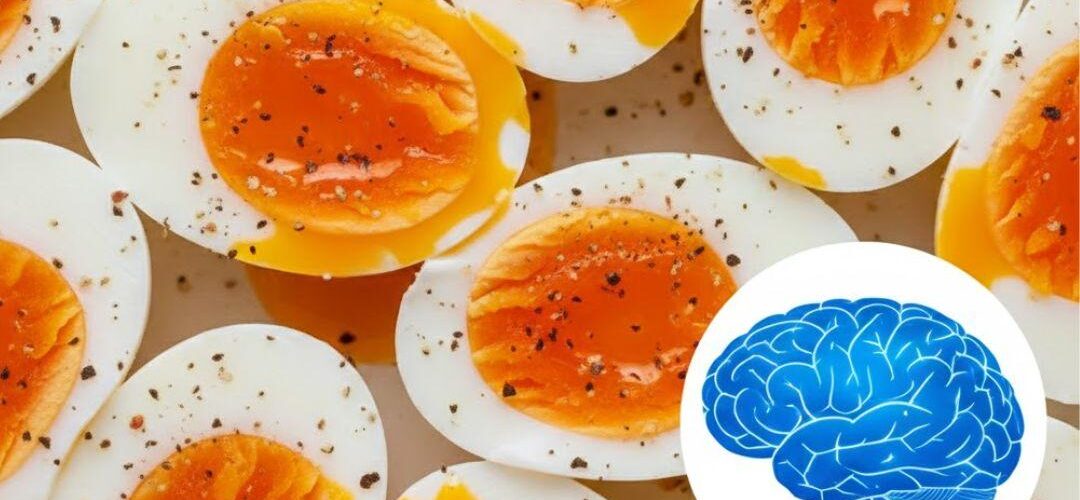
Die Vorteile von Eiern werden manchmal von der medialen Berichterstattung über ihre potenziellen Nachteile überschattet. Dabei besitzen Eier viele positive Eigenschaften, die sie zu einem überraschend gesunden Lebensmittel machen. Sie sind reich an Vitaminen und Mineralstoffen und können sogar helfen, einem Schlaganfall vorzubeugen. Wer Wert auf seine Gesundheit legt, kann mit Eiern eine hervorragende Ergänzung seiner Ernährung darstellen.
Eier sind äußerst nahrhaft.
Eier zählen zu den nährstoffreichsten Lebensmitteln der Welt – sie sind reich an hochwertigen Proteinen, Vitaminen, Mineralien, gesunden Fetten und verschiedenen Spurenelementen.
Ein einzelnes großes Ei (50 g) enthält:
- Vitamin A: 5 % der empfohlenen Tagesdosis.
- Vitamin D: 10 % der empfohlenen Tagesdosis
- Vitamin B12: 10 % der empfohlenen Tagesdosis.
- Vitamin B6: 5 % der empfohlenen Tagesdosis.
- Selen: 28 % der empfohlenen Tagesdosis.
- Phosphor: 9 % der empfohlenen Tagesdosis.
- Vitamin B2: 15 % der empfohlenen Tagesdosis.
Eier enthalten zudem nennenswerte Mengen an Vitamin E, Vitamin K, Kalzium und Zink. Ein großes Ei liefert 72 Kalorien, 6 Gramm Eiweiß und 3 Gramm gesunde Fette.
Eier enthalten außerdem verschiedene andere Spurenelemente, die für die Gesundheit wichtig sind. Eier sind nahezu das perfekte Lebensmittel, da sie fast alle Nährstoffe in geringen Mengen enthalten, die wir benötigen.
Hier sind einige der spannenden gesundheitlichen Vorteile von Eiern:
Eier fördern die Augengesundheit
Karotten, macht Platz – auch Eier können zur Erhaltung der Augengesundheit beitragen!
Eigelb enthält viele der Antioxidantien Lutein und Zeaxanthin. Diese starken Antioxidantien können das Risiko einer Makuladegeneration und anderer häufiger Augenerkrankungen verringern. Ich habe die Bedeutung dieser beiden Antioxidantien bereits in meinem Artikel über die neun besten Lebensmittel zum Schutz und zur Verbesserung der Sehkraft erwähnt.
Laut einer Studie von Forschern der Tufts University, die in der Augustausgabe 1999 des American Journal of Clinical Nutrition veröffentlicht wurde , steigt der Gehalt an diesen Antioxidantien im Körper dramatisch an, wenn Eigelb verzehrt wird.
Beachten Sie, dass diese Vorteile nicht erzielt werden können, wenn Sie das Eigelb meiden und nur das Eiweiß verzehren, da diese Nährstoffe spezifisch für das Eigelb sind. 1
Laut einem 2001 in der Encyclopedia of Life Sciences veröffentlichten Artikel von Alfred Sommer führt Vitamin-A-Mangel jährlich zu über 500.000 neuen Fällen von Erblindung.² Dieses für die Augengesundheit so wichtige Vitamin ist reichlich in Eiern enthalten – also greifen Sie zu, um Ihre Sehkraft zu erhalten.
Eier können beim Abnehmen helfen
Obwohl manche Leute angesichts des Fettgehalts von Eiern entsetzt sind und denken, dass diese unmöglich beim Abnehmen helfen könnten, könnte nichts weiter von der Wahrheit entfernt sein.
According to a study published in the Journal of the American College of Nutrition, people who ate protein-rich eggs for breakfast were better able to control their appetites while attempting to lose weight.
This was due to experiencing less hunger—greater satiety—after an egg breakfast (as compared with the control group who ate a carbohydrate-rich bagel for breakfast).
This led the egg-eaters to consume notably fewer calories after eating eggs—an effect that lasted up to 36 hours in some individuals.5
Eggs are also one of the top 5 belly fat burning foods and are also one of the foods you can use to lose 88 pounds in one year.
Eggs Help Build Bone and Muscle Strength
Why eat artificially fortified foods to get those hard-to-come-by essential nutrients when eggs naturally have all you need?
For example, eggs are one of very few natural sources of vitamin D, which, when paired with calcium, promotes strong bones and may prevent the onset of osteoporosis.
The protein contained within eggs make them ideal for building strong muscles, as well. Egg proteins are balanced and easily utilized by the body to renew muscle tissue and up the amount of muscle mass—and the same cannot be said of all proteins.
Eggs Boost Brain Health and Keep you Sharp
Because of an essential nutrient called choline, eggs can also give your brain power a boost.
A study published in the American Journal of Clinical Nutrition looked at 1,391 volunteers between the ages of 36 and 83 and found that increased dietary choline was associated with improved cognitive function, including visual and verbal memory.3
Additionally, a British Journal of Nutrition study of more than 2,000 adults in their 70s found positive associations between increased choline and better performances on cognitive tests of perception speed, cognition, sensory motor speed and executive function.
Eggs are rich source of choline: one whole large egg can provide 35 percent of your daily choline needs — which is good news, because according to a study published in The Journal of the Federation of American Societies for Experimental Biology, 90 percent of Americans do not get enough of it.6
Eggs also contain other nutrients that can delay Alzheimer’s disease and dementia.
Eggs can Prevent Heart Disease and Breast Cancer
A study performed by scientists from the Department of Nutrition at the University of North Carolina at Chapel Hill found that the choline that eggs contain is not only useful for maintaining good brain function, but also good heart function and may play a preventative role when it comes to breast cancer.4
These results were published in the November 2009 edition of the Nutrition Reviews journal, again bringing to light the question of how a food once so reviled for its cholesterol content could be associated with having a positive impact on heart health.
There are other foods that can prevent breast cancer like these seeds and this type of fat.
A Word about Eggs and Cholesterol
You may have heard that eggs are bad for people who are trying to watch their cholesterol levels.
Although this was thought to be the case for more than half of the 20th century, recent findings have shown that eating eggs can actually have a beneficial impact on blood cholesterol and even triglyceride levels.
The reason eggs were long thought to be a poor food choice for people trying to keep cholesterol levels in balance is that eggs are, indeed, high in cholesterol. However, there is little evidence to support a strong connection between dietary cholesterol—i.e., eating cholesterol in the form of eggs—and blood cholesterol levels.
A study from 2006 published in the Journal of Nutrition discovered that 33 participants over the ago of 60 who ate 1 egg per day for 5 weeks increased nutrients that boost eye health (lutein and zeaxanthin) without affecting cholesterol levels.
A 2008 study published in the Upsala Journal of Medical Sciences looked at a group of 19 middle-age, healthy participants who ate a whole egg every day for one month. Researchers found no difference in the participants’ cholesterol levels at all.
In fact, a 2013 study published in the journal Lipids showed that eating whole eggs actually increased levels of HDL (good) cholesterol, and allowed the HDL molecules to function more effectively. For HDL, higher numbers are always welcomed. HDL prevents heart disease and stroke.
How Many Eggs should you Eat each Day?
According to mayo clinic, most healthy people can eat up to seven eggs a week with no increase in their risk of heart disease. Some studies have shown that this level of egg consumption may actually prevent some types of strokes.
But the story is different for people who have diabetes. In this ever-growing population, eating seven eggs a week significantly increases the risk of heart disease.
The Mayo Clinic states that diabetics who eat seven eggs per week “significantly” increase their risk of heart disease. A 2010 analysis published in the Canadian Journal of Cardiology stated that participants in the Physicians’ Health Study who became diabetic during the course of the 20-year study were twice as likely to develop cardiovascular disease if they ate one egg per day.7
Wenn Sie Eier mögen, aber auf das zusätzliche Cholesterin verzichten möchten, verwenden Sie nur das Eiweiß. Bedenken Sie jedoch, dass das Eigelb zwar das gesamte Cholesterin enthält, aber auch viele Nährstoffe des Eis. Essen Sie daher ab und zu das Eigelb, selbst wenn Sie auf Ihren Cholesterinspiegel achten.