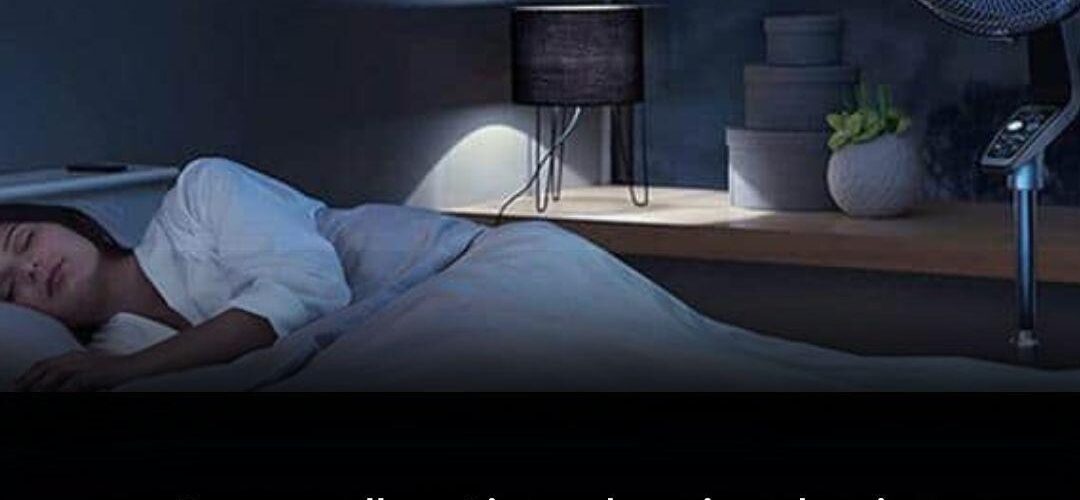
Jeder kennt das unangenehme Gefühl, in einer stickigen, heißen Umgebung schlafen zu wollen. Es ist schwieriger einzuschlafen, schwerer, in einen tiefen Schlaf zu fallen, und unmöglich, die ganze Nacht über bequem zu schlafen, wenn man in einem stickigen, überhitzten Zimmer wohnt.
Wer an heißen Sommerabenden besser schlafen möchte, sollte vielleicht einen Ventilator statt einer Klimaanlage in Betracht ziehen. Ein Ventilator ist aber möglicherweise nicht die beste Lösung, wie wir annehmen. Auch wenn er auf den ersten Blick einfach erscheint, bietet er nicht den Komfort, den wir erwarten.
Studie: Neue Forschungsergebnisse deuten darauf hin, dass eine niedrigere Körpertemperatur (vorzugsweise zwischen 18 und 20 °C, aber auch bis zu 16 °C) im Schlafzimmer einen erholsameren Schlaf fördert. [1]
Um Ihnen zu einem tieferen, erholsameren Schlaf zu verhelfen, gehen wir auf die wichtigsten Argumente gegen die Verwendung eines Ventilators zur Kühlung im Bett ein und stellen Ihnen eine bessere Alternative vor.

Ist das Schlafen mit einem Ventilator schädlich?
Viele Menschen, insbesondere in wärmeren Klimazonen oder im Sommer, lassen nachts einen Ventilator laufen. Dennoch sind sich nur wenige der verschiedenen Gesundheitsrisiken bewusst, die mit dieser scheinbar harmlosen Methode der Kühlung verbunden sind.
Auch wenn die meisten dieser Probleme eher geringfügig sind und in der Regel mehr Ärgernis als Schaden verursachen, sind sie doch bedeutsam genug, um Sie dazu zu bringen, Ihre Abhängigkeit von einem Ventilator für den Komfort in der Nacht zu überdenken.
1. Verschlimmerung von Allergien

Da Ventilatoren Staub, Pollen, Tierhaare und andere Allergene in der Luft aufwirbeln, können sie Allergien und Atemwegserkrankungen verschlimmern. Allergien können sich beim Einschalten des Ventilators verstärken, da dieser Allergene freisetzen kann, die sich im Luftfilter oder an den Ventilatorflügeln festsetzen.
Ohne dass Sie es merken, können sich mit der Zeit Hausstaubmilben und Haushaltsallergene auf den Flügeln des Deckenventilators ansammeln.
Dies kann zu Symptomen wie verstopfter Nase, juckenden Augen, Husten und Niesen führen. Es wird empfohlen, die Ventilatorflügel und den Luftfilter regelmäßig zu reinigen, um Allergene zu reduzieren und typische Allergiesymptome zu lindern.
Wussten Sie, dass Studien einen Zusammenhang zwischen saisonalen Allergien und Schnarchen, schlechter Schlafqualität und Schlafstörungen nachgewiesen haben? [2]
2. Zunahme der Nasennebenhöhlenreizung

Die Luft Ihres Ventilators kann Mund, Rachen und Nase austrocknen, Ihre Nebenhöhlen reizen und dazu führen, dass Ihr Körper zu viel Schleim produziert, was zu Verstopfung und Kopfschmerzen führen kann.
Außerdem kann das Schlafen mit einem Ventilator Halsschmerzen verursachen. Bei Allergien kann der ständige Luftzug unangenehm sein. Der kontinuierliche Luftstrom des Ventilators kann bestehende Krankheitssymptome verschlimmern und Ihr Befinden verschlechtern.
Wenn Sie einen Ventilator benutzen, stellen Sie einen Luftbefeuchter oder ein Glas Wasser neben Ihr Bett. So können Sie die austrocknende Wirkung des Ventilators verringern und möglichen Schmerzen vorbeugen.
3. Führt zu steifen oder schmerzenden Muskeln

It’s not uncommon to wake up with sore muscles or a stiff neck, and, strangely enough, using a fan to circulate air while you sleep might actually make your muscles tense. Muscle strain can result from a fan’s nighttime continuous air circulation, particularly in areas that are immediately exposed to the airflow.
If the fan is placed near your face or neck, this issue is more serious. Long-term exposure to a cool breeze can cause the muscles to stiffen up from the steady blast of air, making it difficult to move and causing you to wake up hurting or with a stiff neck.
You can solve this problem by repositioning the fan so that air doesn’t blow straight into your face while you sleep. You might try angling the fan so that air flows around the space without coming into close contact with your body.
4. Cause Dry Skin and Can Irritate Eyes

For people who already have a tendency toward dryness, the constant wind from a desk or ceiling fan at night can cause dry skin and eyes.
The constant airflow from the fan accelerates the evaporation of moisture from the skin and eyes, depriving them of their natural lubricant. As a result, there is uncomfortable dryness, tight or flaky skin, and itchy or inflamed eyes.
The severity of these symptoms may be increased in those with eczema or sensitive eyes. Furthermore, using a fan on a regular basis over time may cause irritation or even more severe eye issues if you wear contact lenses, increasing pain.
When deciding whether to use a fan while you sleep, it’s crucial to take these factors into account, particularly if you already have dry skin or eyes.
5. Increased Congestion

A fan’s airflow can dry up your throat, nose, and mouth, which may cause your body to generate more mucus. This may cause symptoms including headaches, stuffy noses, or even louder snoring.
While using a fan by itself won’t likely get you sick, it can make your current symptoms worse if you’re not feeling well. Congestion may be reduced by drinking plenty of water and using a humidifier in addition to a fan.
6. Potential Noise Disruption
For light sleepers or those who prefer an entirely silent sleeping environment, even a low hum from a fan might cause major disruptions to their sleep.
Even if some fans are made to run softly, they nevertheless provide a steady background noise that is audible in the serenity of the evening. This noise, which can range in volume from a soft buzzing to a loud humming, can disrupt the sleep-wake cycle and cause trouble falling asleep or staying asleep.
This can lead to a reduction in the quality of sleep for those who are sensitive to auditory disruptions because they may experience less deep sleep or more fragmented sleep. Furthermore, it can be difficult for people who are used to sleeping in complete silence to get used to the sound of a fan, which could cause longer-term sleep difficulties.
Did You Know: The Chilipad Dock Pro noise reduces background noise to 41–46 decibels, so you won’t even notice it’s on. Furthermore, regardless of the temperature in your bedroom or the heat your body produces, it is guaranteed to maintain your ideal sleeping temperature, which is between 55 and 115 °F.
7. Interrupted Sleep

Did you know that nighttime air movement might cause you to wake up and worsen sleep disturbances? Thus, the things you use to enhance your sleep can interfere with it.
Fans may exacerbate or cause health problems while providing little help in keeping you cool at night. Using our cooling mattress pad is one way to stay cool at night and fall asleep instead of using a fan.
They are made to keep you cool, comfy, and free from overheating throughout the entire night. Normal mattresses make it hard to stay cool since they retain your body heat and reflect it back towards you.
To avoid overheating and sleeping too hot, hot sleepers can control their body temperature with our cooling mattress pads.
8. Limitations in Temperature Control
It’s critical to recognize a fan’s limitations when it comes to room cooling. A fan only moves air around, even if it may seem as though it is lowering the temperature in the space.
When the air flows over your body, this movement produces a breeze or wind chill effect, which makes you feel colder. But neither the room’s real temperature nor your body’s core temperature are being lowered by the fan.
This distinction becomes more important when the weather is exceptionally hot. A fan only circulates the heated air already present in the room, not removing any of the heat, hence, it is useless if the ambient air temperature is already high. This suggests that even while the breeze may provide you with some short-term respite, the room’s temperature remains constant overall.
Because they are unable to lower the temperature like an air conditioner can, fans are comparatively useless in hot weather.
How to Sleep Cooler at Night
Although the Chilipad sleep system has already been discussed, there are further options for sleeping in a cooler environment.
- Breathable, cool bedding
- Take a warm shower
- Hydrate before bed
- Use blackout curtain
- and more
Are you looking for additional strategies to keep cool and sleep through the night? Discover practical advice and methods for maintaining your composure at night and enhancing the quality of your sleep by reading our blog.
Final Thought
It’s evident that fans have drawbacks despite being a common way to stay cool and decorate your space. There are a number of negative consequences to sleeping with a fan on, including the ability to aggravate allergies, dry up your skin and eyes, and induce muscular stiffness and sleep disturbances due to noise.
Es ist wichtig, diese Überlegungen mit Ihren individuellen Bedürfnissen und Schlafgewohnheiten in Einklang zu bringen. Weitere Lösungen, die Komfort ohne die Nachteile eines Ventilators bieten, sind atmungsaktive Bettwäsche, kühlende Matratzenauflagen und eine niedrigere Raumtemperatur.
Um einen kontinuierlichen, tiefen Schlaf zu gewährleisten, sollten Sie bedenken, dass die perfekte Schlafumgebung ein Gleichgewicht zwischen Komfort, Temperatur und persönlichen Vorlieben herstellt.