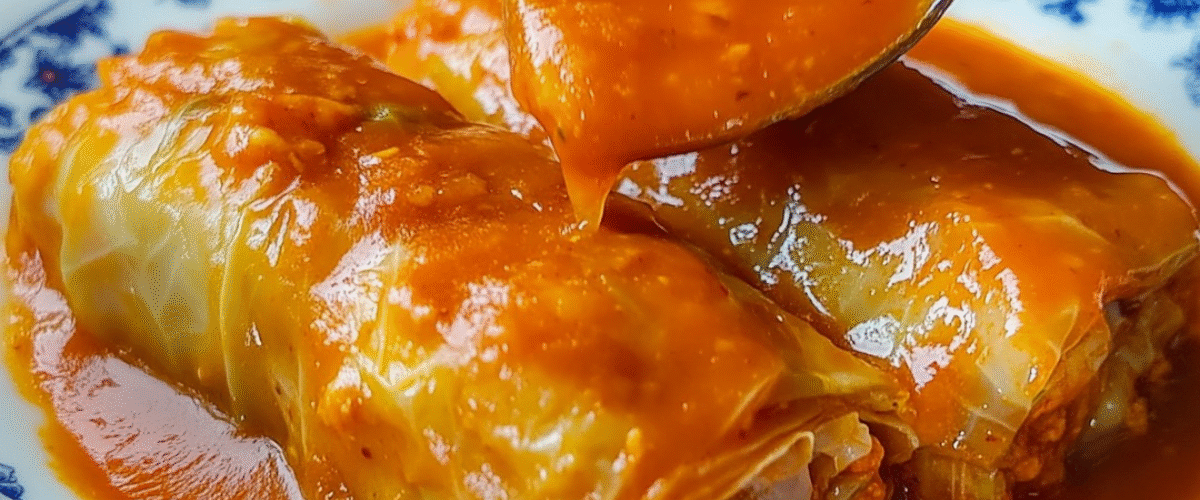
Diese veganen Kohlrouladen bieten eine proteinreiche Variante eines traditionellen Wohlfühl-Klassikers. Zarte Kohlblätter werden mit einer herzhaften Mischung aus Linsen, Tofu und aromatischem Gemüse gefüllt und anschließend in einer reichhaltigen, cremigen Tomatensauce sanft geköchelt. Das Ergebnis ist ein herzhaftes, sättigendes Gericht, das beweist, dass pflanzliche Gerichte genauso aromatisch und nahrhaft sein können wie fleischbasierte Alternativen. Egal, ob Sie überzeugter Veganer sind oder einfach mehr pflanzliche Gerichte in Ihren Alltag integrieren möchten – diese Kohlrouladen bieten einen unglaublichen Geschmack und eine Textur, die selbst die eingefleischtesten Fleischesser begeistern werden.
Zutaten
Für die Kohlrouladen:
- 1 Wirsingkohl (ca. 1 kg)
- 1 mittelgroße Zwiebel, gewürfelt (ca. 150 g)
- 1 mittelgroße Karotte, gewürfelt (ca. 100 g)
- 2 Knoblauchzehen, gehackt
- 220 g (8 oz) gekochte Linsen (1 Standarddose, abgetropft)
- 220 g (8 oz) fester Tofu
- 1 Teelöffel geräucherter Paprika
- 1 Teelöffel gemahlener Koriander
- 1 Esslöffel Sojasauce
- Frischer Dill, gehackt (ca. 2 Esslöffel)
- Salz nach Geschmack
- 1-2 Esslöffel Pflanzenöl zum Anbraten
Für die cremige Tomatensauce:
- 500 ml (17 fl oz/2 Tassen) Gemüsebrühe
- 2 Esslöffel Tomatenmark
- 100 ml (3 fl oz/⅓ Tasse) milchfreie Sahne (z. B. Hafer-, Soja- oder Kokoscreme)
- 1 Esslöffel Sojasauce
- 1 Teelöffel Paprika
- 1 Teelöffel gemahlener Kreuzkümmel
- 1 Esslöffel Maisstärke
- Salz nach Geschmack
Anweisungen
Zubereitung des Kohls:
- Entfernen Sie vorsichtig die ganzen Blätter vom Wirsing und achten Sie darauf, dass sie ganz bleiben. Je nach Größe benötigen Sie etwa 12–16 Blätter.
- Bringen Sie einen großen Topf Wasser zum Kochen.
- Sobald das Wasser kocht, nehmen Sie den Topf vom Herd und tauchen Sie die Kohlblätter vorsichtig in das heiße Wasser.
- Decken Sie den Topf ab und lassen Sie die Blätter etwa 15 Minuten lang weich werden.
- Wenn die Blätter weich sind, entfernen Sie sie und legen Sie sie auf ein Küchentuch, um überschüssiges Wasser abtropfen zu lassen.
- Wenn die Mittelrippe des Kohlblattes sehr dick ist, können Sie sie etwas kürzen, damit sich das Blatt leichter rollen lässt.
Zubereitung der Füllung:
- 1–2 Esslöffel Pflanzenöl in einer großen Bratpfanne bei mittlerer Hitze erhitzen.
- Die gewürfelte Zwiebel hinzufügen und etwa 3–4 Minuten anbraten, bis sie glasig ist.
- Die gewürfelte Karotte in die Pfanne geben und unter gelegentlichem Rühren weitere 3 Minuten kochen.
- Den gehackten Knoblauch hinzufügen und eine weitere Minute kochen, bis er duftet.
- Geben Sie die sautierte Gemüsemischung, die abgetropften Linsen aus der Dose und den festen Tofu (mit einer Gabel zerdrückt oder mit den Händen zerbröselt) in eine große Rührschüssel.
- Würzen Sie die Mischung mit geräuchertem Paprika, gemahlenem Koriander, Sojasauce, gehacktem frischem Dill und Salz nach Geschmack.
- Alle Zutaten gut verrühren. Die Füllung sollte feucht, aber nicht wässrig sein.
Zusammenstellen der Kohlrouladen:
- Legen Sie ein weiches Kohlblatt mit dem Stielende zu Ihnen zeigend auf eine flache Oberfläche.
- Place approximately 2-3 tablespoons of the filling mixture (depending on the size of your leaf) near the stem end of the leaf.
- Fold the stem end over the filling, then fold in the sides, and roll up the leaf completely to form a neat package.
- Repeat with the remaining cabbage leaves and filling.
- If necessary, secure the rolls with toothpicks to prevent them from unraveling during cooking.
- Gently press each cabbage roll with a paper towel to remove any excess moisture.
Preparing the Sauce:
- In a large bowl or measuring cup, combine the vegetable broth, tomato paste, dairy-free cream, and soy sauce. Whisk until well blended.
- Add the paprika, cumin, and salt to taste.
- In a small bowl, mix the cornstarch with 2 tablespoons of cold water to create a slurry.
- Add the cornstarch slurry to the sauce mixture and whisk until completely incorporated.
Cooking the Cabbage Rolls:
- Pour the prepared sauce into a large, deep skillet or Dutch oven.
- Carefully arrange the cabbage rolls in the sauce, seam-side down, in a single layer if possible.
- Bring the sauce to a gentle simmer over medium heat.
- Once simmering, reduce the heat to low, cover the pan with a lid, and cook for 20 minutes.
- Occasionally spoon some of the sauce over the rolls during cooking.
- The cabbage rolls are done when they are tender and have absorbed some of the sauce flavors.
Serving:
- Carefully transfer the cabbage rolls to serving plates.
- Spoon additional sauce over the top of each serving.
- Garnish with additional fresh dill if desired.
- Serve hot, accompanied by your favorite side dish such as mashed potatoes, rice, or crusty bread.
Nutritional Information and Timing
Preparation Time: 30 minutes
Cooking Time: 30 minutes
Total Time: 1 hour
Servings: 4-5 (12-16 rolls)
Per Serving (approximately 3 rolls):
- Calories: 250 kcal
- Protein: 14g
- Carbohydrates: 30g
- Fiber: 8g
- Fat: 9g
- Sodium: 650mg (varies based on salt/soy sauce used)
Cooking Tips and Tricks
- Cabbage Selection: Savoy cabbage is ideal for this recipe as its leaves are more pliable than regular green cabbage. However, if savoy cabbage is unavailable, you can use regular green cabbage—just blanch it slightly longer.
- Leaf Preparation: If you’re having trouble removing whole leaves from the cabbage head, make a cut around the core at the bottom of the cabbage and blanch the entire head briefly in boiling water. This makes it easier to peel off intact leaves.
- Filling Consistency: The filling should be moist enough to hold together but not so wet that it makes the cabbage rolls soggy. If your mixture seems too dry, add a splash of vegetable broth; if too wet, add a small amount of breadcrumbs.
- Uniform Rolls: Try to make your cabbage rolls roughly the same size so they cook evenly. For smaller leaves, use less filling; for larger leaves, use more.
- Sauce Thickness: If you prefer a thicker sauce, increase the cornstarch to 1½ tablespoons. For a thinner sauce, reduce to 2 teaspoons.
- Flavor Development: The cabbage rolls taste even better the next day after the flavors have had time to meld. Consider making them ahead of time and gently reheating.
- Tofu Texture: For a more “meaty” texture in the filling, freeze the firm tofu, then thaw and squeeze out the excess water before crumbling it into the mixture.
Variations and Substitutions
- Grain Addition: For added texture and nutrition, incorporate ½ cup of cooked brown rice, quinoa, or bulgur wheat into the filling mixture.
- Bean Alternatives: If lentils aren’t available, substitute with mashed pinto beans, kidney beans, or chickpeas.
- Leafy Green Options: Instead of cabbage, try using large collard green leaves, swiss chard, or blanched large kale leaves.
- Sauce Variations: For a different flavor profile, substitute the tomato base with a mushroom gravy, a sweet and sour sauce, or a curry-based sauce.
- Spice Adjustments: Add heat to the filling or sauce with red pepper flakes, cayenne pepper, or a diced jalapeño sautéed with the onions.
- Herb Alternatives: Replace dill with fresh parsley, basil, or cilantro depending on your flavor preferences.
- Nut Enhancement: Add texture and protein by incorporating ¼ cup of chopped walnuts or sunflower seeds into the filling mixture.
Common FAQs
Can I make these cabbage rolls ahead of time?
Yes, these cabbage rolls can be prepared up to 24 hours in advance and refrigerated before cooking. You can also cook them completely, cool, and refrigerate for up to 3 days. Reheat gently in the oven at 150°C (300°F) for about 20 minutes or until heated through.
How do I prevent my cabbage rolls from falling apart?
Make sure your cabbage leaves are properly softened, but not overcooked. The filling should be moist enough to hold together but not too wet. Secure the rolls with toothpicks if needed during cooking, and handle them gently when serving.
Can I freeze these vegan cabbage rolls?
Yes, they freeze well. Cool completely, then freeze in an airtight container for up to 3 months. Thaw overnight in the refrigerator and reheat in the oven at 160°C (325°F) for 20-25 minutes or until thoroughly heated.
What can I serve with these cabbage rolls?
These cabbage rolls pair wonderfully with mashed potatoes, steamed rice, crusty bread, or a simple green salad. For a complete meal, consider adding a side of roasted vegetables or a light soup as a starter.
My cabbage leaves tore while rolling. Can I still use them?
Absolutely! If some leaves tear, just overlap the torn sections as you roll, or use two smaller leaves to create one roll. The sauce will help hold everything together during cooking.
Storage and Make-Ahead Tips
- Kühlung: Bewahren Sie abgekühlte Kohlrouladenreste bis zu 4 Tage in einem luftdichten Behälter im Kühlschrank auf.
- Einfrierhinweise: Die abgekühlten Kohlrouladen in einer Lage auf ein Backblech legen und einfrieren, bis sie fest sind. In einen gefrierfesten Behälter oder Beutel geben und die Lagen mit Backpapier trennen. Bis zu 3 Monate einfrieren.
- Auftauen: Tauen Sie gefrorene Kohlrouladen über Nacht im Kühlschrank auf, bevor Sie sie wieder aufwärmen.
- Aufwärmen: Gekühlte Kohlrouladen in einer abgedeckten Schüssel im Backofen bei 160 °C (325 °F) 15–20 Minuten lang aufwärmen oder in der Mikrowelle bei mittlerer Leistung erhitzen, bis sie durchgewärmt sind.
- Soßenaufbewahrung: Wenn Soße übrig bleibt, kann diese separat aufbewahrt und innerhalb von 3–4 Tagen als Grundlage für Suppen oder Eintöpfe verwendet werden.
- Zutaten für die Zubereitung: Die Füllung kann bis zu 2 Tage im Voraus zubereitet und im Kühlschrank aufbewahrt werden. Die Kohlblätter können blanchiert, getrocknet und bis zu 24 Stunden im Kühlschrank aufbewahrt werden.
- Große Mengen kochen: Dieses Rezept lässt sich gut verdoppeln, wenn Sie für viele Personen kochen oder Ihren Gefrierschrank füllen möchten. Stellen Sie einfach sicher, dass Sie ein ausreichend großes Kochgefäß haben oder teilen Sie die Zutaten auf zwei Töpfe auf.
Diese veganen Kohlrouladen zeigen, wie man mit pflanzlichen Zutaten sättigende, nährstoffreiche Gerichte zubereiten kann, ohne dabei an Geschmack oder Konsistenz einzubüßen. Die Kombination aus proteinreichen Linsen und Tofu mit aromatischem Gemüse und Kräutern ergibt eine nahrhafte und köstliche Füllung, während die cremige Tomatensauce für einen köstlichen Abschluss sorgt. Egal, ob Sie bereits erfahrener veganer Koch sind oder gerade erst anfangen, sich mit der pflanzlichen Küche auseinanderzusetzen – dieses Rezept bietet eine wunderbare Möglichkeit, ein klassisches Wohlfühlessen in einer umweltfreundlichen und nachhaltigen Form zu genießen.